
The Secret Hair Stylists Keep to Themselves: Is Hair Toner the Ultimate Solution to Brassy Hair?
Introduction: The Unsung Hero of Color Perfection
Have you ever left a hair salon with a luminous, cool-toned shade that looked like it belonged on the cover of a magazine, only to watch it turn harsh, warm, and distinctly brassy a few weeks later? Or perhaps you attempted an at-home bleach transformation, only to be met with a stubborn, bright orange hue rather than the buttery vanilla blonde you envisioned?
If you have ever struggled with unwanted yellow, orange, or red tones in your hair, you are not alone. It is one of the most common and frustrating challenges in hair coloring. The secret to achieving and maintaining that fresh-out-of-the-chair finish isn’t actually lightener—it is hair toner.
Often misunderstood and frequently overlooked, hair toner is the absolute backbone of successful color treatment. It is the critical step that bridges the gap between raw, bleached pigment and refined, nuanced color.
What Is Hair Toner, Really?
At its core, a hair toner is a product designed to customize, refine, or correct the tone of your hair. While many people associate toner strictly with blonde hair, it is actually used across all shades—including brunettes, redheads, and silver-haired individuals.
When hair is bleached or lightened, the process strips away the natural melanin. However, natural hair pigments lift in stages. Dark hair lifts to red, then orange, then yellow, before finally reaching pale yellow. Because underlying warm pigments are extremely stubborn, lightened hair almost always reveals unwanted underlying warmth once the primary color settles.
This is where toner steps in. Toner does not change the lightness or darkness level of your hair; instead, it changes the tone (the coolness or warmth) of the color.
The Science of Toning: Color Theory 101
To truly understand how toner works its magic, you have to look at basic color theory. Toners rely directly on the principles of the color wheel to neutralize unwanted tones.
+--------------------+---------------------+
| Target Tone        | Counteracting Toner |
+--------------------+---------------------+
| Unwanted Yellow    | Purple Toner        |
| Unwanted Orange    | Blue Toner          |
| Unwanted Red/Copper| Green Toner         |
+--------------------+---------------------+
- Purple Toners: Purple sits directly opposite yellow on the color wheel. If your light blonde hair is looking like a golden canary, a purple toner cancels out the yellow, restoring a pale, icy, or neutral shade.
- Blue Toners: Blue sits opposite orange. If your dark blonde or light brown hair has turned a fiery shade of copper or orange, a blue-based toner neutralizes those warm tones into a rich, cool brunette or beige.
- Green Toners: Green counteracts red. For dark brunettes struggling with unwanted red or cherry undertones, green-tinted toners restore a crisp, deep, neutral brown.
By applying a deposit-only shade that contains the opposite pigment, the two contrasting colors cancel each other out, leaving behind a balanced, neutralized finish.
The Different Types of Hair Toners
Not all toners are created equal. Depending on your hair type, goals, and experience level, different formulations provide distinct results.
+--------------------+-----------------------+------------------------+------------------+
| Type               | How It Works          | Longevity              | Best Used For    |
+--------------------+-----------------------+------------------------+------------------+
| Demi-Permanent     | Mixes with low-volume | Lasts 4–6 weeks        | Salon/Professional|
|                    | developer to deposit  | (approx. 24 washes)    | toning updates   |
|                    | pigment gently.       |                        |                  |
+--------------------+-----------------------+------------------------+------------------+
| Semi-Permanent     | Sits on hair surface; | Lasts 1–2 weeks        | Quick refreshes  |
|                    | no developer needed.  |                        | at home          |
+--------------------+-----------------------+------------------------+------------------+
| Purple/Blue        | Pigmented maintenance | Temporary              | Weekly wash-day  |
| Shampoos & Masks   | washes and treatments.| (refreshes per wash)   | upkeep           |
+--------------------+-----------------------+------------------------+------------------+
| Glosses & Glazes   | Adds sheer tint and   | Lasts 2–4 weeks        | Shine boost and  |
|                    | Seals cuticle layer.  |                        | tonal polish     |
+--------------------+-----------------------+------------------------+------------------+
1. Professional Demi-Permanent Toners
These are liquid or cream formulas typically used in salons. They require mixing with a low-volume developer (usually 6V to 10V). Because the developer opens the hair cuticle slightly, the pigment deposits deeper into the strand. Demi-permanent toners last anywhere from 4 to 6 weeks (around 20 to 24 washes) before fading naturally.
2. Semi-Permanent Toners
Semi-permanent formulas do not require developer. Instead, they coat the outside of the hair shaft. They are far gentler, making them ideal for quick home touch-ups, though they wash out faster—usually within 1 to 3 weeks.
3. Toning Shampoos, Conditioners, and Masks
Depositing toners in shampoo or mask form are designed for ongoing maintenance. They contain concentrated violet, blue, or green pigments that deposit a small amount of color with every wash. They won’t dramatically alter raw bleach brassiness on their own, but they are essential for extending the life of your professional toner.
4. Color Glosses and Glazes
Glosses are semi- or demi-permanent treatments that combine subtle tone correction with high-shine conditioning agents. They seal the hair cuticle, smoothing frizz and adding a reflective finish while subtly shifting the tone.
Who Needs a Hair Toner?
While blonde hair gets the majority of the spotlight when it comes to toning, almost every color-treated hair type benefits from it.
- Platinum & Ash Blondes: Essential for removing bright yellow hues and creating crisp silver, pearl, or icy tones.
- Brunettes with Balayage or Highlights: Perfect for cooling down harsh, brassy orange highlights into caramel, mocha, or mushroom brown tones.
- Silver & Gray Hair: Natural or dyed gray hair easily absorbs environmental pollutants and yellow stains; violet toners keep grays looking bright and silvery.
- Redheads: Toners can re-inject rich copper or auburn pigments into faded hair without subjecting it to aggressive dye again.
Step-by-Step Guide: How to Tone Hair at Home
If you are using a semi-permanent toner or a gentle gloss kit at home, proper application technique makes the difference between an even, glossy result and a patchy color job.
Step 1: Preparation and Patch Test
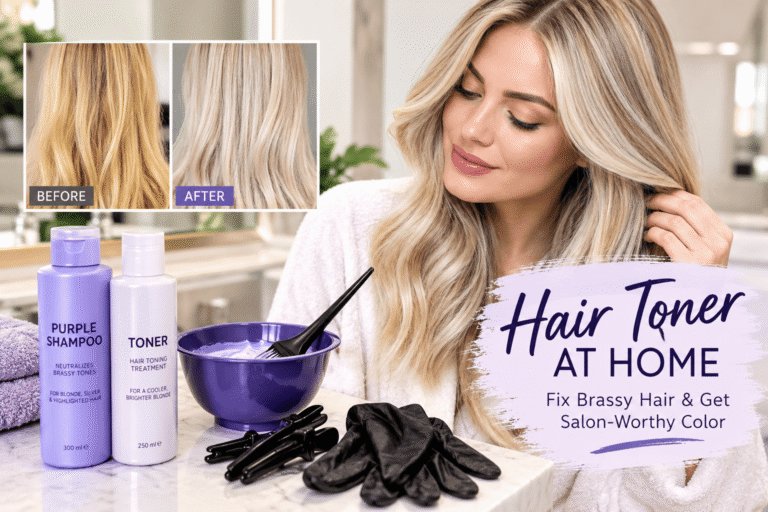
Always perform a patch test 48 hours prior to check for allergic reactions. Gather your supplies: gloves, a non-metallic mixing bowl, an applicator brush, a wide-tooth comb, and your chosen toner.
Step 2: Wash Your Hair
Shampoo your hair thoroughly to remove oil, silicone, and styling product buildup. Skip the conditioner for now—toner absorbs best into fresh, clean hair cuticles. Towel-dry until your hair is damp, not dripping wet.
Step 3: Mix and Apply
Mix your toner according to the product package directions. Divide your hair into four manageable sections using clips. Apply the product generously from roots to ends (or specifically to highlighted areas needing correction) using your applicator brush.
Step 4: Comb Through and Process
Use a wide-tooth comb to distribute the product evenly through every section. Pay close attention to the processing time listed on the box—most toners work quickly, taking anywhere from 5 to 20 minutes.
Pro Tip: Keep a close eye on your hair while processing. Violet and blue pigments act fast, and leaving toner on too long can cause pale hair to temporarily take on a lilac or bluish tint!
Step 5: Rinse and Condition
Once processing is complete, rinse thoroughly with cool water until the water runs completely clear. Follow up with a rich, hydrating conditioner or deep conditioning mask to seal the cuticle and lock in hydration.
Common Hair Toning Mistakes to Avoid
Toning seems straightforward, but a few simple missteps can compromise your results.
- Attempting to Lighten Hair with Toner: Toner only deposits pigment; it cannot lift or lighten dark hair. Applying a light ash toner to dark brown hair will yield zero visible change.
- Choosing the Wrong Base Color: Applying a purple toner to dark orange hair won’t work well because purple cancels yellow, not orange. You need a blue-based toner to counteract orange.
- Over-Toning: Using pigmented purple shampoos every single day can build up excess cool pigment, making hair look dull, dark, and dry. Limit toning products to once or twice a week.
- Applying to Bone-Dry or Soaking-Wet Hair: Most toners perform best on towel-dried, damp hair. Soaking-wet hair dilutes the product, while bone-dry hair can absorb pigment too quickly and unevenly.
How to Extend the Life of Your Toner
Because toners are deposit-only pigments, they naturally wash out over time. However, you can significantly prolong your color’s vibrancy with simple routine adjustments:
- Wash with Sulfate-Free Shampoo: Harsh sulfates act like detergents, stripping color molecules out of the hair shaft quickly.
- Lower the Water Temperature: Hot water expands the hair cuticle, allowing toner molecules to escape easily. Rinse hair with lukewarm or cool water instead.
- Reduce Heat Styling: Frequent heat styling fades color quickly. Always apply a quality heat protectant spray before using hairdryers, irons, or curling wands.
- Protect Against Sun & Chlorine: UV rays break down toner pigments fast, while pool chlorine causes chemical discoloration. Wear a hat in direct sunlight or wet your hair with clean tap water before taking a swim.
Final Thoughts: The Unlocking Touch to Great Hair
Hair toner is not just an optional extra step—it is the transformative secret that turns dull, brassy, or unfinished hair into a polished, vibrant masterpiece. By understanding how color theory applies to your hair and choosing the right tone-correcting formulas, you can maintain salon-level finish and depth every single day.
Does hair toner lift or lighten dark hair?
No. Hair toner is a deposit-only product, meaning it adds pigment to change the hair’s undertone rather than removing pigment. It cannot lighten dark or unbleached hair; it can only adjust the shade of pre-lightened or naturally light hair.
How long does hair toner last before fading?
It depends on the formula you use and your hair care routine:
- Demi-Permanent Toners: Last 4 to 6 weeks (around 20–24 washes).
- Semi-Permanent Toners: Last 1 to 3 weeks (about 6–10 washes).
- Toning Shampoos & Conditioners: Temporary maintenance products that wash out over 1 to 2 washes.
Will hair toner damage my hair?
Properly applied semi-permanent and demi-permanent toners do not cause significant damage. In fact, many toners and glazes contain conditioning agents that seal the hair cuticle and add high shine. However, overusing strong toners with developer or leaving them on too long can dry out your strands.
Should you apply toner to wet or dry hair?
Apply toner to towel-dried, damp hair (roughly 70% dry). Soaking-wet hair dilutes the toner formula and prevents uniform absorption, while bone-dry hair absorbs pigment too quickly, which can lead to patchy or over-toned spots.
What is the difference between purple toner and blue toner?
- Purple Toner: Cancels out yellow undertones. It is best for light blonde, platinum, or silver hair.
- Blue Toner: Neutralizes orange and brassy copper tones. It is ideal for medium blondes, brunettes with highlights, or balayage.
Can you tone your hair right after bleaching it?
Yes, toning immediately after bleaching is standard practice. Bleaching lifts the base color and exposes raw, warm undertones. Applying a toner immediately after rinsing out the bleach cancels that raw brassiness and seals the newly lightened strands.