Hair Toner at Home: The Secret to Fixing Brassy Hair and Getting Salon-Worthy Color

Hair Toner at Home: The Secret to Fixing Brassy Hair and Getting Salon-Worthy Color
Have you ever looked in the mirror after bleaching or coloring your hair and wondered why your beautiful blonde shade suddenly looks yellow, orange, or dull? You are not alone. Even after achieving your desired hair color, unwanted warm tones can gradually appear and make your hair look different from the shade you originally wanted.
The good news is that you may not need another expensive salon appointment to refresh your color. Hair toner at home can help neutralize unwanted tones, enhance your existing shade, and make your hair color look more balanced.
However, choosing the wrong toner or applying it incorrectly can lead to disappointing results, uneven color, or additional damage to already fragile hair.
In this guide, you will discover how hair toner works, how to choose the right formula for your hair, how to apply it at home, and which mistakes to avoid for a more professional-looking result.
What Is Hair Toner, and Why Does Your Hair Need It?

Hair toner is a product used to adjust the tone of your hair without necessarily changing its overall darkness or lightness significantly. It can help neutralize unwanted yellow, orange, or reddish undertones and create a cooler, warmer, or more balanced finish.
Toners are particularly popular among people with blonde, bleached, highlighted, silver, and light brown hair.
When hair is lightened, its natural underlying pigments become more visible. Darker hair often reveals red or orange undertones, while lighter blonde hair may reveal yellow undertones. A toner can help balance these colors using principles of the color wheel.
For example:
- Purple toner: Helps neutralize unwanted yellow tones.
- Blue toner: Helps neutralize orange tones in suitable hair shades.
- Green-based toning products: May help counter red undertones in certain brown shades, depending on the formula.
Toners come in different forms, including color-depositing shampoos, conditioners, glosses, and professional demi-permanent formulas.
The important thing to remember is that toner is not bleach. It generally cannot make significantly dark hair lighter or turn orange hair into pale platinum blonde without the necessary underlying lightness.
Can You Tone Your Hair at Home?
Yes, many people can tone their hair at home, especially when they want to maintain an existing shade rather than perform a major color correction.
The best option depends on your hair’s current condition, color, and the result you want.
Purple shampoo or a toning conditioner may be sufficient for mild yellow tones in blonde hair. A formulated hair gloss or toner may be more suitable when you want a more noticeable tonal adjustment.
However, professional guidance is advisable if your hair has multiple uneven colors, severe banding, or significant damage.
Before applying any product, read the manufacturer’s instructions and perform the recommended allergy alert and strand tests. A strand test helps you see how your hair responds before committing to your entire head.
How to Choose the Right Hair Toner for Your Hair Color

Choosing the right toner is one of the most important steps in achieving a beautiful result. The secret is to identify the unwanted undertone before selecting a product.
1. For Yellow or Golden Blonde Hair
If your blonde hair looks too yellow, a purple-based toner may help create a cooler, more neutral appearance. Purple shampoo is often a convenient option for maintaining blonde hair between salon visits.
It is especially useful for people with pale blonde, highlighted, or naturally lightened hair. However, using it too frequently can leave some hair looking dull or slightly violet, particularly if the hair is very porous.
2. For Orange or Copper Hair
If your hair looks orange after bleaching or coloring, a blue-based toning product may help neutralize the warmth.
The key is to choose a formula designed for your current depth of color. Blue shampoo alone may not correct strong orange tones, especially when the hair needs additional lightening to achieve a much lighter blonde.
3. For Beige or Neutral Blonde Hair
If you prefer a natural-looking blonde rather than an icy platinum shade, look for a beige or neutral blonde toner.
These formulas can help soften excessive warmth without necessarily making your hair appear extremely cool or gray. The exact result depends on your starting color and the product’s pigments.
4. For Silver or Gray Hair
Purple toning products can help reduce yellow discoloration in silver, white, or gray hair. A gentle formula may help maintain a brighter appearance while keeping the color looking clean.
Avoid assuming that stronger toner always produces better results. Over-toning can make light hair appear purple, blue, or gray.
What You Need Before Toning Your Hair at Home

Preparing everything in advance makes the process easier and helps reduce mistakes.
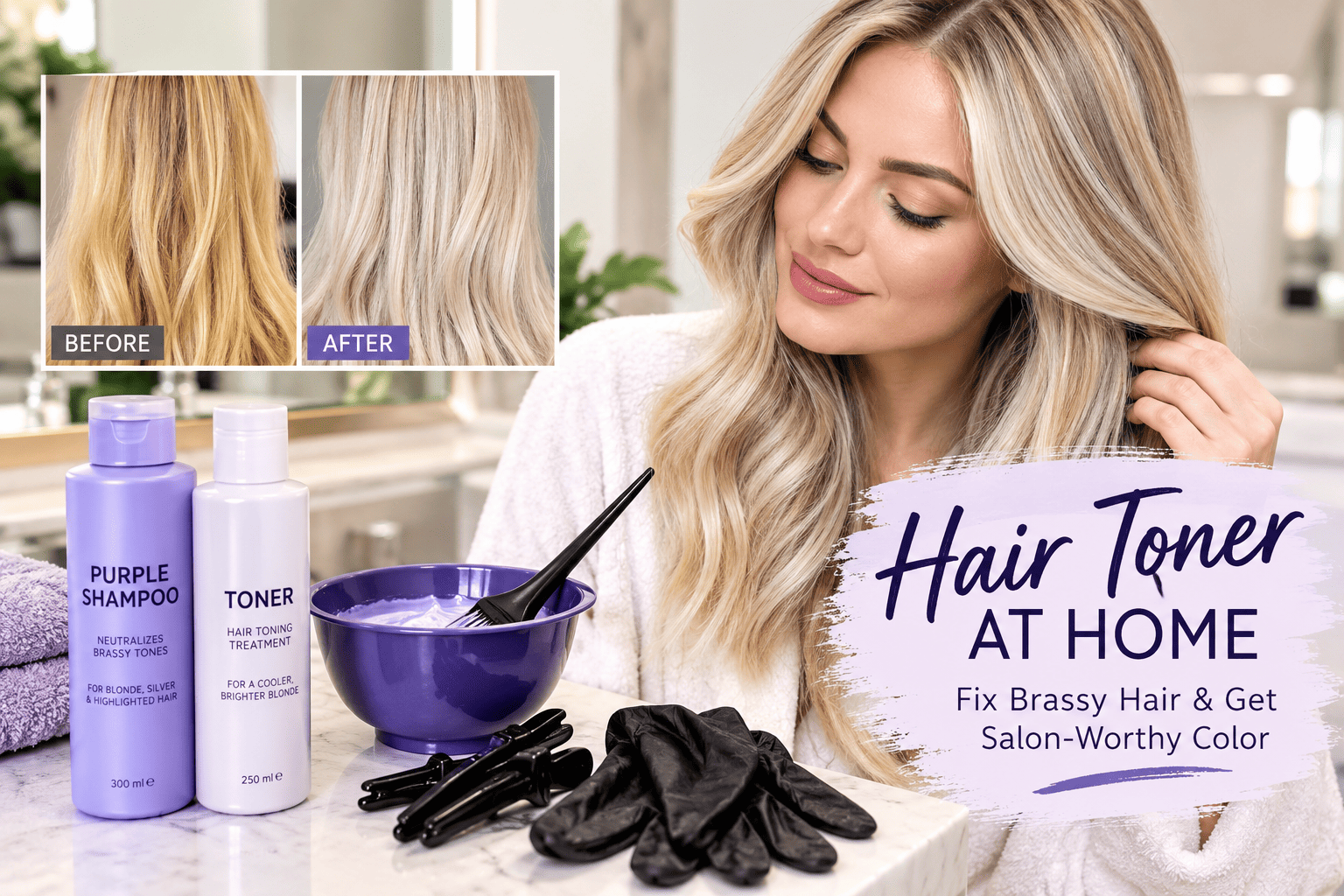
Gather the following items according to the instructions for your chosen product:
- A suitable hair toner or toning shampoo.
- Protective gloves.
- An application brush and non-metallic bowl, if required.
- Hair clips for separating sections.
- An old towel and protective clothing.
- A timer to follow the recommended processing period.
- A wide-tooth comb for gentle detangling.
- Conditioner or a suitable post-color treatment.
Not every toner requires a mixing bowl or brush. Some products are ready to use, while others must be mixed with a specific developer.
Never mix products randomly or substitute a different developer. Follow the manufacturer’s instructions, and never apply a product intended for professional use unless you understand its directions and safety requirements.
Step-by-Step Guide: How to Use Hair Toner at Home

Follow these steps to make your at-home hair-toning routine more controlled and predictable.
Step 1: Identify Your Current Hair Color
Start by examining your hair in natural daylight. Is it yellow, golden, orange, or a mixture of several shades?
Identify the result you want before choosing a toner. For example, purple-based products are generally intended for yellow tones, while blue-based products are designed for suitable orange tones.
If your hair is very dark orange but your goal is platinum blonde, toner alone is unlikely to achieve that result.
Step 2: Check Your Hair’s Condition
Hair that has been bleached repeatedly can become dry, brittle, porous, and more likely to absorb color unevenly.
Look for signs of breakage, excessive tangling, or a gummy texture when wet. If your hair is severely damaged, postpone chemical toning and seek professional advice.
A conditioning treatment may improve manageability, but it cannot reverse serious structural damage.
Step 3: Perform a Strand Test
Choose a small, discreet section of hair and apply the product according to its instructions.
Observe the resulting color, texture, and condition. A strand test can help you determine whether the shade becomes too cool, too dark, or uneven.
If the result is undesirable, do not proceed with your entire head.
Step 4: Complete the Required Allergy Test
Follow the exact allergy-alert testing instructions supplied with the product, including the specified timing.
Do not use the product if you experience itching, burning, redness, swelling, or another reaction during testing. A strand test and an allergy test serve different purposes; one does not replace the other.
If you have previously reacted to hair dye, consult a qualified professional before trying another formula.
Step 5: Prepare and Section Your Hair
Follow the instructions to determine whether your hair should be dry, damp, or freshly washed. Different formulas have different application requirements.
Divide your hair into manageable sections using clips. Wear gloves, protect your clothing, and keep the product away from your eyes and irritated skin.
Step 6: Apply the Toner Evenly
Apply the product according to its directions, paying attention to areas with unwanted warmth.
Work systematically so that each section receives the intended coverage. Avoid repeatedly applying a highly pigmented product to already cool or porous sections, as they may become darker or more violet than the rest of your hair.
For ready-to-use toning shampoos, follow the label rather than treating them like professional chemical toners.
Step 7: Follow the Recommended Processing Time
Use a timer and follow the exact processing time stated on the product label. Do not leave toner on longer in the hope of achieving a stronger result.
If you experience burning, significant discomfort, or irritation, rinse the product off immediately. Seek medical advice if symptoms are severe or persistent.
Step 8: Rinse and Condition
Rinse thoroughly as directed. Apply the recommended conditioner or aftercare product to help improve softness and manageability.
Avoid aggressive brushing or excessive heat styling immediately afterward, particularly if your hair has already been bleached.
Step 9: Evaluate the Final Result
Check your hair in natural light once it is dry. Wet hair can look darker and may conceal uneven tones.
If some warmth remains, resist the urge to repeat the entire process immediately. Assess the result first and consult the product instructions or a professional about the safest next step.
Common Hair-Toning Mistakes You Should Avoid

Even a good toner can disappoint when it is used incorrectly. Avoid these common mistakes:
Choosing toner by brand or trend alone. A popular ash blonde product may not suit your starting color. Match the formula to your unwanted undertone and desired finish.
Expecting toner to lighten dark hair. Toner adjusts tone; it does not replace the lightening process required to achieve a much paler shade.
Leaving the product on too long. Excessive processing can create unwanted color and may increase irritation or damage, depending on the formula.
Ignoring porosity. Damaged ends may absorb pigment faster than healthier roots or mid-lengths, producing an uneven result.
Using purple shampoo every day without checking the instructions. Frequent use may contribute to dryness or unwanted violet buildup in some hair types.
Applying several color products together. Combining formulas without clear manufacturer guidance can create unpredictable results.
How to Maintain Your Hair Color After Toning

Maintaining your color is just as important as getting the initial result. With the right routine, you may be able to extend the time between toning sessions.
- Use a color-safe shampoo: Choose a gentle cleanser suitable for your hair type and color treatment.
- Use toning shampoo when needed: Purple or blue products can help maintain the appropriate tone, but follow the label and avoid overuse.
- Condition regularly: Conditioner and suitable hair masks can improve softness and reduce tangling.
- Limit excessive heat: Use lower heat settings where practical and apply an appropriate heat protectant.
- Protect your hair from the sun: Prolonged UV exposure may contribute to color fading and dryness. A suitable protective hair product can help.
- Monitor changes in tone: Water minerals, product buildup, and environmental exposure can affect the appearance of blonde hair.
Remember that hair toner gradually fades. The exact duration depends on the formula, washing frequency, hair porosity, and other factors. There is no single schedule that works for everyone.
How Often Should You Tone Your Hair at Home?
There is no universal toning schedule because different products work in different ways.
Purple or blue shampoos may be used occasionally when unwanted warmth becomes noticeable, provided the label allows it. Color-depositing conditioners and chemical toners have different usage requirements, so always follow their specific directions.
If your hair becomes excessively dry, dull, purple, or gray, reduce or stop using the toning product until you understand what is causing the change.
If you repeatedly need toner to correct strong orange or yellow tones, you may need a professional color consultation rather than more frequent applications.
Is At-Home Hair Toner Safe?
At-home toning can be suitable when you choose an appropriate product and follow all safety instructions. However, safety depends on the ingredients, your scalp condition, your hair’s history, and how the product is used.
Keep these precautions in mind:
- Never apply toner to an irritated or damaged scalp.
- Follow the manufacturer’s allergy-testing instructions.
- Do not use hair-color products on eyelashes or eyebrows unless specifically approved for that purpose.
- Avoid mixing different hair-color products unless the instructions explicitly permit it.
- Seek professional help if your hair is severely damaged or your color is significantly uneven.
If you develop facial swelling, difficulty breathing, or another sign of a severe allergic reaction, seek emergency medical care immediately.
Frequently Asked Questions About Hair Toner at Home
1. What is the best hair toner to use at home?
The best toner depends on your hair color and your desired result. Purple-based products are commonly used for yellow tones, while blue-based products can help neutralize orange tones in suitable hair colors. For subtle maintenance, a toning shampoo may be sufficient.
2. Can I tone my hair at home without bleaching it?
Yes. You can tone hair that has already been lightened or colored without bleaching it again. However, if your hair is too dark for your desired shade, toner generally will not make it sufficiently lighter.
3. How long should I leave toner in my hair?
Follow the exact processing time on your chosen product. Different formulas require different application methods and timings, so there is no single safe duration for every toner.
4. Does purple shampoo work as a hair toner?
Purple shampoo is a type of toning product that deposits purple pigments to help neutralize yellow tones. It can be useful for maintaining blonde, silver, or highlighted hair, but it may not be strong enough for significant color correction.
5. Why does my hair turn purple after toning?
Highly porous, light-colored hair can absorb purple pigment quickly, especially when a product is left on too long or used too frequently. Follow the label and perform a strand test before full application.
6. Can toner damage bleached hair?
Some toning products are relatively gentle, while others contain chemical ingredients that can irritate the scalp or contribute to damage when misused. Bleached hair is often more fragile, so choose your formula carefully and avoid unnecessary chemical processing.
7. Can I use hair toner on brown hair?
Yes, certain toners and color-depositing products are designed for brown hair. The correct formula depends on whether you want to reduce orange or red undertones, enhance shine, or adjust the overall color.
8. How can I make my hair toner last longer?
Use suitable color-safe hair care products, condition regularly, limit excessive heat styling, and avoid washing more frequently than your hair needs. Use toning shampoo only when necessary and according to its instructions.
Final Thoughts: Get Better Hair Color Without Unnecessary Salon Visits
Toning your hair at home can be a practical way to refresh blonde, highlighted, silver, or other color-treated hair. The key is understanding your current shade, identifying unwanted undertones, and selecting a product designed for your specific needs.
Remember that the secret to successful at-home hair toning is choosing the right formula, testing it first, and following the instructions carefully. More product or longer processing time does not automatically mean better results.
With a suitable toner and a consistent hair-care routine, you can help maintain a beautiful, balanced hair color while reducing unnecessary chemical treatments.
Beauty tip: If your hair is severely damaged, strongly orange, or unevenly colored, consult a qualified hair colorist before attempting a major correction at home.