
The Best Moisturizers for Acne-Prone Skin: 7 Secrets to Hydrated, Clearer-Looking Skin
Moisturizers for Acne-Prone Skin: How to Choose the Right One for Clearer, Healthier Skin
Acne-prone skin can be challenging to manage, especially when your face feels oily, develops frequent breakouts, or becomes dry and irritated after using acne treatments. Many people believe that applying moisturizer will make their skin greasier and cause more pimples. However, this is one of the most common skincare misconceptions.
The truth is that moisturizers for acne-prone skin can help maintain hydration, support the skin barrier, and reduce dryness caused by acne treatments. The key is choosing a formula that suits your skin type and does not feel excessively heavy or irritating.
Whether you have oily, combination, dry, or sensitive skin, the right moisturizer can become an important part of your daily skincare routine. In this guide, you will discover which ingredients to look for, which products to avoid, how to apply moisturizer correctly, and the mistakes that may be making your acne worse.
Why Does Acne-Prone Skin Need Moisturizer?
Acne develops through several processes, including clogged hair follicles, excess oil production, inflammation, and the activity of acne-associated bacteria. Moisturizer does not directly treat every cause of acne, but it can help create a healthier environment for your skin.
Your skin has a natural protective barrier that helps retain moisture and protect against external irritants. When this barrier becomes damaged, your skin may feel tight, flaky, itchy, or unusually sensitive.
Acne treatments such as benzoyl peroxide, salicylic acid, and topical retinoids can sometimes contribute to dryness and irritation. Without appropriate moisturizing, these side effects may make your skincare routine difficult to maintain.
A suitable moisturizer can help by:
- Supporting the skin’s natural moisture barrier.
- Reducing dryness, tightness, and flaking.
- Improving skin softness and comfort.
- Helping your skin tolerate certain acne treatments.
- Reducing moisture loss throughout the day.
Remember that moisturizer is not a replacement for acne medication. Instead, it complements your routine by supporting the condition of your skin.
1. Choose a Non-Comedogenic Moisturizer
One of the most important things to look for when shopping for moisturizers for acne-prone skin is the term non-comedogenic.
This label generally means that a product is formulated to be less likely to clog pores. Clogged pores can contribute to the development of acne, so choosing suitable skincare products may help reduce one potential trigger.
However, non-comedogenic does not guarantee that a product will work for everyone. Individual skin responses vary, and even a product marketed for acne-prone skin may cause irritation or breakouts in some people.
When comparing products, consider these features:
- Non-comedogenic labeling.
- A lightweight lotion, gel, or gel-cream texture.
- Fragrance-free ingredients if your skin is sensitive.
- Ingredients that support hydration and the skin barrier.
- A formula that feels comfortable without leaving a heavy residue.
You do not necessarily need an expensive moisturizer. A simple, affordable product with suitable ingredients may work just as well as a premium alternative.
2. Look for These Skin-Friendly Ingredients
The ingredients in your moisturizer can influence how well it hydrates your skin and how comfortable it feels. Understanding a few common skincare ingredients can make choosing a product much easier.
Hyaluronic Acid for Lightweight Hydration

Hyaluronic acid is a humectant, which means it helps attract and retain water in the skin.
It is often included in lightweight moisturizers because it provides hydration without requiring a rich, oily texture. This can make it appealing to people with oily or combination skin who still experience dehydration.
Hyaluronic acid may help your skin feel smoother, softer, and more comfortable. It does not directly eliminate acne, but it can support hydration as part of a balanced routine.
Ceramides to Support the Skin Barrier
Ceramides are lipids naturally found in the outer layer of your skin. They help maintain the skin barrier and reduce moisture loss.
If your skin becomes dry or irritated after using acne treatments, a moisturizer containing ceramides may be particularly useful.
Look for formulas that combine ceramides with other moisturizing ingredients. Such combinations can help support the barrier while keeping your skin hydrated.
Glycerin for Everyday Moisture
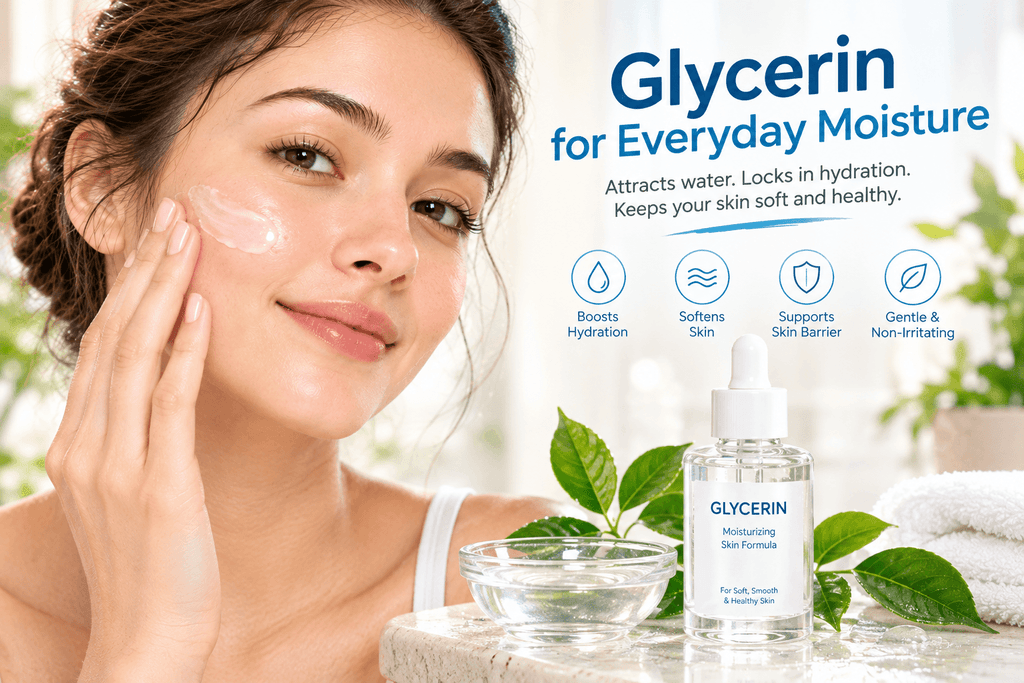
Glycerin is another effective humectant found in many affordable moisturizers.
It attracts water and helps improve skin hydration. Because it is commonly used in lightweight formulations, glycerin can be suitable for many skin types, including oily and acne-prone skin.
A moisturizer containing glycerin may be especially helpful if your face feels tight after cleansing.
Niacinamide for Balanced-Looking Skin
Niacinamide, a form of vitamin B3, is frequently used in skincare products designed for oily or blemish-prone skin.
It may help support the skin barrier, improve uneven skin tone, and reduce the appearance of excess shine for some people. It also has anti-inflammatory properties that may benefit irritated skin.
However, higher concentrations are not automatically better. If your skin is sensitive, start with a gentle formula and discontinue it if you experience persistent irritation.
Squalane for Softness Without a Heavy Feel
Squalane is an emollient that helps soften the skin and reduce moisture loss.
It can be found in lightweight moisturizers and may suit people who need additional hydration but dislike thick creams.
As with any ingredient, the complete formulation matters more than a single ingredient listed on the label.
3. Which Moisturizer Is Best for Your Skin Type?
There is no single best moisturizer for every person with acne-prone skin. The right choice depends on how much oil your skin produces, how easily it becomes irritated, and whether you experience dryness.
Best Moisturizer for Oily, Acne-Prone Skin
If your face becomes shiny within a few hours of washing, consider a lightweight, oil-free gel or lotion.
Look for glycerin, hyaluronic acid, and niacinamide if your skin tolerates them. These ingredients can provide hydration without necessarily creating a heavy feeling.
You do not need to remove every trace of oil from your skin. Excessively drying your face may increase irritation and make your routine harder to maintain.
Best Moisturizer for Dry, Acne-Prone Skin
Dry skin can still develop acne. If your face feels tight, flakes around the nose, or becomes uncomfortable after cleansing, you may need a richer moisturizer.
Look for ceramides, glycerin, and emollients that help reduce water loss. A cream may be more appropriate than a gel when your skin needs extra protection.
Choose a formula labeled non-comedogenic when possible, and introduce new products gradually.
Best Moisturizer for Combination Skin
Combination skin often has an oily forehead, nose, and chin but drier cheeks.
A lightweight lotion or gel-cream can provide a useful middle ground. You can also apply a slightly thicker layer to dry areas and a thinner layer to oilier areas.
There is no need to use the same amount of moisturizer everywhere if different parts of your face have different needs.
Best Moisturizer for Sensitive, Acne-Prone Skin
If your skin frequently stings, becomes red, or reacts to fragranced products, choose a simple, fragrance-free moisturizer.
Ceramides and glycerin may help support hydration without introducing unnecessary complexity into your routine.
Avoid adding several new active ingredients at once. If you have persistent burning, swelling, or a rash, stop using the suspected product and seek medical advice.
4. Ingredients and Formulas to Approach Carefully
Not every ingredient that sounds rich or powerful is necessarily unsuitable for acne-prone skin. The complete formula, concentration, and your individual response all matter.
Still, there are several things worth considering when choosing a moisturizer.
Heavy or greasy textures: Some people find thick products uncomfortable or notice breakouts when using particular formulations. This does not mean all creams or oils clog pores. Choose a texture that works for your skin.
Added fragrance: Fragrance can irritate sensitive skin. A fragrance-free formula is often a sensible starting point if you experience redness or stinging.
Excessive exfoliating ingredients: Using multiple products containing salicylic acid, glycolic acid, or other exfoliating ingredients may cause dryness and irritation. Your moisturizer does not need to contain exfoliating acids to be effective.
Harsh alcohol-based formulas: Certain products with a high concentration of drying alcohols may worsen discomfort for some people. However, not all alcohols in skincare are harmful; fatty alcohols such as cetyl alcohol can help soften and stabilize formulations.
Too many active ingredients: Combining several acne treatments without a clear plan may compromise your skin barrier. Introduce new treatments gradually and follow the product directions.
If you suspect a moisturizer is causing breakouts, consider its other ingredients and your overall routine rather than assuming one ingredient is always responsible.
5. How to Apply Moisturizer to Acne-Prone Skin
Even a suitable moisturizer may be less comfortable if you apply it incorrectly or combine it with irritating products.
Follow these simple steps to make moisturizing part of a consistent routine.
Step 1: Cleanse Gently
Wash your face with a mild cleanser suited to your skin type. Avoid aggressive scrubbing, rough cleansing brushes, and excessively hot water.
Washing too frequently can increase dryness and irritation. For many people, cleansing twice daily and after heavy sweating is sufficient.
Step 2: Apply Acne Treatments as Directed
If you use a prescribed acne treatment, follow your clinician’s instructions regarding the order and timing of application.
Some treatments are applied to clean, dry skin, while others have different instructions. Do not change your medication routine simply because you have introduced a moisturizer.
Step 3: Apply a Suitable Moisturizer
Spread a small amount of moisturizer gently over your face. You generally do not need to rub it vigorously into your skin.
Apply enough to keep your skin comfortable without leaving an unpleasantly thick layer.
Step 4: Finish With Sunscreen in the Morning
Use a broad-spectrum sunscreen with SPF 30 or higher during the day. Choose a formula that feels comfortable on your skin and is labeled non-comedogenic if possible.
Sun protection is particularly important when your routine includes treatments that can increase sensitivity to sunlight or when you are managing post-acne dark marks.
At night, cleanse gently, apply any prescribed treatments as directed, and finish with your moisturizer.
6. Common Moisturizing Mistakes That May Worsen Your Skin
Sometimes the problem is not the moisturizer itself but the way it fits into your routine.
Skipping Moisturizer Because Your Skin Is Oily
Oily skin still needs hydration. Skipping moisturizer may leave your skin feeling tight or uncomfortable, particularly if you use acne treatments.
Choose a lightweight formula rather than abandoning moisturizing altogether.
Using Too Many Acne Products
Combining several exfoliants, spot treatments, and strong cleansers can lead to irritation.
A simple routine is often easier to maintain: gentle cleanser, suitable acne treatment, moisturizer, and daytime sunscreen.
Changing Products Too Frequently
Switching moisturizers every few days makes it difficult to identify what works for your skin.
Introduce one new product at a time and monitor your skin over the following weeks. Stop sooner if you develop significant irritation or an allergic-type reaction.
Expecting Immediate Acne Results
Moisturizer can improve hydration and comfort relatively quickly, but acne usually requires a more targeted treatment plan.
Depending on the treatment, visible improvement may take several weeks. Do not judge a moisturizer solely by whether it clears existing pimples.
Applying Excessive Amounts
More moisturizer does not necessarily mean better hydration. Use enough to cover your face comfortably and adjust the amount according to your skin’s needs.
7. A Simple Daily Skincare Routine for Acne-Prone Skin
Consistency is more important than having a shelf full of products.
Morning routine
- Cleanse with a gentle face wash.
- Apply an appropriate acne treatment if it is part of your routine.
- Use a lightweight, non-comedogenic moisturizer.
- Finish with broad-spectrum SPF 30 or higher sunscreen.
Evening routine
- Remove makeup and sunscreen, then cleanse gently.
- Apply your prescribed or chosen acne treatment according to its instructions.
- Apply moisturizer to help maintain hydration and skin comfort.
If your skin becomes irritated, simplify the routine and seek professional advice about adjusting acne treatments. Avoid adding several new products while trying to identify the source of irritation.
You can also keep a simple skincare diary to record new products, changes in dryness, and possible breakout patterns.
8. How Long Does It Take to See Results?
The time required to notice a difference depends on what you expect the moisturizer to do.
Your skin may feel softer and more comfortable within a few applications. Dryness and flaking may gradually improve as the skin barrier recovers, although results vary depending on the cause and severity of irritation.
Acne improvement is a different matter. A moisturizer alone is unlikely to control persistent acne, and treatments specifically designed for acne often require several weeks to show meaningful results.
If you have deep, painful pimples, scarring, widespread acne, or breakouts that do not improve with appropriate care, consult a dermatologist. Early treatment can help reduce the risk of lasting scars.