
Guide to Types of Exercise: Cardio, Strength, Flexibility & Beyond
The Ultimate Guide to Types of Exercise: How to Build a Balanced Workout Routine
Cardiovascular exercise—often referred to simply as “cardio or aerobic training—is the cornerstone of physical fitness designed to elevate your heart rate, expand lung capacity, and improve the efficiency of your circulatory system. When you engage in cardio activities such as running, brisk walking, cycling, swimming, or rowing, your large muscle groups contract rhythmically, demanding a steady supply of oxygen that forces your heart and lungs to work harder. Over time, this consistent stress strengthens the cardiac muscle, lowers resting blood pressure, improves cholesterol profiles, and significantly reduces the risk of chronic conditions such as type 2 diabetes and coronary artery disease. Beyond its extensive physical health benefits, cardiovascular exercise triggers the release of neurotransmitters like endorphins and dopamine, making it a powerful natural antidote to stress, anxiety, and sluggish energy levels.
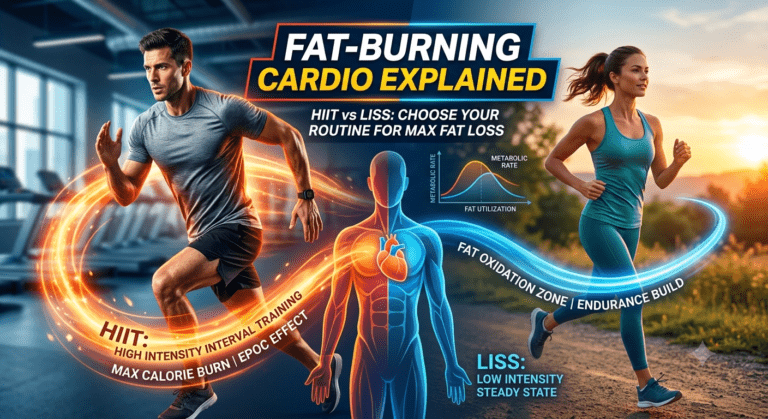
Comparing two popular forms of cardiovascular exercise. Source: Northwest Pharmacy
While cardiovascular health forms a strong foundation for endurance, true physical well-being requires a holistic approach. Fitness is not a one-size-fits-all endeavor; rather, it is comprised of several distinct pillars, each serving a unique role in how your body moves, repairs itself, and ages. Understanding the main categories of exercise—aerobic fitness, resistance training, flexibility, mobility, and functional balance—enables you to design a balanced routine that prevents injury, keeps workouts engaging, and maximizes long-term health benefits.
1. Cardiovascular (Aerobic) Exercise: Building Endurance and Heart Health
Aerobic exercise relies on continuous oxygen delivery to power sustained physical activity over an extended duration. It is generally categorized into low-to-moderate-intensity steady-state (LISS) training and high-intensity interval training (HIIT).
Benefits of Cardiovascular Exercise
- Heart and Vascular Health: Regular cardio strengthens the myocardium (heart muscle), allowing it to pump more blood per beat with less effort.
- Weight Management & Metabolic Rate: Aerobic movement burns calories efficiently during the workout and improves insulin sensitivity, aiding in blood sugar control.
- Mental Clarity and Mood Elevation: Often called the “runner’s high,” aerobic movement promotes neurogenesis (the growth of new brain cells) and reduces systemic inflammation linked to mood disorders.
Common Examples
- Brisk Walking and Running: Simple, accessible exercises that require minimal equipment.
- Cycling: Excellent low-impact cardio that targets the quadriceps, hamstrings, and glutes without straining joints.
- Swimming: A full-body workout that builds cardiovascular endurance while providing thermal regulation and zero-impact resistance.
- Rowing: Engages over 80% of the body’s muscle mass while elevating heart rate rapidly.
2. Strength and Resistance Training: Preserving Muscle and Bone Density
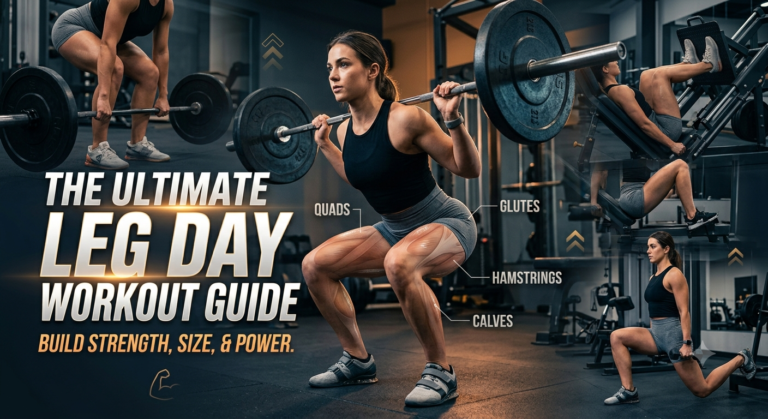
Strength training, or anaerob resistance exercise, involves working muscles against an opposing force to build muscular endurance, hypertrophy (size), and raw power. As humans age, muscle mass naturally declines—a process known as sarcopenia—making resistance training essential for men and women of all ages.
Structure of a basic strength training program. Source: Burnlab
Key Mechanisms and Benefits
When you lift weights or perform bodyweight resistance, you create micro-tears in the muscle fibers. As the body repairs these fibers during rest, muscles grow stronger and denser. Furthermore, the mechanical strain placed on bones during resistance training stimulates osteoblasts—cells responsible for building bone density—which directly combats osteoporosis.
Categories of Strength Training
- Free Weights: Barbells, dumbbells, and kettlebells allow for a natural range of motion and require stabilizing muscles to balance the load.
- Machine-Based Training: Resistance machines isolate specific muscle groups safely, making them ideal for beginners or rehab settings.
- Bodyweight (Calisthenics): Exercises like push-ups, pull-ups, squats, and planks build functional strength using your own mass.
- Resistance Bands: Elastic bands provide variable tension throughout the movement, making them portable and gentle on joints.
3. High-Intensity Interval Training (HIIT): Efficiency and Power
High-Intensity Interval Training (HIIT) bridges the gap between cardio and anaerobic strength training. It alternates short bursts of near-maximal effort (80%–95% of maximum heart rate) with brief periods of low-intensity recovery or rest.
The Science Behind HIIT
HIIT relies heavily on anaerobic energy systems during maximal bursts. Because oxygen consumption cannot keep up with energy demand during these intervals, the body incurs an oxygen debt. This leads to Excess Post-Exercise Oxygen Consumption (EPOC)—commonly referred to as the “afterburn effect.” EPOC allows your body to continue burning calories at an elevated rate for hours after the workout has concluded.
Core Advantages
- Time Efficiency: A typical HIIT session delivers significant cardiovascular and metabolic adaptations in just 15 to 30 minutes.
- Preservation of Lean Muscle: Unlike long-duration cardio, HIIT minimizes muscle catabolism (breakdown) while improving aerobic capacity.
- Versatility: HIIT can be performed using bodyweight movements, sprints, kettlebells, or cardio equipment.
4. Flexibility and Mobility: Restoring Range of Motion
Flexibility and mobility are frequently overlooked, yet they dictate how comfortably and safely you perform everyday movements and intense workouts alike. Although often used interchangeably, they refer to two distinct qualities:
- Flexibility: The passive capacity of a muscle to lengthen (e.g., reaching down to touch your toes).
- Mobility: The active ability of a joint to move through its full, controlled range of motion (e.g., performing a deep overhead squat with clean form).
Types of Stretching
- Dynamic Stretching: Active movements where joints and muscles go through a full range of motion (e.g., leg swings, arm circles). These are ideal as part of a pre-workout warm-up to prepare tissues for movement.
- Static Stretching: Holding a single position at the point of mild discomfort for 15 to 60 seconds. Static stretching is best performed after a workout when muscles are warm, helping to lengthen tight tissues and reduce post-exercise muscular tension.
- Proprioceptive Neuromuscular Facilitation (PNF): An advanced stretching technique involving alternating muscle contraction and relaxation, often used in physical therapy to rapidly improve passive flexibility.
5. Balance and Neuromuscular Training: Stability and Fall Prevention
Balance and coordination training focuses on strengthening the connection between the central nervous system and skeletal muscles. These exercises train proprioception—your brain’s subconscious awareness of where your body is positioned in space.
Why Balance Training Matters
As we age, proprioceptive feedback slows, increasing the risk of slips, trips, and severe falls. Incorporating stability work enhances joint alignment, strengthens small stabilizing muscles around the ankles, hips, and core, and improves athletic agility.
Effective Balance Exercises
- Single-Leg Stances: Standing on one leg while closing your eyes or standing on an unstable surface like a foam pad or Bosu ball.
- Tai Chi: A graceful, low-impact martial art that emphasizes weight shifting, slow movements, and posture.
- Core-Stability Work: Exercises like the “bird-dog,” side planks, and farmer’s carries that challenge your torso to resist unwanted rotation or flexion.
Comparing the Pillars of Exercise
To help you understand how these distinct exercise modalities complement one another, the table below highlights their main focus, ideal frequency, and target benefits:
| Exercise Type | Primary Focus | Recommended Weekly Frequency | Core Physical Benefit |
|---|---|---|---|
| Cardiovascular (Aerobic) | Heart rate elevation & endurance | 150 min (moderate) or 75 min (vigorous) | Cardiovascular health, calorie burn, mood enhancement |
| Strength Training | Resistance against muscles | 2 to 4 days per week | Increased muscle mass, bone density, metabolic boost |
| HIIT | High-effort anaerobic intervals | 1 to 3 days per week | Time-efficient fitness, EPOC afterburn, stamina |
| Flexibility & Mobility | Muscle lengthening & joint control | Daily or pre/post workout | Injury prevention, improved posture, range of motion |
| Balance & Stability | Proprioception & core alignment | 2 to 3 days per week | Fall prevention, joint stability, spatial coordination |
How to Structure a Balanced Fitness Routine
A healthy lifestyle does not require master-level execution in every single category every day. Instead, sustainable fitness relies on weekly balance. Combining aerobic work, strength training, and mobility ensures that no single muscle group is overtrained while preventing gaps in physical performance.
Sample Weekly Schedule
Monday:    Full-Body Strength Training + 10 min Post-Workout Static Stretch
Tuesday:   Moderate Cardio (30-45 min Running or Cycling)
Wednesday: Active Recovery (30 min Yoga, Mobility & Light Walking)
Thursday:  Upper/Lower Split Strength Training
Friday:    20-minute HIIT Workout + Core & Balance Drills
Saturday:  Low-Impact Cardio (Hiking, Swimming, or Recreational Sport)
Sunday:    Rest and Hydration
Safety and Progression Guidelines
- Prioritize Form Over Load: When beginning strength or HIIT routines, master bodyweight mechanics before adding heavy weights or extreme speed.
- Incorporate Rest: Muscles repair and adapt during rest days, not during the workout itself. Overtraining can lead to elevated cortisol, fatigue, and injury.
- Stay Consistent: Consistency will always outperform temporary intensity. Choose activities you genuinely enjoy to ensure long-term adherence.
Final Thoughts
Achieving optimal fitness isn’t about choosing between cardio, strength training, or yoga—it is about synthesizing them into a sustainable routine that supports your life goals. By nourishing your heart through cardiovascular exercise, protecting your joints and bones with resistance training, and maintaining your body’s movement through mobility and balance work, you build a resilient, strong, and capable body for years to come.