The 99¢ Enigma: Why Arizona Green Tea Refuses to Obey Inflation
The 99-Cent Anomaly
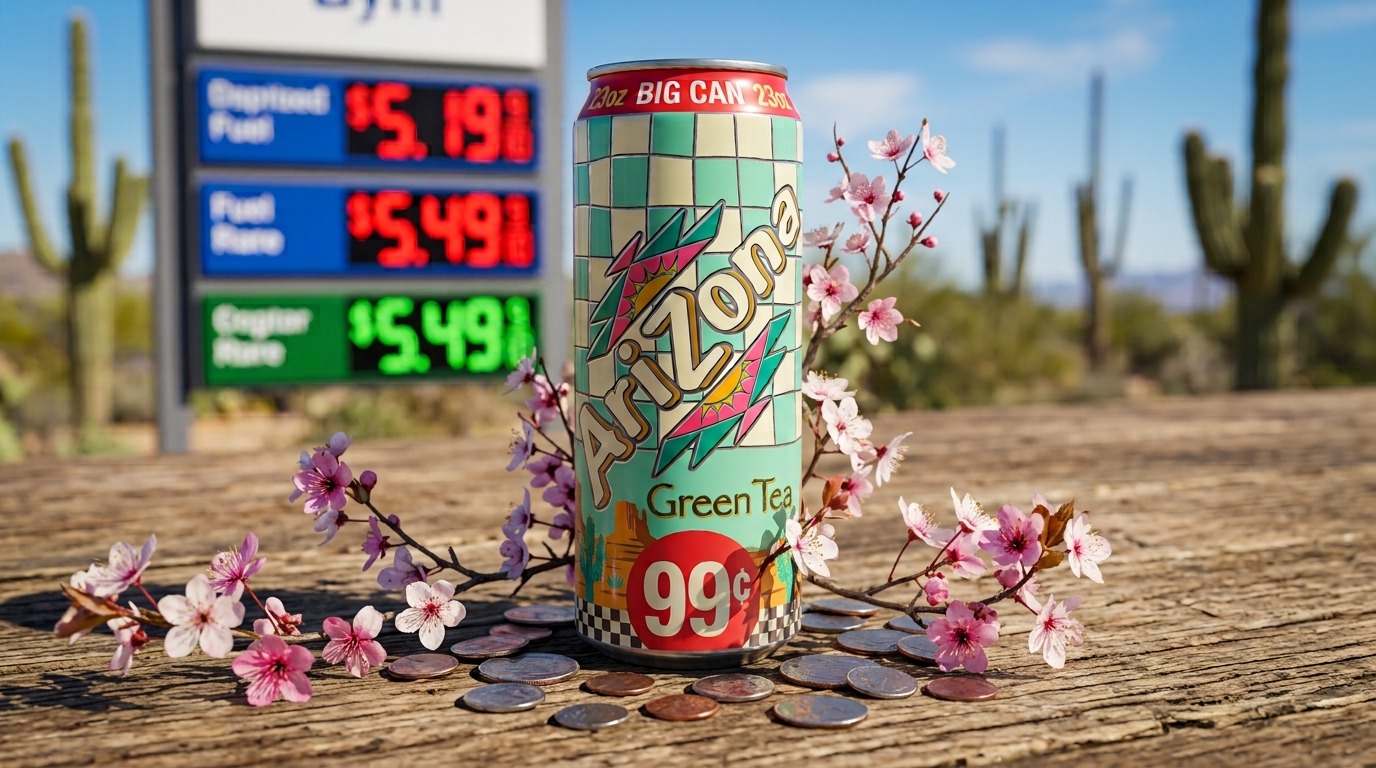
Walk into virtually any bodega, gas station, or supermarket across North America, and you will encounter a statistical anomaly resting inside the glass display case. Wrapped in seafoam green, ornate cherry blossom branches, and Southwestern geometric patterns sits the 23-ounce Big Can of AriZona Green Tea with Ginseng and Honey.
Stamped directly onto the aluminum is a bold, unyielding declaration: 99¢.
In a world dictated by aggressive economic shifts, record-high inflation, and “shrinkflation” (where products get smaller while prices rise), AriZona Green Tea has remained frozen in time. Since its introduction in the early 1990s, the price tag has not moved.
How does a global beverage titan sell 680 milliliters of liquid refreshment—housed in metal, shipped across continents, and stocked on retail shelves—for under a dollar without going bankrupt? Is it a marketing stunt, a philanthropic gesture, or a dark secret hidden deep within the supply chain?
Born on the Streets of Brooklyn
To understand how AriZona Green Tea defies economic logic, you have to look past the desert aesthetic. The drink was not born under the scorching sun of Phoenix or Tucson; it was conceived in Brooklyn, New York.
Co-founder Don Vultaggio built his business from the back of a delivery truck, initially selling beer in tough Brooklyn neighborhoods. When he noticed the meteoric rise of Snapple in the early 1990s, he realized there was an untapped goldmine in ready-to-drink iced tea. Vultaggio and his partner designed a tall, eye-catching 24-ounce tallboy-style can, named it after a sunny place he had never visited, and priced it aggressively at 99 cents.
When AriZona launched its signature Green Tea with Ginseng and Honey, it changed the market landscape. While competitors were selling 16-ounce glass bottles of plain black tea, AriZona was offering nearly a half-gallon of smooth green tea sweetened with honey and spiked with panax ginseng—for a fraction of the price.
Deconstructing the Formula: Health Elixir or Liquid Candy?
Part of the mystery surrounding AriZona Green Tea lies in its perception. The delicate pastel green can, decorated with blooming pink flowers and healthy keywords like ginseng, honey, and antioxidants, leads consumers to believe they are consuming an ancient wellness formula.
| Ingredient | Role in Flavor Profile | Consumer Perception vs. Reality |
| Filtered Water | Base hydration | Pure, clean liquid foundation |
| Premium Brewed Green Tea | Herbal base, slight astringency | Delivers real antioxidants, but mild strength |
| High Fructose Corn Syrup (HFCS) | Primary sweetener | Masks bitter tea tannins; highly processed sugar |
| Sue Bee Honey | Floral notes, smooth finish | Gives the “natural health” impression |
| Panax Ginseng Root Extract | Earthy undertones | Promoted for energy/focus, present in minimal amounts |
| Citric Acid & Ascorbic Acid | Tartness & stability | Vitamin C preservative that balances the heavy sugar |
While real green tea contains beneficial polyphenols and epigallocatechin gallate (EGCG), a standard 23 oz Big Can packs roughly 50 to 70 grams of sugar (primarily from high fructose corn syrup) and over 200 calories.
It isn’t a medical potion; it is a meticulously engineered indulgence. The heavy syrup cuts through the natural bitterness of green tea leaves, making it palatable to mass markets that typically reject bitter herbal brews.
The Secret Blueprint: How They Keep It at 99 Cents
How can AriZona maintain a 99-cent price point when aluminum costs fluctuate, fuel prices spike, and labor costs increase? The answer relies on extreme operational efficiency and refusal to play by traditional corporate rules.
1. Zero Traditional Advertising
Most beverage companies spend tens of millions of dollars on Super Bowl commercials, influencer endorsements, and massive billboard campaigns. AriZona spends zero dollars on traditional media advertising. The iconic, ornate can acts as its own billboard. By cutting out marketing agencies and ad budgets, AriZona saves massive overhead, passing those savings directly to the price tag.
2. Micro-Engineering the Can
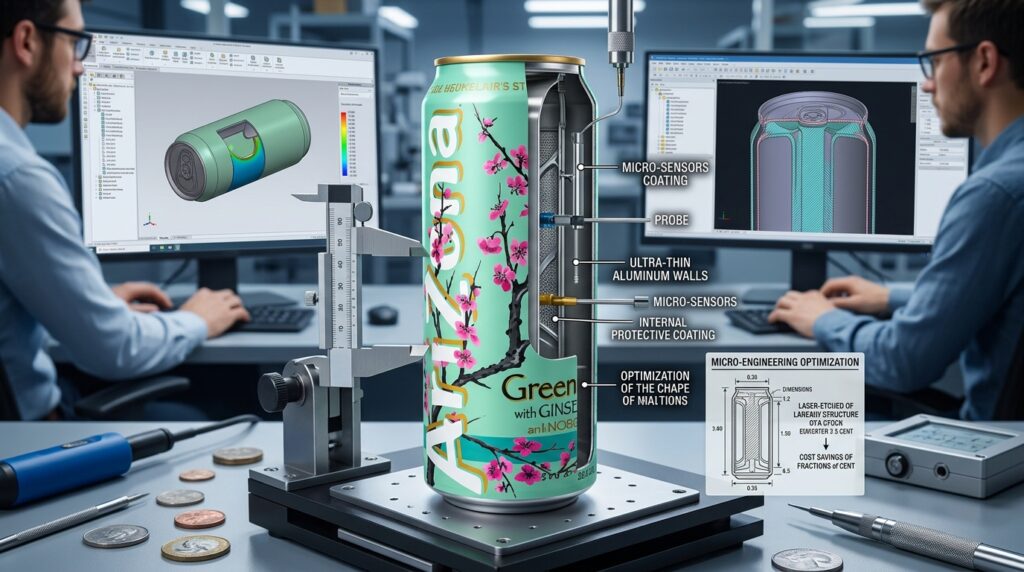
AriZona’s engineering team treats fractions of a cent as major battlegrounds. Over the decades, the company has redesigned its aluminum cans to use less metal. They thinned the walls of the cans, re-engineered the top lids to save tiny amounts of aluminum per unit, and optimized their recycled aluminum sourcing. When you produce billions of cans annually, saving $0.002 per can translates into millions of dollars in net profit.
3. Nighttime Logistics & High-Speed Bottling
Transporting heavy liquid across the country is expensive. To combat fuel costs, AriZona ships heavily during off-peak hours (like nighttime) to avoid traffic delays that waste gas. Furthermore, their modern production lines run at breakneck speeds—filling upwards of 1,500 cans per minute compared to the 150-can-per-minute speed of the early 1990s.
4. Privately Owned Independence
Because AriZona is a private, family-owned business led by Don Vultaggio, it does not answer to Wall Street shareholders demanding quarterly profit margins or continuous dividend growth. Vultaggio has publicly stated that he prefers to make less money per can while maintaining fanatical brand loyalty than squeeze his customer base for short-term profit spikes.
“I’m a guy from Brooklyn. I don’t need to make every last dime out there. We want to give people a product they can afford, every single day.”
— Don Vultaggio, Founder of AriZona Beverages
The Convenience Store Revolt: The “Covert” Price War
If you have stepped into a store recently, you might have noticed something strange: some independent retailers put price stickers over the 99-cent mark, charging $1.29, $1.49, or even $1.99.
This dynamic stems from a quiet war between independent store owners and AriZona corporate headquarters:
[AriZona Factory] ---> Ships 99¢ Pre-printed Cans ---> [Retailers Buy Wholesale]
                                                                |
                                             +------------------+------------------+
                                             |                                     |
                                   (Follows MSRP)                       (Marks Up Price)
                                             |                                     |
                                  Sells at 99¢ (Thin Profit)          Covers 99¢ with $1.49 Sticker
                                             |                                     |
                                   Happy Customers                      Customer Complaints
Because AriZona does not own the gas stations or corner stores selling their drinks, retailers technically have the legal right to charge whatever price they want. However, AriZona fights back by printing “GREAT BUY 99¢” in massive ink directly onto the aluminum. This forces stores that mark up the price to face angry customers who point right at the can.
In response to rogue store markups, AriZona even launched un-stamped cans for retailers who insist on higher margins, while reserving the classic 99-cent printed cans for partners who respect the original price point.
Pop Culture & Nostalgia as a Shield
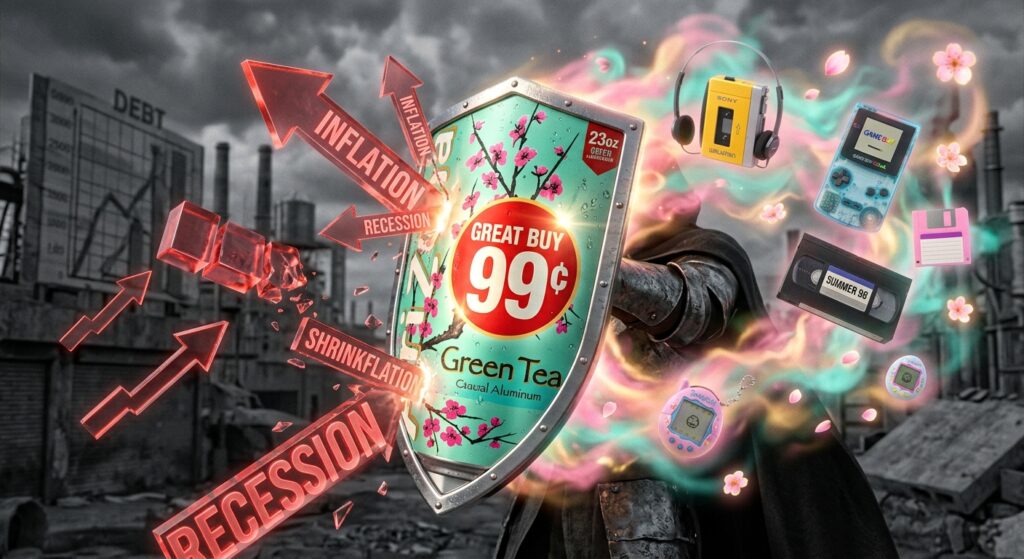
AriZona Green Tea has transcended its identity as a simple convenience store beverage; it has become a pop-culture icon and aesthetic movement.
During the mid-2010s “Vaporwave” internet aesthetic movement, the teal can with pink cherry blossoms was adopted as a symbol of nostalgic retro-futurism. Today, the design appears on streetwear, socks, sneakers, skateboards, and phone cases.
By becoming a cultural artifact, AriZona achieved something rare: unbeatable brand loyalty. For Gen Z, Millennials, and Gen X alike, buying an AriZona Green Tea brings back memories of walking home from middle school, summer road trips, and late-night study sessions. It represents one of the few constants in a rapidly changing world.
The Road Ahead: Can 99 Cents Last Forever?
As freight rates rise, global raw material costs shift, and inflation alters retail norms, consumers wonder how much longer the 99-cent Big Can can survive.
AriZona has already expanded into alternative product lines to diversify its revenue:
- 20 oz Plastic Bottles (often sold at higher profit margins)
- Gallon Jugs & Powder Mixes
- Hard AriZona Iced Teas (alcohol-infused versions targeting adult consumers)
- Fruit Snacks & Merch
By earning higher profit margins on these spinoff products, AriZona generates a financial buffer that subsidizes the classic 23 oz Green Tea can.
The 99-cent green tea is no longer just a beverage—it is a brand promise, a massive promotional tool, and a symbol of anti-inflationary resistance. As long as the Vultaggio family controls the company, that teal-and-pink can will continue to stand as the best deal in the grocery aisle.
Frequently Asked Questions About AriZona Green Tea
Why is AriZona Green Tea still 99 cents?
AriZona keeps its price at 99 cents by spending zero dollars on traditional media advertising, using hyper-efficient high-speed bottling facilities, optimizing aluminum usage in its cans, and operating as a privately owned family business that prioritizes long-term brand loyalty over maximum short-term profit margins.
Is AriZona Green Tea actually good for you?
While AriZona Green Tea contains real green tea extracts, antioxidants, and honey, it also contains significant amounts of added sugar (typically high fructose corn syrup). A single 23 oz Big Can delivers roughly 50 to 70 grams of sugar and around 200 calories, making it more of a sweetened beverage than a strict health drink.
How much caffeine is in a 23 oz AriZona Green Tea?
A standard 23 oz Big Can of AriZona Green Tea with Ginseng and Honey contains approximately 15 mg to 25 mg of caffeine. By comparison, a typical 8 oz cup of black coffee contains around 95 mg of caffeine, making AriZona relatively low in caffeine content.
Why do some stores charge more than 99 cents for AriZona Green Tea?
Independent retailers buy their stock wholesale and legally have the right to mark up retail prices to cover their own overhead costs or increase profit margins. AriZona prints “GREAT BUY 99¢” directly on the aluminum can to discourage retailers from marking up the price, though some stores sell un-stamped cans or place price stickers over the original tag.
Does AriZona Green Tea contain real honey and ginseng?
Yes, AriZona Green Tea is brewed with real Sue Bee® Honey and Panax Ginseng root extract. However, the primary sweetener in the beverage remains high fructose corn syrup, with honey and ginseng acting as complementary ingredients.
Where is AriZona Green Tea manufactured?
Despite the Southwestern name and desert aesthetic, AriZona Beverages was founded in Brooklyn, New York. Its corporate headquarters are located in Woodbury, New York, and the tea is produced and bottled across multiple regional facilities in North America.