

Green Tea Guide: Health Benefits, Types, & Brewing Secrets
The Ultimate Green Tea Guide: Health Benefits, Types, & Brewing Secrets
For thousands of years, green tea has been revered not merely as a comforting beverage, but as a potent elixir for vitality, mental clarity, and longevity. Originating in ancient China, this vibrant infusion has transcended cultural borders to become one of the most widely consumed beverages on Earth. Modern medical science now validates what traditional healers knew centuries ago: green tea is a nutritional powerhouse capable of enhancing cardiovascular health, boosting brain function, aiding weight management, and protecting cells against chronic oxidation.
Whether you are a seasoned tea connoisseur or a curious newcomer seeking healthier lifestyle habits, understanding the rich heritage, chemistry, varieties, and proper preparation of green tea can transform your daily habit into an extraordinary wellness ritual.
1. The Origins and Botany of Green Tea
All true teas—green, black, white, and oolong—originate from a single plant species: Camellia sinensis. What distinguishes green tea from its counterparts is not the plant itself, but how the harvested leaves are processed.
Harvesting (Camellia sinensis) ➔ Immediate Heat Fixation (Steaming/Pan-firing) ➔ Rolling ➔ Drying
To produce green tea, freshly picked leaves are immediately subjected to heat—either by steaming or pan-firing. This critical step deactivates the enzyme polyphenol oxidase, stopping oxidation in its tracks. Because the leaves retain their raw chemical structure, green tea preserves its vivid green color, delicate grassy flavors, and maximum antioxidant capacity.
2. The Science of Green Tea: Bioactive Compounds
The impressive health profile of green tea stems from its rich concentration of bioactive compounds. When you sip green tea, you ingest a complex matrix of vitamins, minerals, and plant nutrients.
┌─────────────────────────────────────────────────────────────────┐
│                   KEY GREEN TEA PHYTONUTRIENTS                  │
├───────────────────────────────┬─────────────────────────────────┤
│ Compound                      │ Primary Biological Role         │
├───────────────────────────────┼─────────────────────────────────┤
│ Epigallocatechin Gallate      │ Powerful antioxidant; neutral-  │
│ (EGCG)                        │ izes free radicals and supports │
│                               │ cellular defense systems.       │
├───────────────────────────────┼─────────────────────────────────┤
│ L-Theanine                    │ Nootropic amino acid; promotes  │
│                               │ calm focus and balances the     │
│                               │ jittery effects of caffeine.    │
├───────────────────────────────┼─────────────────────────────────┤
│ Polyphenols & Flavonoids      │ Anti-inflammatory action;       │
│                               │ supports vascular lining.       │
├───────────────────────────────┼─────────────────────────────────┤
│ Natural Caffeine              │ Mild central nervous system     │
│                               │ stimulant; boosts metabolic     │
│                               │ rate and alertness.             │
└───────────────────────────────┴─────────────────────────────────┘
3. Top Health Benefits Backed by Science
Enhanced Brain Function and Calm Focus

Green tea contains caffeine, but in moderate quantities (roughly 25 to 50 milligrams per cup, compared to 95 to 200 milligrams in coffee). This modest dose provides an energy boost without the rapid spikes and crashes associated with stronger stimulants.
More importantly, green tea contains L-theanine, an amino acid that crosses the blood-brain barrier. L-theanine increases the activity of the inhibitory neurotransmitter GABA, producing an anti-anxiety effect. It also increases dopamine and the production of alpha waves in the brain. The combination of caffeine and L-theanine creates a unique state of “sustained calm focus,” enhancing working memory, attention, and cognitive efficiency.
Weight Management and Metabolic Support

Green tea is a staple ingredient in many natural weight-loss supplements. Clinical research suggests that the combination of caffeine and EGCG exerts a synergistic effect on the metabolic rate.
- Thermogenesis: Green tea compounds help stimulate thermogenesis—the process by which the body burns calories to produce heat.
- Fat Oxidation: Studies indicate that green tea extract can increase fat oxidation, particularly during moderate physical exercise, helping the body mobilize fatty acids from fat tissue to use for energy.
- Insulin Sensitivity: Regular green tea consumption helps stabilize blood sugar spikes, curbing sudden cravings and supporting metabolic efficiency.
Cardiovascular Protection
Cardiovascular disease remains a leading cause of mortality worldwide. Epidemiological studies consistently show that regular green tea drinkers have a lower risk of developing heart conditions.
- Cholesterol Modulation: Green tea polyphenols reduce the absorption of dietary cholesterol and help lower low-density lipoprotein (LDL, or “bad”) cholesterol levels.
- Antioxidant Shielding: EGCG protects LDL particles from oxidation—a key triggering event in the formation of arterial plaque.
- Endothelial Support: Regular consumption improves endothelial function, allowing blood vessels to dilate more effectively and helping to maintain healthy blood pressure levels.
Cellular Health and Longevity
Free radicals are unstable molecules generated naturally by metabolism, pollution, UV radiation, and stress. Left unchecked, they cause oxidative stress, damaging cellular membranes, proteins, and DNA.
The catechins in green tea act as potent scavengers, neutralizing these reactive oxygen species before they can inflict cellular damage. While green tea is not a magic cure, long-term observational studies in populations with high green tea intake (such as in Japan and China) consistently correlate daily consumption with extended life expectancy and reduced incidence of age-related cellular decline.
4. Popular Green Tea Varieties You Should Know
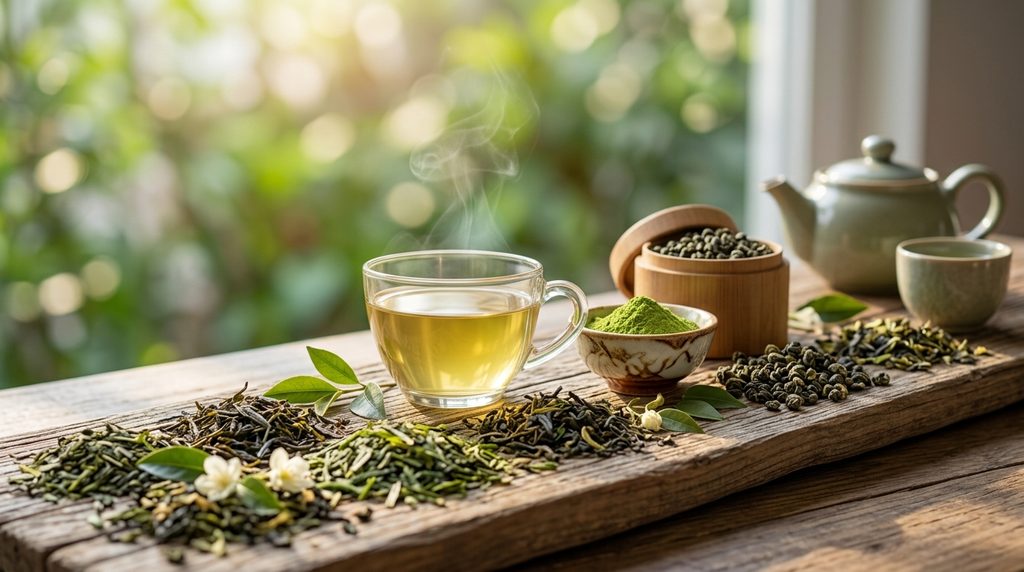
Not all green teas taste the same. Differences in soil, climate, shading techniques, and processing methods create a rich spectrum of flavor profiles.
                      ┌────────────────────────┐
                      │  GREEN TEA VARIETIES   │
                      └───────────┬────────────┘
                                  │
         ┌────────────────────────┴────────────────────────┐
         ▼                                                 ▼
  JAPANESE VARIETIES                               CHINESE VARIETIES
  (Steamed / Grassy / Umami)                      (Pan-Fired / Nutty / Toasty)

  • Sencha: Everyday favorite, bright green       • Longjing (Dragon Well): Flat leaf, chestnut note
  • Matcha: Stone-ground whole leaf powder        • Gunpowder: Tightly rolled pellets, smoky finish
  • Gyokuro: Shade-grown, deep umami flavor      • Jasmine Green: Scented naturally with jasmine flowers
  • Genmaicha: Blended with roasted brown rice
Japanese Varieties (Steamed)
Japanese green teas are traditionally steamed immediately after harvesting. This method imparts a vibrant emerald color and a fresh, oceanic, vegetable-like flavor profile rich in umami.
- Sencha: The most popular tea in Japan. It offers a balanced flavor combining sweet, astringent, and grassy notes.
- Matcha: A powdered green tea made from shade-grown leaves (tencha). Because you consume the entire leaf dissolved in water rather than an infusion, Matcha delivers a concentrated dose of antioxidants, L-theanine, and caffeine.
- Gyokuro: Grown under shade for three weeks prior to harvest. Shading boosts chlorophyll and L-theanine levels, resulting in a rich, sweet, deeply umami flavor with almost no bitterness.
- Genmaicha: A cozy blend of green tea leaves and toasted brown rice. The roasted rice adds a warm, nutty aroma and softens the astringency.
Chinese Varieties (Pan-Fired)
Chinese green teas are typically pan-fired or roasted in large wok-like vessels. This heating method yields softer, leaf-green colors and delicate nutty, toasty, or floral flavor notes.
- Longjing (Dragon Well): Famous for its flat, sword-shaped leaves and distinct sweet, roasted-chestnut flavor.
- Gunpowder: Leaves rolled tightly into tiny pellets that unfurl in hot water. It yields a bold, slightly smoky flavor.
- Jasmine Green: High-grade green tea leaves scented naturally with fresh jasmine blossoms, offering an aromatic, calming floral profile.
5. How to Brew Green Tea Perfectly Every Time
The most common complaint about green tea is that it tastes bitter or astringent. Bitterness is almost always caused by improper brewing technique—specifically using boiling water or steeping the leaves for too long, which extracts excess tannins.
┌─────────────────────────────────────────────────────────────────┐
│                   BREWING PARAMETERS CHEAT SHEET                │
├───────────────┬───────────────────┬───────────────┬─────────────┤
│ Variety       │ Water Temp        │ Leaf Quantity │ Steep Time  │
├───────────────┼───────────────────┼───────────────┼─────────────┤
│ Sencha        │ 160°F - 175°F     │ 1 tsp / 8 oz  │ 1 - 2 mins  │
│               │ (70°C - 80°C)     │               │             │
├───────────────┼───────────────────┼───────────────┼─────────────┤
│ Gyokuro       │ 120°F - 140°F     │ 1.5 tsp / 8 oz│ 2 - 3 mins  │
│               │ (50°C - 60°C)     │               │             │
├───────────────┼───────────────────┼───────────────┼─────────────┤
│ Dragon Well   │ 175°F - 185°F     │ 1 tsp / 8 oz  │ 2 - 3 mins  │
│               │ (80°C - 85°C)     │               │             │
├───────────────┼───────────────────┼───────────────┼─────────────┤
│ Matcha        │ 160°F - 175°F     │ 1/2 tsp / 2 oz│ Whisk until │
│               │ (70°C - 80°C)     │               │ frothy      │
└───────────────┴───────────────────┴───────────────┴─────────────┘
1.Filter Your Water:Prerequisite for clean flavor.
Use fresh, filtered water. Tap water with heavy mineral contents or chlorine masks the delicate aromas of green tea leaves.
2.Control Water Temperature:Never use rolling boiling water.
Boil your water and let it sit off the heat for 2 to 3 minutes to cool down to 160°F–180°F (70°C–80°C). Water that is too hot burns the delicate leaves and releases harsh tannins.
3.Measure Leaf to Water Ratio:Maintain balance.
Use roughly 1 teaspoon (2 to 3 grams) of loose-leaf green tea per 8 ounces (240 mL) of water. Adjust according to taste preference.
4.Time Your Steep:Avoid over-extraction.
Steep for 1 to 3 minutes maximum. Pour or strain immediately to stop extraction. High-quality loose leaves can often be re-steeped 2 to 3 times.
6. How to Integrate Green Tea into Your Daily Routine
Maximizing the benefits of green tea requires consistency. Here are practical ways to incorporate it seamlessly into your day:
- Morning Clarity: Replace your second cup of coffee with a bowl of ceremonial Matcha or a mug of Sencha to prevent the mid-morning coffee crash.
- Pre-Workout Fuel: Drink a cup of green tea 30 minutes before exercise to enhance fat oxidation and boost endurance naturally.
- Afternoon Reset: Enjoy a warm cup of Jasmine or Dragon Well green tea during your afternoon slump to reset your focus without disrupting night sleep.
- Culinary Uses: Add powdered Matcha to morning smoothies, oatmeal, yogurt bowls, or healthy baked goods for a vivid green hue and an extra nutrient boost.
Potential Side Effects and Considerations
While tea is safe for most healthy adults when consumed in moderation (3 to 5 cups per day), keep these factors in mind:
- Iron Absorption: The tannins in green tea can interfere with the absorption of non-heme (plant-based) iron. To prevent this, enjoy green tea between meals rather than directly alongside iron-rich food.
- Caffeine Sensitivity: Though lower in caffeine than coffee, drinking green tea late in the evening may disrupt sleep for sensitive individuals.
- Fasting Caution: Drinking strong tea on an entirely empty stomach can sometimes trigger mild nausea due to high tannin concentration. Pair it with a light snack if needed.
Integrate 2 to 3 high-quality cups of tea into your daily routine to enjoy a refreshing ritual that supports long-term health and wellbeing.
Frequently Asked Questions About Green Tea
Q: What is the best time of day to drink green tea? The best time to drink tea is mid-morning (between 10:00 AM and 11:30 AM) or about 30 minutes before a workout. Avoid drinking green tea late in the evening due to its caffeine content, and refrain from drinking it directly with iron-rich meals, as tannins can lower iron absorption.
Q: How many cups of green tea should I drink daily for maximum benefits? Drinking 2 to 3 cups of green tea per day provides an optimal dose of antioxidants (like EGCG) and L-theanine without causing caffeine jitteriness or digestive upset.
Q: Why does my green tea taste bitter, and how can I fix it? tea tastes bitter when brewed with boiling water or steeped for too long, which extracts harsh tannins. To fix this, use water cooled to 160°F–180°F (70°C–80°C) and limit steeping time to 1–2 minutes.
Q: Does green tea help with weight loss? Yes, tea can support weight management. The combination of caffeine and epigallocatechin gallate (EGCG) helps boost metabolic rate, improve thermogenesis, and enhance fat oxidation during exercise.
Q: Is Matcha better for you than regular green tea? Matcha offers a higher concentration of nutrients because you ingest the entire ground tea leaf rather than an infusion. As a result, a single cup of Matcha can deliver up to 3 times more antioxidants and higher caffeine levels than standard brewed green tea.
Q: Does green tea contain caffeine? Yes, tea naturally contains caffeine, typically ranging from 25 to 50 mg per 8 oz cup. This is significantly less than a standard cup of coffee, which contains 95 to 200 mg.
Q: Can I drink green tea on an empty stomach? It is generally better to avoid drinking green tea on an empty stomach. The high tannin content can stimulate stomach acid production, leading to mild nausea or acid reflux in sensitive individuals.