
The Secret Behind Fluttery Lashes: Is Your Eyelash Serum Silently Damaging Your Eyes?
Long, dark, and voluminous eyelashes have always been a universal symbol of youth, beauty, and allure. From false eyelashes and heavy layers of mascara to costly salon lash extensions, beauty lovers have tried almost every temporary fix imaginable. However, the modern beauty world promised a permanent solution to sparse hairs: Eyelash Serums.
With a quick swipe across the upper eyelid line once a night, these magical bottles claim to deliver natural, dramatic, flutter-worthy lashes within weeks. Social media feeds are flooded with striking before-and-after transformations, convincing millions of consumers to make lash conditioners a mandatory step in their nighttime skincare rituals.
Behind the glowing reviews and viral marketing campaigns, an important debate has quietly surfaced in dermatological and optometric circles. Do eyelash serums deliver genuine, healthy growth, or are they a temporary cosmetic fix with hidden, permanent side effects? Understanding how these formulas interact with hair growth dynamics, the underlying science behind active ingredients, potential hidden risks, and how to choose the right serum for your eye health is essential before making a purchase.
How Eyelashes Grow: The Science of the Lash Cycle
To understand how lash serums achieve dramatic length and density, it helps to examine the natural biological cycle of an eyelash. Unlike the hair on your scalp, which can grow continuously for up to six years, eyelashes have a significantly shorter lifespan—typically lasting between three and four months total.
The eyelash growth cycle operates in three distinct phases:
[Anagen Phase] ➔ [Catagen Phase] ➔ [Telogen Phase]
Active Growth      Transition       Resting & Shedding
(4 - 6 Weeks)     (2 - 3 Weeks)       (100+ Days)
- The Anagen (Growth) Phase: This is the active stage where the hair follicle produces new cells and the lash actively grows. For eyelashes, this phase lasts roughly 4 to 6 weeks.
- The Catagen (Transition) Phase: During this 2-to-3-week period, hair growth stops, and the hair follicle shrinks. If a lash falls out or is pulled out during this phase, it will not grow back until the entire cycle resets.
- The Telogen (Resting & Shedding) Phase: Lasting around 100 days, the lash rests quietly until it naturally falls out to make room for a new hair sprouting from the active Anagen phase.
Eyelash serums do not magically create brand-new hair follicles. Instead, they work by manipulating this precise biological clock—either by keeping the hair in the Anagen phase for a longer duration or by strengthening the lash strand so it resists premature breakage.
Decoding the Ingredient Label: Not All Serums Are Created Equal
The cosmetic market offers dozens of lash enhancers, but their internal chemistry varies dramatically. Broadly speaking, eyelash serums fall into three main formulation categories based on their primary active ingredients:
1. Prostaglandin Analogs (PGAs)
Prostaglandin analogs—such as Bimatoprost, Isopropyl Cloprostenate, Dechloro Dihydroxy Difluoro Ethylprostenolamide (DDDE), or Norbimatoprost—represent the most potent growth compounds in lash products. Originally developed inside prescription eye drops to treat glaucoma, medical professionals noticed an unexpected side effect: patients were growing remarkably long, thick eyelashes.
PGAs work by forcibly extending the Anagen growth phase, allowing lashes to reach extreme lengths before entering the shedding phase. While highly effective at delivering fast, dramatic results, they are also associated with the highest risk of cosmetic and ocular side effects.
2. Peptide-Based Formulas

Peptide-focused serums utilize short chains of amino acids (such as Myristoyl Pentapeptide-17 or Biotinyl Tripeptide-1) that serve as building blocks for natural keratin proteins. Rather than altering cellular growth signals, peptides fortify the structural integrity of the hair shaft, anchor the root deeply within the follicle, and stimulate collagen production at the root. They yield a gentler, steady improvement in lash density and thickness over time without changing ocular physiology.
3. Conditioning and Vitamin Formulas
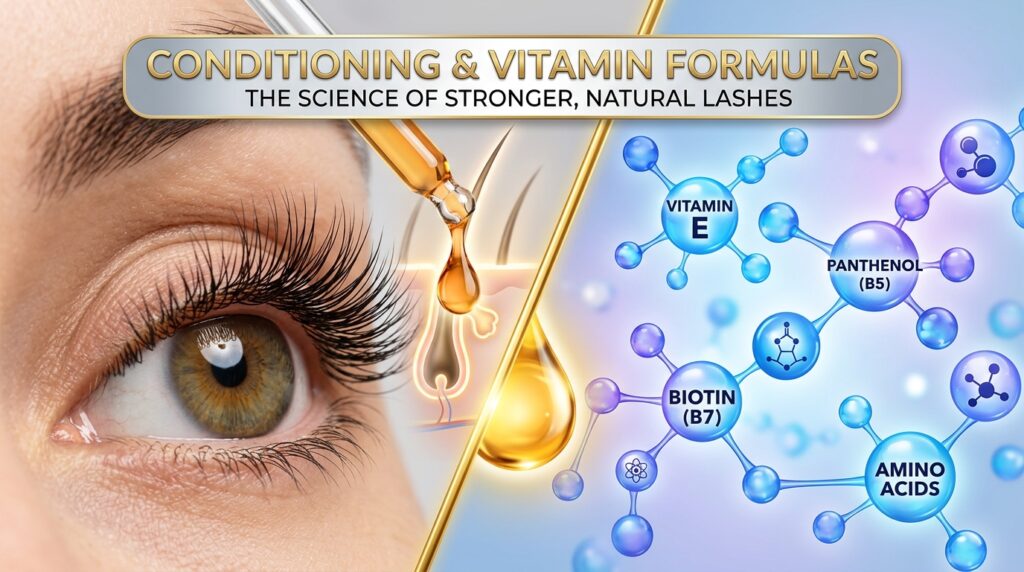
These botanical and vitamin-infused serums utilize ingredients like Biotin (Vitamin B7), Panthenol (Pro-Vitamin B5), Hyaluronic Acid, and natural oils (such as castor oil or green tea extract). They function primarily as deep-moisturizing hair conditioners. By coating each lash in protective hydration, they prevent hair brittle-ness and breakage caused by curling irons or waterproof mascara.
| Ingredient Class | Primary Function | Growth Speed | Risk Profile |
| Prostaglandin Analogs (PGAs) | Extends the active Anagen growth cycle | Very Fast (2–4 weeks) | High (Irritation, fat loss, pigmentation) |
| Peptides & Amino Acids | Stimulates keratin & reinforces roots | Moderate (6–8 weeks) | Very Low (Occasional sensitivity) |
| Vitamins & Botanicals | Hydrates shaft & prevents breakage | Slow (Conditioning only) | Extremely Low |
The Dark Side of Fast Results: Hidden Risks & Side Effects
While achieving long lashes can elevate your appearance, consumers must understand the potential side effects associated with synthetic growth compounds. Because the skin around the eyes is the thinnest and most delicate on the human body, applying harsh chemicals along the lash margin can lead to unintended consequences.
                ┌──────────────────────────────────┐
                │   Prostaglandin Analog Risks     │
                └─────────────────┬────────────────┘
                                  │
      ┌───────────────────────────┼───────────────────────────┐
      ▼                           ▼                           ▼
[Periorbital Fat Loss]    [Iris Pigmentation]     [Eyelid Hyperpigmentation]
Hollow, sunken-eye look    Permanent iris color   Reversible skin darkening
around orbits  darkening  along lash line
1. Periorbital Fat Loss (Prostaglandin-Associated Periorbitopathy)
One of the most concerning side effects documented by eye specialists is periorbital fat atrophy. Prostaglandin compounds can cause the delicate fat pads surrounding the eye socket to shrink. This leads to deep-set, sunken-looking eyes, hollowed upper eyelids, and an prematurely aged aesthetic around the orbital bone.
2. Irreversible Iris Discoloration
Prostaglandin analogs can stimulate melanin production in the melanocytes of the iris. For individuals with lighter or mixed-color eyes (such as hazel, green, or blue-brown), this can cause permanent darkening, turning lighter eyes into a solid dark brown.
3. Hyperpigmentation Along the Eyelid

A frequent cosmetic complaint is a dark, purplish or reddish band appearing along the upper eyelid margin right where the serum brush makes contact. This occurs when small capillary blood vessels dilate or excess pigment accumulates due to active chemical irritation. While usually reversible after stopping the serum, it can take months to fade completely.
4. Chronic Dry Eye & Meibomian Gland Dysfunction
Applying active cosmetic chemicals along the rim of the eye can clog or inflame the Meibomian glands—tiny oil-producing glands located inside the upper and lower eyelids. When these glands become irritated, they fail to secrete the protective lipid layer needed to keep tears from evaporating, causing painful chronic dry eye syndrome, redness, and swelling.
How to Apply Eyelash Serum Safely: Step-by-Step
If you decide to use an eyelash serum, correct application techniques drastically reduce your risk of irritation, gland blockage, or unwanted skin discoloration.
- Perform a Patch Test First: Apply a tiny droplet of serum to the inside of your wrist or behind your ear. Wait 24 to 48 hours to check for allergic reactions or skin redness before placing it near your eyes.
- Cleanse and Dry Thoroughly: Wash off all makeup, contact lenses, facial oils, and lingering eye creams. Apply the serum exclusively to completely clean, dry skin to avoid trapping contaminants against the delicate eye tissues.
- Apply a Minimal Amount: Wipe off excess liquid from the applicator brush onto the rim of the bottle. You only need a thin layer. Over-applying product does not speed up growth; it merely spills into the eye, raising the likelihood of red, bloodshot eyes.
- Target the Upper Lash Line Only: Carefully trace the base of your upper eyelashes—just like applying liquid eyeliner. Never apply serum to your lower lash line or directly onto the eyeball. Blink gently to distribute, wiping away any runaway drops immediately with a clean cotton swab.
- Maintain Daily Consistency: Consistency matters far more than quantity. Apply the serum once per day (preferably at bedtime). You should anticipate seeing gradual results between weeks 4 and 8.
Natural Alternatives and Lash-Care Tips
If you prefer to avoid high-risk chemical formulations altogether, you can foster healthy, fluttery lashes using safe, natural alternatives and gentle maintenance habits:
- Nutritional Support: Ensure your diet includes adequate protein, biotin, zinc, and iron. Hair follicles require essential micronutrients to synthesize healthy strands.
- Gentle Cleansing: Avoid aggressive scrubbing or pulling when removing eye makeup. Use a gentle, oil-based micellar cleanser to dissolve stubborn mascara effortlessly.
- Castor Oil and Cold-Pressed Oils: While organic cold-pressed castor oil or argan oil does not force cellular hair growth, it serves as a wonderful natural conditioner. Applying a drop to lash tips keeps them flexible and minimizes mechanical breakage.
- Avoid Waterproof Mascaras Daily: Waterproof formulas require harsh, repetitive rubbing to remove, which pulls out healthy lashes during their critical Anagen growth phase. Reserve waterproof makeup for special occasions.
Final Verdict: Is an Eyelash Serum Worth It?
Eyelash serums can yield impressive transformations, taking sparse, barely-there lashes and turning them into thick, sweeping curtains of hair. However, those dramatic results require clear consumer awareness.
If you prioritize safety and have sensitive eyes, opt for Prostaglandin-Free, Peptide-Rich lash formulas. While they take slightly longer to show visible volume, they nourish the hair follicle safely without risking eyelid fat loss, iris changes, or chronic eye dryness. Always read the ingredient list closely, stick to clean daily application habits, and listen to your body—if irritation occurs, discontinue use immediately to protect your vision and long-term eye health.