
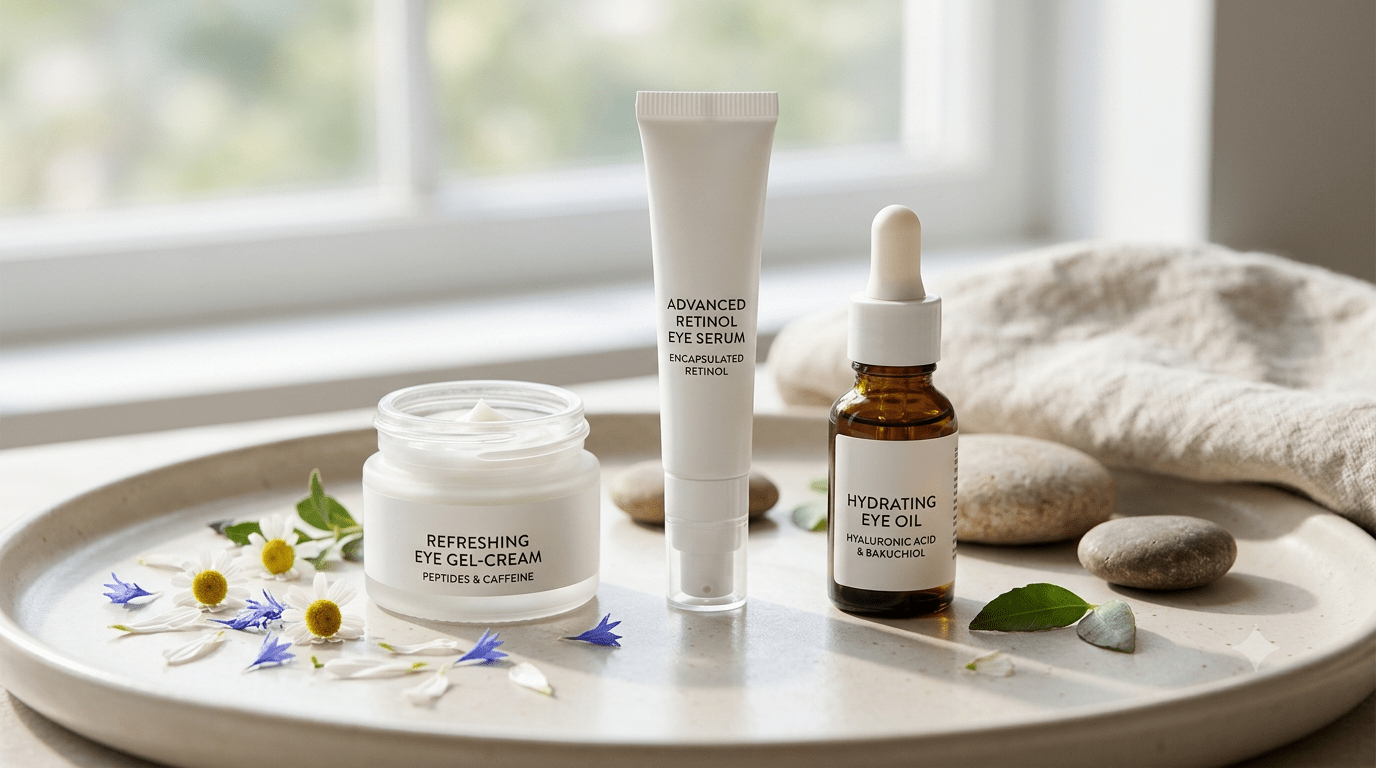
Ultimate Eye Cream Guide: Benefits, Ingredients & How to Choose
The delicate skin around your eyes is often the very first area to show signs of stress, fatigue, environmental damage, and natural aging. Whether you are battling stubborn dark circles after a late night, waking up with under-eye puffiness, or starting to notice fine lines around the outer corners, finding the right eye cream can make a noticeable difference in your skincare routine.
Despite its popularity, eye cream remains one of the most debated steps in modern skincare. Is a dedicated eye product truly necessary, or is it just a overpriced face moisturizer in a smaller jar?
In this comprehensive guide, we will break down the unique biology of the eye area, explore key ingredients backed by dermatological science, address common eye concerns, and show you exactly how to select and apply the ideal product for your skin.
1. The Biology: Why the Eye Area Requires Special Care
To understand why specialized eye products exist, it helps to look at the anatomy of facial skin. The skin surrounding your eyes (the periorbital area) is fundamentally different from the skin on the rest of your face and body.
A. It Is Exceptionally Thin
The skin around the eyes is the thinnest on the entire human body—measuring roughly 0.5 mm thick, compared to 2.0 mm on other parts of the face. Because it is so thin, blood vessels beneath the surface are much more visible, contributing directly to under-eye darkness.
B. Fewer Oil Glands
The periorbital region contains significantly fewer sebaceous (oil) glands than the forehead, nose, or cheekshttps://glowingcave.com/2026/07/19/guide-to-retinol-serum-benefits-side-effects-and-how-to-use-it-for-flawless-skin/. As a result:
- It produces less natural moisture.
- It is far more susceptible to dryness, dehydration, and flakey patches.
- The moisture barrier breaks down more easily, leading to earlier line formation.
C. Constant Muscle Movement
Your eyes are among the most active parts of your face. Between blinking (roughly 10,000 to 20,000 times a day), smiling, squinting, and expressing emotion, the underlying muscles (orbicularis oculi) are in perpetual motion. This repetitive mechanical stress causes dynamic expression lines to gradually turn into static wrinkles, commonly known as “crow’s feet.”
2. Common Eye Concerns & The Ingredients That Target Them
Not all eye creams perform the same function. Choosing the right product depends entirely on identifying your primary concern.
       Concern                     Key Active Ingredient
+---------------------+     +----------------------------------+
| Dark Circles        | --> | Vitamin C, Niacinamide, Caffeine |
+---------------------+     +----------------------------------+
| Puffiness / Bags    | --> | Caffeine, Peptides, Cold Roller  |
+---------------------+     +----------------------------------+
| Fine Lines / Aging  | --> | Retinol, Peptides, Bakuchiol     |
+---------------------+     +----------------------------------+
| Dryness / Flakiness | --> | Hyaluronic Acid, Ceramides       |
+---------------------+     +----------------------------------+
Concern 1: Dark Circles
Under-eye darkness generally falls into three main categories:
- Vascular: Caused by thin skin revealing pooled blood or dilated micro-vessels beneath.
- Hyperpigmentation: Caused by excess melanin production (common in darker skin tones or from sun exposure).
- Structural Shadows: Caused by deep-set eyes or age-related fat loss creating a hollow trough.
Ingredients to Look For:
- Vitamin C: Brightens skin tone, inhibits melanin synthesis, and boosts collagen production to thicken skin over time.
- Caffeine: Constricts blood vessels (vasoconstriction) to temporarily reduce the bluish tint of pooled blood.
- Niacinamide (Vitamin B3): Soothes inflammation, evens out pigmentation, and strengthens the skin barrier.
Concern 2: Under-Eye Puffiness and Bags
Puffiness is often caused by fluid retention (edema) due to high sodium intake, allergies, lack of sleep, or sleeping flat on your back. Permanent under-eye “bags,” however, are often structural fat pads shifting with age.
Ingredients to Look For:
- Caffeine: Helps drain excess fluid buildup and temporarily tightens the surface.
- Peptides: Signal proteins that encourage lymphatic drainage and support structural firmness.
- Soothing Botanicals: Green tea extract, chamomile, and cucumber extract help cool and calm inflamed tissue.
Concern 3: Fine Lines, Wrinkles, and Crow’s Feet
Fine lines are caused by a combination of collagen degradation, sun damage, and dehydration.
Ingredients to Look For:
- Encapsulated Retinol / Retinoids: The gold standard for stimulating collagen production and accelerating cell turnover. Encapsulated formulas release slowly to avoid irritating thin skin.
- Bakuchiol: A gentler, plant-derived alternative to retinol that provides anti-aging benefits without redness or peeling.
- Peptides (e.g., Matrixyl, Argireline): Help boost elasticity and relax subtle facial tension to smooth expression linehttps://safrinskincare.com.pk/products/eyeloxyl-dark-circles-eye-cream?gad_source=1&gad_campaignid=23657583302&gbraid=0AAAAA-YYB_wff6TwevI_oteBQ1r2Kykuq&gclid=CjwKCAjw1IHTBhAaEiwA4AYNFiEVkBVlLT1XXddbqIrEwJxt6_fG8o4kYw2Ocg0GdSd0pBGwyWpy8xoCrTMQAvD_BwEs.
Concern 4: Dehydration and Crepey Texture
When the eye area lacks water, fine lines appear deeper and the skin takes on a crinkled, paper-like (“crepey”) texture.
Ingredients to Look For:
- Hyaluronic Acid: Pulls water into the upper skin layers to instantly plump up fine dehydration lines.
- Ceramides & Squalane: Replenish crucial lipids, preventing moisture loss and maintaining a smooth, soft texture.
3. Eye Cream vs. Regular Moisturizer: Do You Really Need Both?
A common debate in skincare is whether an eye cream is essential or redundant.
When Your Facial Moisturizer Is Enough:
If your standard face moisturizer is fragrance-free, gentle, non-comedogenic, and adequately hydrating, you can safely bring it up to the orbital bone. If you only care about basic hydration and have non-sensitive skin, a separate eye cream may not be strictly necessary.
When a Dedicated Eye Cream Is Better:
- Sensitivity: Standard facial moisturizers often contain high concentrations of active acids (AHAs/BHAs), heavy fragrances, or potent retinoids that can cause burning, stinging, or contact dermatitis around the eyes.
- Targeted Concerns: Regular moisturizers rarely contain specialized concentrations of caffeine for puffiness or light-reflecting minerals for dark circles.
- Texture: Facial creams can sometimes be too rich, leading to milia—tiny, painless white keratin cysts that form under the skin when heavy oils clog delicate eye pores. Dedicated eye creams are formulated to hydrate without causing milia.
4. How to Properly Apply Eye Cream
Even the most advanced eye cream won’t deliver results if applied incorrectly. Gentle handling is essential to avoid stretching or irritating the tissue.
Step-by-Step Application Technique
- Amount: Use a pea-sized amount total for both eyes. Using too much product increases the risk of it migrating into the eye, causing stinginess or puffiness.
- Which Finger: Use your ring finger. It naturally exerts the least amount of mechanical pressure of all your fingers.
- Placement: Tap small dots along the orbital bone—the hard skeletal ridge surrounding your eye socket. Start at the inner corner under the eye, move outward along the bone toward the temple, and gently follow under the eyebrow.
- Motion: Tap or press softly until absorbed. Never drag, pull, or rub the skin aggressively.
- Avoid the Upper Lids (Unless Specified): Unless the product label explicitly states it is safe for the eyelids, avoid applying cream directly on the mobile upper eyelid. As you blink, warmth causes the product to travel toward the eye margin, leading to redness or irritation.
                  Step-by-Step Placement

                     ( Under Eyebrow )
                   . - - - - - - - - .
                 '                     '
               '                         '
     (Inner Corner)   [ Eye Socket ]    (Outer Corner / Temple)
               '                         '
                 ' - - - - - - - - - - '
                     ( Orbital Bone )
5. Day vs. Night Eye Care Routines
To get the most out of your investment, tailor your eye care choices to the time of day.
| Feature | Daytime Eye Routine | Nighttime Eye Routine |
|---|---|---|
| Primary Goal | Protection, de-puffing, brightening | Repair, hydration, collagen synthesis |
| Key Ingredients | Caffeine, Vitamin C, Antioxidants, SPF | Retinol, Heavy Peptides, Ceramides, Rich Oils |
| Texture | Lightweight gel or fluid (wears well under makeup) | Richer cream or nourishing balm |
| Bonus Tip | Look for tint or light-reflecting mica for cosmetic brightening | Use a cooling eye mask or silk sleep mask to retain moisture |
Pro Tip for Sun Protection: Sun damage is a leading cause of premature aging around the eyes. Always apply a broad-spectrum mineral SPF up to the orbital bone during the day, or wear UV400-rated sunglasses outdoors.
6. How to Prevent and Treat Milia
Milia are tiny, raised, firm white bumps that frequently appear under the eyes. They occur when dead skin cells (keratin) become trapped beneath the surface.
Causes of Milia Around the Eyes:
- Using overly occlusive, heavy body or face creams in the eye zone.
- Inadequate cleansing or leaving eye makeup on overnight.
- Lack of natural exfoliation in the periorbital area.
How to Avoid & Treat It:
- Switch to a gel-based or lightweight fluid eye product.
- Look for eye products containing mild chemical exfoliants (like gentle PHAs) or low-dose retinol to encourage cell turnover.
- Never attempt to pop or squeeze milia at home. Because the skin is thin, squeezing can cause permanent scarring or broken capillaries. Consult a licensed dermatologist or aesthetician for safe extraction.
Invest in Your Eye Care Ritual
The skin around your eyes works hard every day. While no eye cream can instantly erase genetic dark circles or deep structural fat loss overnight, a well-formulated product can dramatically improve hydration, smooth fine lines, reduce puffiness, and brighten your overall appearance.
By understanding your specific skin needs, selecting targeted ingredients like peptides, caffeine, or hyaluronic acid, and applying them with a delicate touch, you can protect and refresh your eye area for years to come.