The Secret Below the Surface: Why Your Skincare Routine Fails (and the Gut Secret to Radiant Skin)
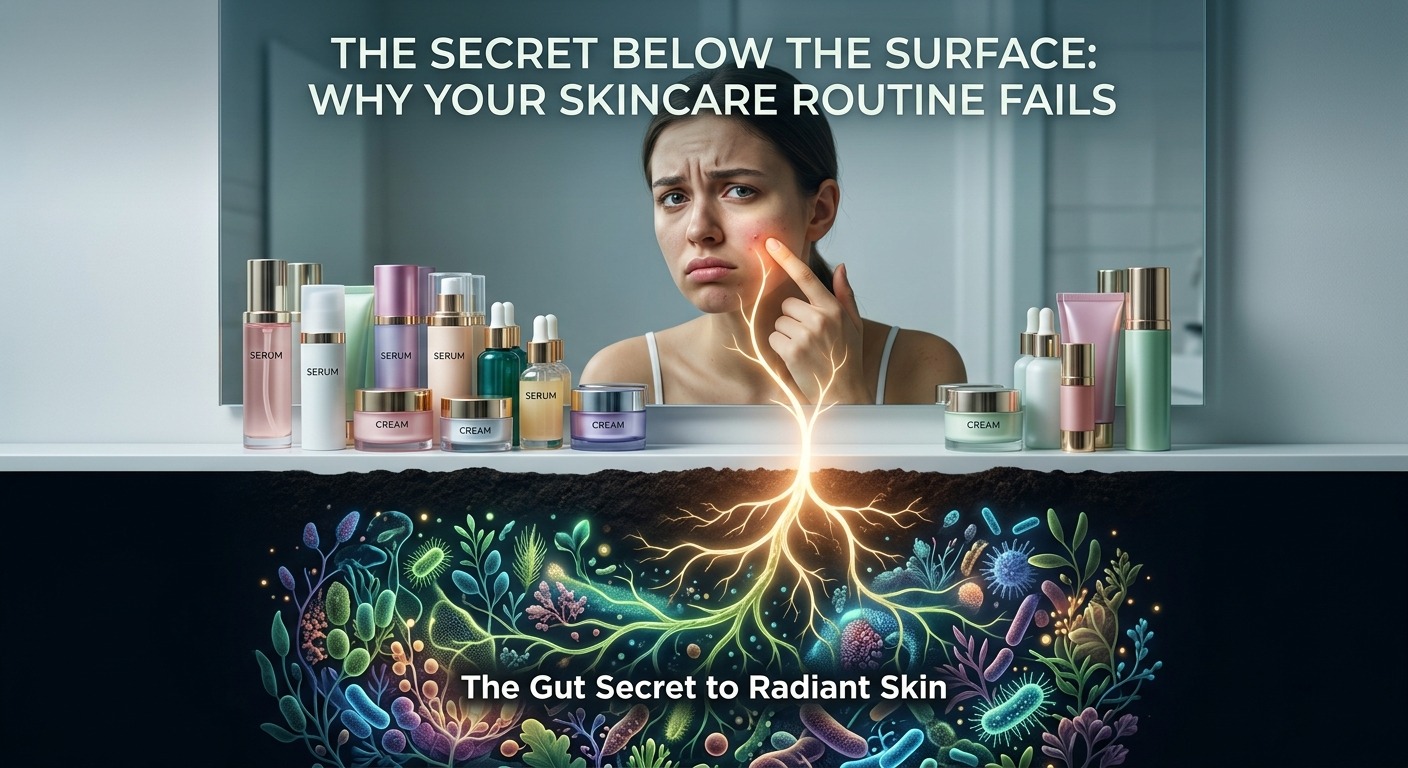
You’ve tried every luxury serum on the shelf. You double-cleanse, apply retinol with clinical precision, wear sunscreen every single morning, and invest in high-end moisturisers. Yet, stubborn breakouts, dullness, or unexpected redness continue to surface.
What if the root cause of your skin struggles isn’t on your face at all?
Deep within your digestive system lies an intricate, hyper-communicative network known as the gut-skin axis. Emerging dermatological and microbiological research shows that your intestinal tract and your skin share a direct communication channel. When your gut microbiome thrives, your skin mirrors that health with clarity, bounce, and luminescence. But when your internal balance slips, your skin acts as an early-warning alarm system.
Here is how the gut-skin connection functions, why expensive topical products can’t fix internal imbalance, and what you should eat to achieve a clear, radiant complexion from the inside out.
What Is the Gut-Skin Axis?
The gut-skin axis is the bidirectional communications network connecting your gastrointestinal tract directly to your cutaneous system (your skin). This connection operates through three primary mechanisms: immune signaling, neuroendocrine pathways, and metabolic bi-products.
The physiological pathway connecting gut microbiota to skin barrier function.. Source: MDPI
1. The Immune Connection
Roughly 70% to 80% of your body’s immune cells reside in the gut. When the lining of your intestines becomes inflamed or compromised, immune cells release pro-inflammatory cytokines into the bloodstream. These signals travel throughout the body, landing directly in your dermal layers and triggering flare-ups like acne, rosacea, eczema, and psoriasis.
2. Leaky Gut and Systemic Inflammation
The intestinal barrier acts as a selective gatekeeper, letting nutrients in while keeping pathogens, undigested food particles, and toxins out. When this barrier weakens—a condition known as increased intestinal permeability or “leaky gut”—bacterial metabolites like lipopolysaccharides (LPS) escape into the circulatory system. Your body views these escaped particles as invaders, sparking systemic inflammation that shows up as facial breakouts and sensitivity.
3. The Short-Chain Fatty Acid (SCFA) Bridge
When beneficial gut microbes ferment dietary fiber, they produce compounds called short-chain fatty acids (SCFAs)—primarily acetate, propionate, and butyrate. SCFAs help regulate epidermal differentiation, support skin barrier integrity, and prevent excessive water loss, keeping your skin naturally hydrated and supple.
Red Flags: Is Your Gut Causing Your Skin Issues?
Topical issues often come with subtle digestive warning signs. You may be dealing with a gut-skin imbalance if you experience skin concerns alongside:
- Frequent Bloating or Irregularity: Indigestion after normal meals often signals dysbiosis (an imbalance between good and bad bacteria).
- Breakouts Clustered on the Lower Face: Hormonal acne around the chin and jawline is closely tied to how efficiently the gut and liver metabolize and excrete excess estrogen.
- Sudden Skin Sensitivity: Reactive skin that suddenly tolerates fewer products often points to elevated systemic inflammation originating in the gut.
- Stubborn Dryness or Eczema: A compromised intestinal lining reduces your body’s ability to absorb skin-essential fatty acids and fat-soluble vitamins (A, D, and E).
What to Eat for a Clear, Radiant Complexion
Transforming your skin requires shifting your focus from quick-fix topical treatments to dietary fuel that nurtures your microbiome. Here are the core nutritional pillars for glowing, clear skin.
       ┌────────────────────────────────────────────────────────┐
       │                THE RADIANT SKIN DIET                   │
       └────────────────────────────────────────────────────────┘
                                   │
         ┌─────────────────────────┼─────────────────────────┐
         ▼                         ▼                         ▼
  ┌─────────────┐           ┌─────────────┐           ┌─────────────┐
  │ PREBIOTICS  │           │ PROBIOTICS  │           │ ANTIOXIDANTS│
  │ Feed Good   │           │ Seed New    │           │ Shield Dermal│
  │ Bacteria    │           │ Microbes    │           │ Collagen    │
  └─────────────┘           └─────────────┘           └─────────────┘
1. Prebiotic Fiber: Feeding Your Skin-Protective Microbes
Prebiotics are non-digestible fibers that pass through the upper digestive tract to feed beneficial bacteria in your colon.
- Top Choices: Garlic, onions, leeks, asparagus, green bananas, and Jerusalem artichokes.
- Skin Benefit: Consuming prebiotic fiber boosts SCFA production, helping lock in skin moisture and maintain a strong dermal barrier.
2. Probiotic-Rich Foods: Cultivating Diversity
Probiotics introduce live, beneficial microorganisms into your digestive tract to outcompete acne-causing bacteria.
- Top Choices: Unsweetened plain kefir, wild-fermented sauerkraut, kimchi, traditional miso, and kombucha.
- Skin Benefit: Fermented foods lower systemic markers of inflammation, helping calm reactive conditions like rosacea and redness.
3. Polyphenols: The Microbiome’s UV Shield
Polyphenols are plant compounds rich in antioxidants that pass largely unabsorbed to the colon, where gut microbes break them down into active skin-protective metabolites.
- Top Choices: Dark leafy greens, wild blueberries, dark cocoa (70%+), pomegranate seeds, and high-quality green tea (EGCG).
- Skin Benefit: Polyphenols neutralize free radicals caused by UV radiation and environmental pollution, preventing collagen degradation and premature aging.
4. Essential Omega-3 Fatty Acids: Soothing Cellular Inflammation
Omega-3 fats are essential components of healthy cell membranes, helping your skin retain moisture and keep irritants out.
- Top Choices: Wild-caught salmon, sardines, mackerel, flaxseeds, chia seeds, and walnuts.
- Skin Benefit: Omega-3s help regulate sebum production, preventing oil from thickening and clogging pores.
Foods to Limit for Clear Skin
Just as certain foods nourish your gut microbiome, others disrupt it. Minimizing these common culprits helps protect both your gut lining and your skin:
| Food Category | Gut Impact | Skin Consequence |
|---|---|---|
| Refined Sugars | Feeds pathogenic yeast (Candida) and inflammatory bacteria | Causes glycation, damaging collagen and speeding up wrinkle formation |
| Ultra-Processed Oils | High in pro-inflammatory Omega-6 fatty acids | Promotes systemic inflammation and aggravates cystic acne |
| Artificial Sweeteners | Alters bacterial composition and reduces microbiome diversity | Can lead to unexplainable breakouts and digestive distress |
| Conventional Dairy | Can trigger insulin-like growth factor 1 (IGF-1) in sensitive individuals | Stimulates excess sebum production and pore congestion |
4-Step Daily Protocol for Gut-Skin Harmony
Healing your gut to achieve radiant skin is a gradual process that requires consistency. Here is a simple daily routine to get started:
- Morning Hydration: Start your day with 16 oz of room-temperature water mixed with a squeeze of fresh lemon to stimulate stomach acid and digest nutrients efficiently.
- Build a “Microbiome Bowl” for Lunch: Fill half your plate with bitter leafy greens (arugula, dandelion greens), add a serving of wild salmon or tempeh, a spoonful of sauerkraut, and a drizzle of extra-virgin olive oil.
- Mid-Afternoon Polyphenol Boost: Swap afternoon coffee for a cup of green tea alongside a small handful of walnuts and blueberries.
- Stress-Reduction Evening Reset: Chronic stress releases cortisol, which directly impairs gut lining integrity. Spend 10 minutes before bed practicing deep diaphragmatic breathing to switch your nervous system into rest-and-digest mode.
Final Thoughts: True Radiance Starts Within
Clear, glowing skin isn’t just a result of what you put on your face—it’s a direct reflection of how you nourish your body from within. By supporting your gut microbiome with prebiotic fibers, probiotic foods, healthy fats, and rich antioxidants, you address the root cause of skin inflammation rather than just masking the symptoms.
Give your body 30 to 60 days of consistent, gut-focused nutrition. As your internal ecosystem balances out, your skin will reward you with clarity, resilience, and natural glow.
Frequently Asked Questions About the Gut-Skin Axis1
Q: How long does it take to see skin improvements after fixing your gut?
A: Most people notice initial improvements in skin clarity and hydration within 3 to 4 weeks of consistent dietary changes. However, full gut barrier repair and deeper cell turnover typically take 8 to 12 weeks.
Q: Can taking a probiotic supplement cure my acne?
A: While probiotics support skin health by reducing systemic inflammation, they are not a standalone cure. Probiotics work best alongside a balanced diet rich in prebiotic fiber, adequate hydration, and a consistent topical skincare routine.
Q: What is the single best food to eat for the gut-skin axis?
A: Fermented foods like plain kefir, kimchi, and sauerkraut are exceptional because they deliver live beneficial bacteria directly to your digestive tract while generating short-chain fatty acids that strengthen the skin barrier.
Q: Does sugar directly affect the gut-skin axis?
A: Yes. Refined sugar feeds opportunistic bacteria and yeast in the gut, leading to dysbiosis and increased intestinal permeability. It also triggers spikes in insulin and IGF-1, which spur excess sebum production and clog pores.
Q: Is leaky gut the reason my expensive skincare serums aren’t working?
A: If your skin struggles stem from internal inflammation caused by increased intestinal permeability (leaky gut), topical products can only soothe the surface. Addressing the root cause inside your gut helps topical treatments work far more effectively.