How to Repair a Damaged Skin Barrier: Complete Dermatologist-Approved Guide
The Ultimate Guide to Skin Barrier Repair: How to Heal Damaged Skin Fast
If your face suddenly feels tight, stings when you apply basic moisturizer, or suffers from persistent redness and breakout flare-ups despite using high-end products, you are likely dealing with a damaged skin barrier.
In a world driven by aggressive chemical exfoliants, high-percentage retinoids, and 10-step skincare trends, compromised moisture barriers have reached an all-time high. The good news? Your skin barrier is resilient. With the right strategy, simplified routine, and targeted ingredients, you can restore your skin’s natural shield and regain a calm, hydrated, healthy complexion.
What Is the Skin Barrier and How Does It Work?
To repair your skin barrier, you first need to understand what it actually is and how it protects you.
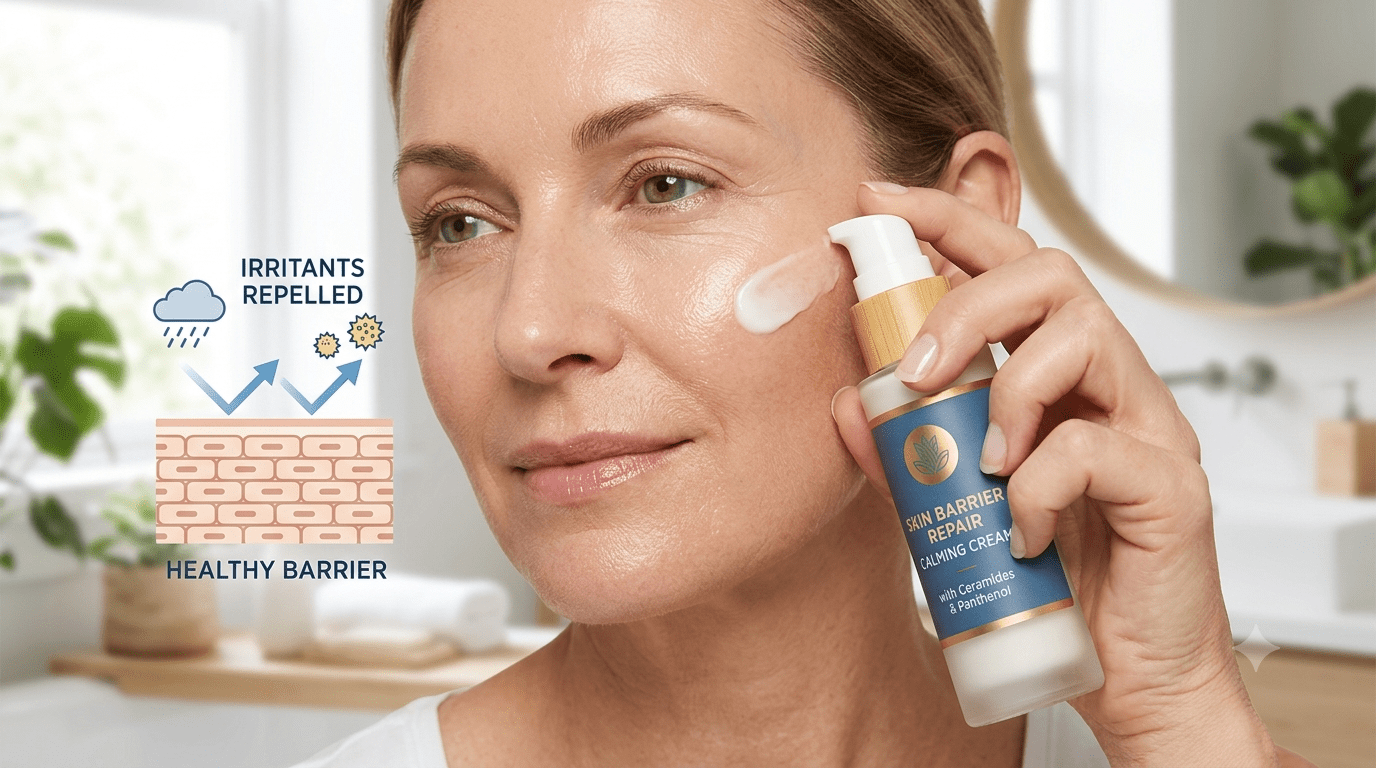
Scientifically known as the stratum corneum, the skin barrier is the outermost layer of your epidermis. Dermatologists often describe its structure using the classic “brick and mortar” model:
- The Bricks: Corneocytes (flattened, dead skin cells filled with keratin and natural moisturizing factors).
- The Mortar: A dense matrix of intercellular lipids consisting of ceramides (~50%), cholesterol (~25%), and free fatty acids (~15%).
Working together, this lipid matrix fulfills two essential life-sustaining functions:
- Keeps Good Things In: It locks in vital moisturehttps://glowingcave.com/2026/08/04/guide-to-anti-aging-creams-ingredients-science-and-how-to-choose-the-best-one/, preventing Transepidermal Water Loss (TEWL)—the process where hydration evaporates from your skin into the environment.
- Keeps Bad Things Out: It serves as a physical and immunological shield against environmental aggressors, UV radiation, pathogens, allergens, and harsh chemical pollutants.
Overlying this lipid matrix is your acid mantle, a slightly acidic film (pH around 4.7 to 5.5) populated by helpful bacteria (the skin microbiome). When the lipid matrix degrades or the acid mantle’s pH is disrupted, your skin barrierhttps://www.healthline.com/health/skin-barrier becomes leaky and vulnerable.
7 Tell-Tale Signs Your Skin Barrier Is Damaged
When your barrier is compromised, your skin loses its structural integrity and sends clear SOS signals. Watch out for these common warning signs:
- Stinging or Burning: Mild products—even plain water or gentle hydration serums—cause a burning sensation upon application.
- Persistent Redness and Inflammation: Your skin appears flushed, blotchy, or continuously inflamed.
- Dehydration Combined with Oiliness: Your skin feels bone-dry and tight underneath, yet secretes excess sebum on top as a panic response to replace lost hydration.
- Flaking, Peeling, and Rough Texture: The skin loses its smooth surface, developing dry patches, scaling, or micro-cracks.
- Increased Reactivity: Products you’ve safely used for years suddenly trigger allergic reactions, itching, or contact dermatitis.
- Unexplained Breakouts: Micro-cracks in a weak barrier allow acne-causing bacteria (C. acnes) to invade deeper skin layers easily.
- Dull, Lifeless Appearance: Without a uniform protective lipid layer, light bounces unevenly off the skin, leaving it looking sallow and flat.
Top Causes of a Compromised Skin Barrier
Skin barrier damage rarely happens overnight; it is usually the result of cumulative stress from habits or environment.
1. Over-Exfoliation and Active Ingredient Overload
The single most frequent cause of barrier breakdown is the overuse of strong active ingredients. Combining glycolic acid (AHA), salicylic acid (BHA), high-strength retinoids, vitamin C, and physical scrubs strips away natural lipids faster than your body can synthesize them.
2. Harsh Cleansers and Hot Water
Alkaline bar soaps and cleansers loaded with harsh sulfates (like SLS) spike your skin’s pH, stripping essential oils and destroying the acid mantle. Washing your face with hot water further melts away protective surface lipids.
3. Environmental Aggressors
- Weather Extremes: Low atmospheric humidity during winter, harsh winds, and indoor artificial heating dry out the stratum corneum rapidly.
- Sun Exposure: Unprotected ultraviolet (UV) radiation generates free radicals that break down lipids and structural proteins.
- Pollution: Airborne particulate matter generates oxidative stress, degrading lipids and damaging cellular DNA.
4. Psychological Stress and Sleep Deprivation
Elevated systemic cortisol levels impair skin barrier repair mechanisms, slow down lipid production, and increase systemic inflammation throughout the body.
The 4-Step Emergency Routine to Fix Your Skin Barrier
When your skin barrier is in crisis, less is drastically more. You must immediately hit “reset” and pare your routine down to absolute basics for at least 2 to 4 weeks.
       +-------------------------------------------------------+
       |   STEP 1: Ditch Actives & Strip to Bare Basics        |
       +-------------------------------------------------------+
                                   |
                                   v
       +-------------------------------------------------------+
       |   STEP 2: Use Ultra-Gentle, Low-pH Cleansing          |
       +-------------------------------------------------------+
                                   |
                                   v
       +-------------------------------------------------------+
       |   STEP 3: Layer Hydration & Occlusive Moisturizer     |
       +-------------------------------------------------------+
                                   |
                                   v
       +-------------------------------------------------------+
       |   STEP 4: Protect Daily with Mineral Sunscreen         |
       +-------------------------------------------------------+
Step 1: Strip Your Routine to the Essentials
Stop using all chemical exfoliants (AHAs, BHAs, PHAs), retinoids (retinol, tretinoin, adapalene), vitamin C serums, clay masks, and cleansing brushes. Put them away until your skin can handle water without stinging.
Step 2: Switch to a Hydrating, Non-Foaming Cleanser
Choose a mild, non-stripping cleanser formulated at a skin-friendly pH (5.0–5.5). Look for cream, lotion, or milk textures containing soothing ingredients like glycerin or oat extract. Wash your face only once a day with lukewarm water in the evening; in the morning, rinse with plain water.
Step 3: Layer Humectants, Emollients, and Occlusives
Rebuilding your barrier requires a multi-layered approach to moisture restoration:
- Humectants (Water Magnet): Apply humectants like Hyaluronic Acid, Glycerin, or Panthenol on damp skin to draw hydration into the cells.
- Emollients (Gap Fillers): Use emollients rich in Ceramides, Squalane, and Fatty Acids to plug the gaps between damaged skin cells.
- Occlusives (The Shield): Top off your nighttime routine with a rich occlusive cream or barrier balm containing Petrolatum, Dimethicone, or Shea Butter to seal everything in and prevent TEWL while you sleep.
Step 4: Protect with a Mineral Sunscreen
UV rays prevent damaged skin from healing properly. While your barrier is vulnerable, chemical sunscreens may cause stinging. Opt for a broad-spectrum 100% Mineral Sunscreen containing Zinc Oxide or Titanium Dioxide, which sits gently on top of the skin and acts as a physical shield while providing anti-inflammatory benefits.
Essential Ingredients for Skin Barrier Restoration
When reading skincare labels, look for formulations backed by lipid-repair science.
| Ingredient Category | Key Ingredients | How It Helps Repair Your Barrier |
| Barrier Lipids | Ceramides (NP, AP, EOP), Cholesterol, Free Fatty Acids | Replaces lost intercellular lipids, restoring the natural 3:1:1 skin lipid structure. |
| Humectants & Soothers | Panthenol (Vitamin B5), Centella Asiatica (Cica), Allantoin | Calms micro-inflammation, relieves redness, and promotes tissue healing. |
| Skin Hydrators | Glycerin, Hyaluronic Acid, Beta-Glucan, Sodium PCA | Draws water molecules into the stratum corneum to restore plumpness. |
| Barrier Strengtheners | Niacinamide (1-3% low dose), Colloidal Oat, Ectoin | Boosts natural ceramide production and reduces moisture loss. |
| Protective Occlusives | Squalane, Petrolatum, Plant-Derived Seed Oils, Ceramides | Forms a physical seal to stop evaporation and protect exposed nerve endings. |
Slugging: Is It Good for Barrier Repair?
“Slugging”—the practice of applying a thin layer of an petroleum-based occlusive (like Vaseline or Aquaphor) over your night moisturizer—can be a game-changer for barrier repair, but it must be done carefully.
- When to Slug: If your skin is dry, flaking, tight, and severely dehydrated. Petrolatum reduces TEWL by up to 99%, giving your underlying cells a micro-climate in which to repair uninterrupted.
- When to Avoid: If you have active, acne-prone skin, heavy occlusives can trap dead skin cells and sebum inside pores, leading to congestion. Never slug over active ingredients like retinol or acids, as occlusives drive active ingredients deeper and dramatically increase irritation.
How Long Does It Take to Repair a Damaged Skin Barrier?
The timeframe for complete skin barrier recovery depends on the extent of the damage, your age, and your overall skin health:
- Mild Damage (mild dry patches or temporary tightness): 2 to 3 weeks.
- Moderate Damage (redness, stinging, minor flaking): 4 to 6 weeks (matching the natural 28-to-40-day skin cell turnover cycle).
- Severe/Chronic Damage (prolonged dermatitis, cracked skin, chemical burns): 2 to 3 months of consistent, uninterrupted care.
Patience and consistency are paramount. Reintroducing active ingredients too early will immediately reset your progress back to zero.
Frequently Asked Questions
Can I use Niacinamide on a damaged skin barrier?
Yes, but concentration matters. Low concentrations (1% to 3%) stimulate natural ceramide synthesis and calm inflammation. High concentrations (5% to 10%) frequently cause burning and further irritation on compromised skin.
Is hyaluronic acid safe when my skin barrier is broken?
Hyaluronic acid is safe, but it must always be applied to damp skin and immediately sealed with an emollient moisturizer. In dry environments, applying hyaluronic acid to dry skin pulls water out of deeper layers, worsening dehydration.
When can I start using Retinol or exfoliants again?
Wait until your skin displays zero symptoms (no stinging, no unexplained redness, no flaking) for at least 2 full weeks. When reintroducing actives, start once per week and slowly build frequency while keeping your barrier-nourishing products at the core of your routine.