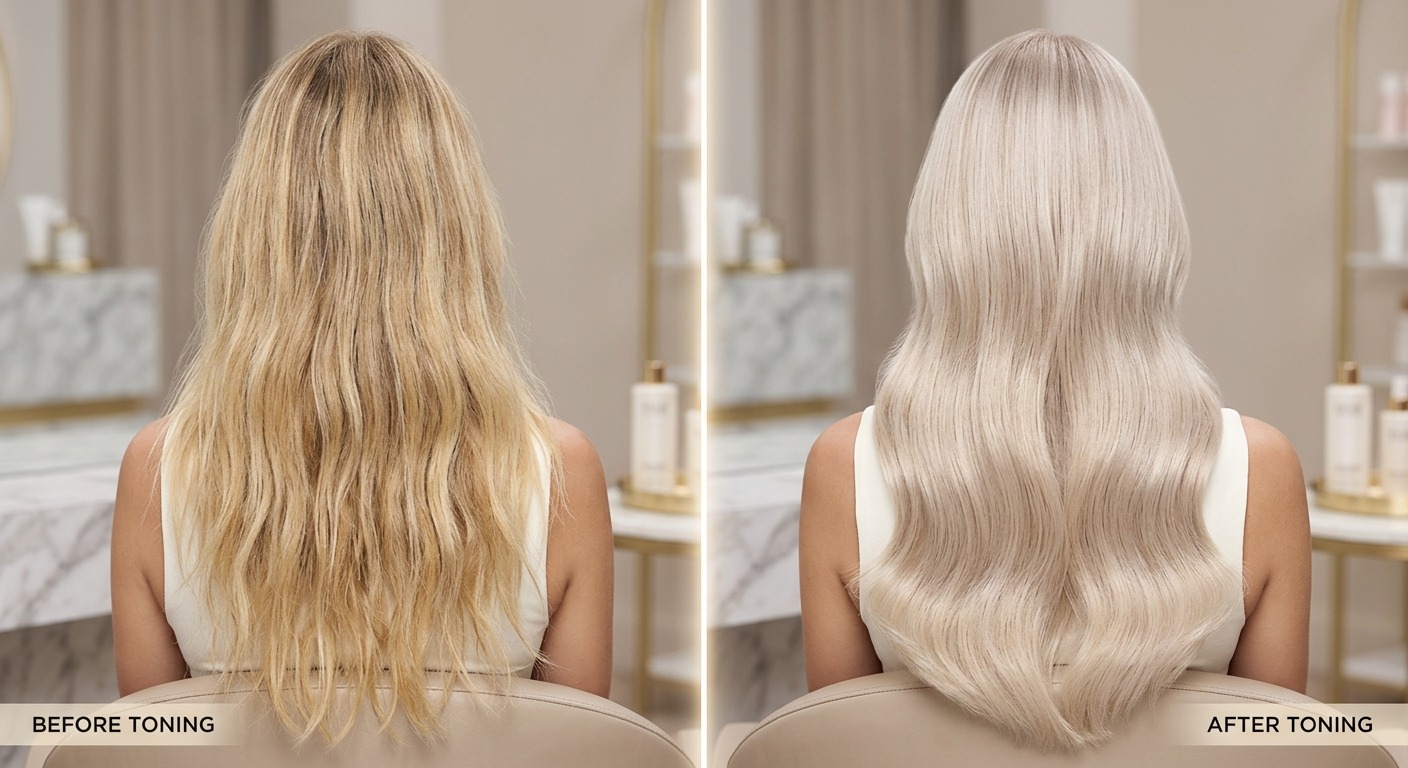
Toner for Blonde Hair: The Secret Step That Can Transform Your Blonde Overnight
Introduction: Why Doesn’t Your Blonde Look Like the Color You Wanted?
You finally achieved the blonde you dreamed about.
At first, everything looks perfect—bright, fresh, and beautifully dimensional. But after a few washes, something changes. Your blonde starts looking yellow, golden, orange, or strangely dull.
So what happened?
The answer may be hiding in one simple hair-care step: toning.
A toner for blonde hair can dramatically change the appearance of blonde hair by neutralizing unwanted warm tones and helping the desired shade look cleaner and more balanced. But toner isn’t simply a purple product that you leave on your hair whenever your blonde starts looking brassy.
Choosing the wrong toner, using it too frequently, or applying it to hair that isn’t light enough can produce disappointing results.
So, what exactly does toner do—and how can you use it correctly?
Let’s uncover the secrets behind beautiful, balanced blonde hair.
What Is Toner for Blonde Hair?
Hair toner is a product designed to adjust the tone or underlying color of the hair without dramatically changing its overall lightness.
When blonde hair is lightened through bleaching or coloring, underlying pigments can remain in the hair. Depending on how light the hair becomes, these pigments may appear yellow, gold, or orange.
A toner works by depositing specific pigments that visually neutralize unwanted tones.
For example:
- Purple tones can help neutralize yellow.
- Blue tones can help counteract orange.
- Blue-violet tones can help balance certain yellow-orange shades.
This is why toning is so important for maintaining blonde hair that looks intentional rather than overly warm or brassy.
However, toner doesn’t magically turn dark hair into platinum blonde. The hair generally needs to be light enough for the toner to create the desired result.
Why Blonde Hair Turns Brassy
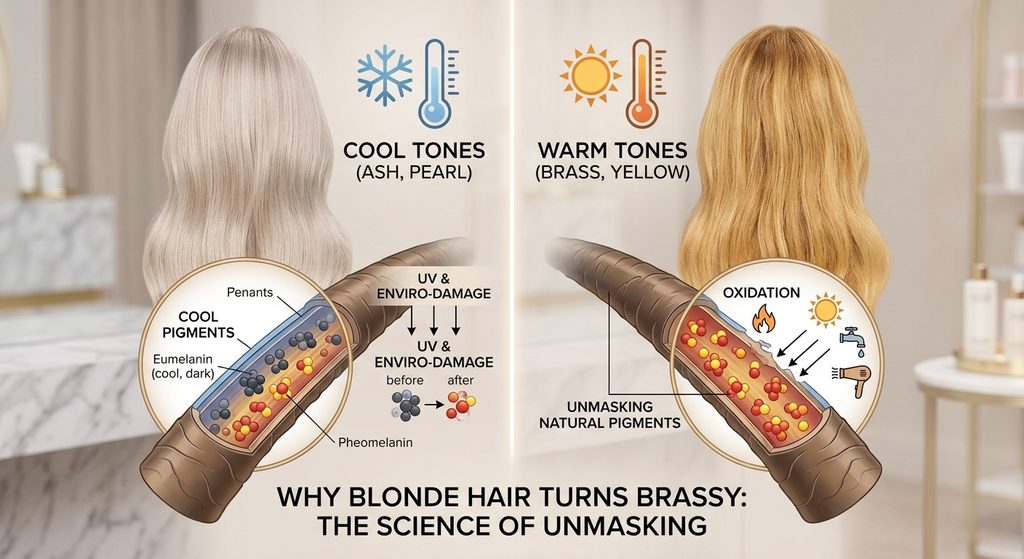
One of the biggest frustrations for blonde-haired people is brassiness.
But brassiness isn’t necessarily a sign that something has gone wrong.
When hair is lightened, natural underlying pigments are exposed. Darker hair typically passes through several warm stages as it becomes lighter.
Depending on the starting hair color and the lightening process, you may see:
Red → Orange → Yellow → Pale Yellow
If the hair isn’t lightened sufficiently, some of those warmer pigments remain visible.
Even hair that initially looks cool can gradually become warmer because of:
- Washing
- Sun exposure
- Heat styling
- Mineral buildup
- Hard water
- Swimming
- Product buildup
- Fading of salon color
This is where toner can become your blonde hair’s secret weapon.
How Does Toner Neutralize Yellow and Orange?
The science behind toner is based largely on the principles of color theory.
On the color wheel, complementary colors can visually neutralize each other.
For blonde hair, this usually means:
Purple + Yellow = More Neutral Appearance
Blue + Orange = More Neutral Appearance
This doesn’t mean the hair literally becomes purple or blue. Instead, carefully selected pigments can reduce the appearance of unwanted warmth.
That’s why purple shampoos are popular among blonde-haired people. They contain violet pigments that can temporarily counteract yellow tones.
Professional toners can provide a more targeted color adjustment and may offer a different level of control than a regular toning shampoo.
Toner vs. Purple Shampoo: What’s the Difference?
Although toner and purple shampoo are often discussed together, they’re not exactly the same thing.
Purple Shampoo

Purple shampoo is generally designed for maintenance. It can help temporarily reduce yellow tones between coloring appointments.
It is often incorporated into a blonde hair-care routine periodically rather than used every day.
Hair Toner
A professional or at-home toner is intended to make a more noticeable tonal adjustment.
Toner may be used after lightening or whenever blonde hair needs a color refresh.
The right option depends on your hair’s current condition, color, and desired result.
If your blonde only needs a subtle refresh, a toning shampoo might be enough. If your hair has significant unwanted warmth, a more targeted toning service may be appropriate.
Which Toner Is Best for Blonde Hair?
There isn’t one universal “best toner for blonde hair.”
The ideal toner depends on what color your hair currently is and what shade you want to achieve.
For Yellow Blonde Hair
If your blonde looks noticeably yellow, violet-based toning products may help make the color appear cooler and more balanced.
This is particularly common with lighter blonde shades.
For Orange Blonde Hair
Orange tones generally require a different pigment approach than pale yellow tones. Blue-based pigments are commonly used to counteract orange.
Using a strongly purple product on distinctly orange hair may not produce the result you’re expecting.
For Yellow-Orange Hair
Some blonde hair falls somewhere between yellow and orange. In that situation, a blue-violet approach may be more suitable.
This is one reason professional colorists assess the exact underlying tone before choosing a toner.
Can Toner Make Blonde Hair Ashy?
Yes.
If your goal is an ashy blonde, a suitable toner can help reduce warm golden tones and create a cooler-looking finish.
But there’s an important catch.
If you leave a toner on too long or use a highly pigmented product incorrectly, very light porous hair may absorb more pigment than expected.
Instead of a soft cool blonde, you could end up with a dull, grayish, violet, or uneven appearance.
Always follow the product’s instructions and consider a strand test when using an unfamiliar toner.
How Often Should You Tone Blonde Hair?
There is no single schedule that works for everyone.
How frequently you need toning depends on:
- Your blonde shade
- Hair porosity
- Washing frequency
- Water quality
- Sun exposure
- Heat styling
- Type of toner used
- Your desired level of coolness
Some people may refresh their tone every few weeks, while others may only need occasional maintenance.
Over-toning can make blonde hair look dull or overly cool, particularly when the hair is highly porous.
Instead of automatically toning on a fixed schedule, pay attention to how your hair actually looks.
How to Use Toner for Blonde Hair at Home
If you’re using an at-home toning product, preparation matters.
Step 1: Identify Your Current Tone
Look closely at your hair under natural lighting.
Is it:
- Pale yellow?
- Golden yellow?
- Yellow-orange?
- Orange?
- Already fairly neutral?
Knowing the starting tone helps you choose an appropriate product.
Step 2: Read the Product Instructions
Different toners have different application methods and processing times.
Never assume that one toner should be used exactly like another.
Step 3: Perform a Strand Test
A strand test can help you understand how your hair will react before applying the product everywhere.
This is especially useful if your hair is bleached, damaged, or highly porous.
Step 4: Apply Evenly
Uneven application can create patchy results.
Make sure the product is distributed according to the manufacturer’s instructions.
Step 5: Monitor the Processing Time
Don’t simply leave toner on longer because you want a cooler result.
More processing time doesn’t always mean better results.
Step 6: Rinse and Condition
After the recommended processing time, rinse thoroughly and follow the product instructions for conditioning.
What If Your Blonde Hair Is Damaged?
This is where caution becomes especially important.
Bleaching can make hair more porous and fragile. Highly processed blonde hair may absorb toner differently from healthy hair.
Porous sections can sometimes grab pigment quickly, creating uneven results.
If your hair feels:
- Extremely dry
- Brittle
- Stretchy when wet
- Rough
- Weak
- Prone to snapping
consider addressing the hair’s condition before performing additional chemical services.
A professional stylist can evaluate the hair and determine whether it is suitable for another coloring or toning process.
How to Keep Blonde Hair Looking Fresh
Toning is only one part of blonde hair maintenance.
Your daily routine can make a major difference.
Use a Gentle Shampoo
Frequent harsh cleansing can contribute to dryness and may cause color to fade more quickly.
Choose products designed for color-treated or chemically processed hair when appropriate.
Don’t Overuse Purple Shampoo
Purple shampoo can be useful, but using it too frequently may leave hair looking overly cool or dull.
Start conservatively and adjust according to your results.
Protect Your Hair From Heat
Straighteners, curling irons, and blow dryers can contribute to dryness and damage.
Use an appropriate heat protectant and avoid unnecessarily high temperatures.
Protect Blonde Hair From the Sun
UV exposure can affect the appearance of color-treated hair and contribute to dryness.
A hat or suitable UV-protective hair product can help reduce exposure.
Consider Your Water
Hard water contains minerals that can build up on the hair and affect its appearance.
If you notice persistent dullness or unexpected color changes, mineral buildup may be worth considering.
Can Toner Lighten Blonde Hair?
Generally, toner is not designed to dramatically lighten the hair.
Its primary purpose is to adjust tone, not replace the lightening process.
If your hair is significantly darker than the blonde shade you want, toner alone is unlikely to create the desired level of lightness.
Trying to compensate by repeatedly applying toner can lead to unnecessary product buildup without solving the underlying problem.
Common Toner Mistakes to Avoid
Beautiful blonde hair isn’t just about choosing the right product. It’s also about avoiding common mistakes.
Choosing a Toner Based Only on the Word “Blonde”
Two people with blonde hair may need completely different toners.
Look at the actual underlying tone rather than simply choosing a product labeled for blonde hair.
Ignoring Hair Porosity
Porous hair can absorb pigment differently and sometimes much faster.
Over-Toning
Constantly trying to eliminate every trace of warmth can make hair look flat or dull.
Skipping a Strand Test
A small test section can reveal how your hair reacts before you commit to a full application.
Expecting Toner to Fix Every Problem
If your hair is unevenly lightened, severely damaged, or has significant color buildup, toner may not be the complete solution.
When Should You See a Professional?
A professional colorist can be especially helpful when your blonde is uneven, heavily bleached, or significantly brassy.
Professional assessment can help determine:
- Your current level of lightness
- The underlying pigment
- Hair porosity
- Condition of the hair
- Appropriate toner family
- Processing requirements
- Long-term maintenance
This can be particularly important if you’ve recently used bleach or multiple color products.
The Final Secret to Beautiful Blonde Hair
The perfect blonde isn’t always the brightest or coolest blonde.
It’s the shade that complements your desired look while keeping the hair healthy and balanced.
A toner for blonde hair can be an incredibly useful tool for reducing unwanted yellow, orange, and golden tones. But the secret isn’t simply finding the strongest purple or blue product.
The real secret is understanding your starting color, your desired result, and your hair’s condition.
When those three factors are considered together, toning becomes much more predictable.
So, the next time your beautiful blonde begins looking warmer than you wanted, don’t immediately assume you need another dramatic color change.
The solution might be much simpler.
Sometimes, the smallest tonal adjustment is what makes a blonde look polished, fresh, and salon-inspired again.
Frequently Asked Questions About Toner for Blonde Hair
1. What does toner do for blonde hair?
Toner for blonde hair helps adjust unwanted yellow, orange, or golden tones after lightening. It deposits color pigments that can make blonde hair appear more neutral, cool, or balanced. Toner does not usually lighten the hair significantly; its main purpose is to refine the existing shade.
2. What is the best toner for blonde hair?
The best toner depends on your current blonde shade and the unwanted tones you want to neutralize. Violet-based toners are commonly used for yellow tones, while blue-based products can help counteract orange tones. Your desired final shade and hair condition should also be considered before choosing a toner.
3. How do I get rid of yellow tones in blonde hair?
Purple or violet-based toning products can help reduce the appearance of yellow tones in blonde hair. Purple shampoo may provide ongoing maintenance, while a dedicated toner can create a more noticeable tonal adjustment. Always follow the product’s directions and avoid excessive toning.
4. Does purple toner work on blonde hair?
Yes, purple toner can help neutralize unwanted yellow tones in blonde hair. Violet and yellow are complementary colors, so violet pigments can visually reduce yellow warmth. The result depends on the starting shade, porosity, product formulation, and processing time.
5. What toner removes orange from blonde hair?
Blue-based toning products are commonly used to counteract orange tones because blue and orange are complementary colors. However, the appropriate product depends on whether the hair is predominantly orange, yellow-orange, or yellow. Choosing a toner based on the actual underlying tone is more effective than simply choosing one labeled for blonde hair.
6. How often should I use toner on blonde hair?
The frequency depends on your hair color, porosity, washing routine, and the type of toner being used. Some people may need occasional toning, while others may use a toning shampoo periodically for maintenance. Over-toning can make blonde hair look dull or overly cool, so follow the manufacturer’s recommendations.
7. Can toner damage blonde hair?
Toner itself is generally used to adjust color, but some toning products involve chemical processing that can affect the hair. Previously bleached or highly porous hair may also react differently to color products. If your hair is brittle, severely dry, or breaking, consider getting professional advice before additional chemical treatments.