The Ultimate Guide to Building a Sustainable Fitness Routine
Walk into any commercial gym in the United States on January 2nd, and you will find a packed house. Treadmills are booked, dumbbells are scarce, and motivation is at an all-time high. Fast forward to the second week of February, and the crowd has thinned by nearly 80%.
This dramatic drop-off isn’t due to a lack of desire; it’s a failure of system design. We are conditioned by fitness marketing to view health through the lens of 30-day shreds, extreme boot camps, and restrictive diets. For the average busy professional—juggling commutes, family obligations, and career demands—these extreme approaches are a one-way ticket to burnout.
The secret to lifelong health isn’t finding the perfect, punishing workout. It’s building a sustainable fitness routine—a system that bends with your lifestyle rather than breaking under the pressure of it. If you want to build strength, improve your cardiovascular health, and actually enjoy the process, you need to shift your focus from aesthetics to longevity and function.
Here is the comprehensive guide to building a fitness routine that will serve you for decades, not just weeks.
1. The Mindset Shift: Training for Longevity
Before lifting a weight or lacing up your running shoes, you have to redefine what a “good workout” looks like. The “no pain, no gain” mentality is outdated and scientifically flawed. Leaving the gym feeling completely destroyed does not equate to a superior workout; it often just equates to prolonged muscle soreness that prevents you from training consistently later in the week.
Consistency Over Intensity
The foundational rule of a sustainable fitness routine is that consistency always beats intensity. Working out at 70% of your maximum effort for three days a week, 52 weeks a year, will yield drastically better results than working out at 100% effort for six days a week, burning out, and quitting after a month.
When building your routine, aim for the “minimum effective dose.” What is the smallest amount of structured exercise you need to trigger an adaptation (muscle growth or cardiovascular improvement) without interfering with your daily life and recovery? For most adults, this is between three to four hours of dedicated exercise per week.
2. The Three Pillars of Functional Fitness
A complete, sustainable fitness routine requires a balance of three distinct physical pillars. Neglecting any one of these increases your risk of injury and limits your overall health span.
Pillar 1: Resistance Training (Muscle and Bone Health)
After the age of 30, adults naturally lose 3% to 5% of their muscle mass per decade in a process called sarcopenia. Resistance training is the only way to halt and reverse this decline. Furthermore, lifting weights increases bone mineral density, which is crucial for preventing osteoporosis later in life.
You do not need to become a bodybuilder to reap the benefits of resistance training. Focus on compound movements—exercises that engage multiple muscle groups and joints simultaneously. These movements mimic real-world activities (like picking up a heavy box or standing up from a low chair) and provide the highest return on your time investment.
Core compound movements include:
- Squats: Goblet squats, barbell squats, or bodyweight squats.
- Hinges: Deadlifts, Romanian deadlifts, or kettlebell swings.
- Pushes: Push-ups, overhead presses, or dumbbell bench presses.
- Pulls: Pull-ups, dumbbell rows, or lat pulldowns.
- Carries: Farmer’s walks (carrying heavy dumbbells for distance).
Pillar 2: Cardiovascular Health (The Engine)
Cardiovascular exercise improves the efficiency of your heart and lungs, lowering your resting heart rate and blood pressure. For a sustainable routine, you should divide your cardio into two distinct intensities:
Zone 2 Cardio (The Foundation):
This is steady-state exercise performed at an intensity where you could comfortably hold a conversation, but you would rather not. Think of a brisk walk on an incline, a steady bike ride, or a light jog. Zone 2 training improves mitochondrial function (your cells’ energy powerhouses) and builds aerobic endurance. Aim for 120 to 150 minutes of Zone 2 cardio per week.
High-Intensity Interval Training (HIIT):
Once or twice a week, push your heart rate near its maximum for short bursts. This could be 30 seconds of all-out sprinting on an assault bike followed by 90 seconds of rest. HIIT improves your VO2 max (the maximum amount of oxygen your body can use), which is one of the strongest predictors of longevity.
Pillar 3: Mobility and Flexibility (The Armor)
Mobility is your ability to actively control your joints through their full range of motion. If you sit at a desk for eight hours a day, your hip flexors tighten, your shoulders round forward, and your thoracic spine stiffens.
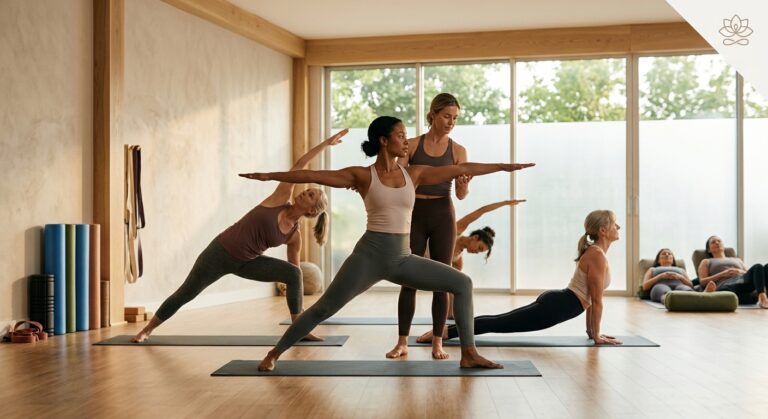
Incorporate 5 to 10 minutes of dynamic mobility work into your warm-ups. Focus on exercises like the “World’s Greatest Stretch,” cat-cows, and thoracic rotations. You don’t need hour-long yoga sessions if you don’t enjoy them, but regular, targeted mobility work prevents injuries that could otherwise derail your routine for months.
3. The Power of NEAT (Non-Exercise Activity Thermogenesis)
One of the biggest misconceptions in the US fitness culture is that health is only built inside a gym. The truth is, the one hour you spend lifting weights is a fraction of your day. The other 23 hours matter just as much.
NEAT refers to the calories you burn doing everything that isn’t sleeping, eating, or structured exercise. This includes walking to your car, pacing while on a phone call, carrying groceries, or doing yard work.
In our modern, convenience-driven society, NEAT levels have plummeted. You can have a grueling 45-minute workout, but if you sit in a chair for the next 14 hours, you are still living a sedentary lifestyle.
How to increase your NEAT:
- Aim for a daily step count. The “10,000 steps” rule is a great marketing slogan, but science shows significant health benefits kick in around 7,000 to 8,000 steps per day.
- Take a 10-minute walk after every meal to aid digestion and regulate blood sugar.
- Use a standing desk for portions of your workday.
- Take the stairs instead of the elevator whenever possible.
4. Structuring Your Weekly Routine
How do you fit all of this into a busy American workweek? The key is flexibility. Do not assign specific workouts to specific days if your schedule is unpredictable. Instead, aim to check off a series of “boxes” over a seven-day period.
Here is an example of a highly effective, sustainable 4-day workout split for a busy professional:
| Day | Workout Focus | Duration | Key Objectives |
| Day 1 | Full Body Strength A | 45 min | Squat pattern, Horizontal Push, Horizontal Pull, Core |
| Day 2 | Zone 2 Cardio + Mobility | 40 min | 30 min incline walk or cycle, 10 min stretching |
| Day 3 | Active Recovery | – | Hit 8,000+ daily steps, light stretching |
| Day 4 | Full Body Strength B | 45 min | Hinge pattern, Vertical Push, Vertical Pull, Carry |
| Day 5 | HIIT + Core | 30 min | 15 mins intervals (e.g., sprint/rest), 15 mins core stability |
| Day 6 | Outdoor Activity | 60+ min | Hike, long walk, recreational sports (Play) |
| Day 7 | Complete Rest | – | Prioritize sleep and meal prep for the week |
If you miss Day 2 because of a late meeting, you simply slide the schedule to the right. The routine adapts to you.
5. Nutrition: Fueling for Performance
A sustainable fitness routine requires sustainable nutrition. Strict exclusion diets (cutting out entire macronutrients like carbs or fats) are rarely sustainable long-term and often lead to binge-restrict cycles.
Instead of adopting the latest fad diet, focus on these fundamental principles:
- Prioritize Protein: Protein is essential for muscle repair and keeps you feeling full. Aim for roughly 0.8 to 1 gram of protein per pound of your target body weight. Excellent sources include chicken breast, lean beef, fish, eggs, Greek yogurt, and legumes.
- Eat the Rainbow: Aim to get the majority of your carbohydrates from whole, unprocessed sources like fruits, vegetables, oats, and potatoes. These provide the micronutrients and fiber necessary for gut health and energy regulation.
- Hydrate Aggressively: Even mild dehydration (a 2% drop in water volume) can severely impair physical performance and cognitive function. Aim for half your body weight in ounces of water per day as a baseline.
- The 80/20 Rule: Eat whole, nutrient-dense foods 80% of the time, and allow yourself to enjoy the foods you love (pizza, ice cream, a glass of wine) 20% of the time. Guilt has no place in a sustainable routine.
6. Sleep: The Ultimate Performance Enhancer
You do not get stronger or fitter while you are working out; you get fitter while you are recovering from the workout. The stress of exercise breaks your body down. Recovery is when your body builds itself back up, stronger than before.
In the US, chronic sleep deprivation is a public health crisis. If you are sleeping fewer than six hours a night, your cortisol (stress hormone) levels remain elevated, your body stores fat more readily, and your muscle recovery plummets.
Sleep Hygiene Protocol:
- Keep your bedroom cool—around 65°F (18°C) is optimal for sleep onset.
- Limit alcohol before bed. While it may help you fall asleep faster, it severely disrupts REM sleep and deep physical recovery.
- Implement a “digital sunset.” Turn off bright overhead lights and screens 60 minutes before you intend to sleep. The blue light from phones suppresses melatonin production, delaying your sleep cycle.
Conclusion
Building a sustainable fitness routine is not about overhauling your entire life overnight. It is about making small, calculated additions to your week that compound over time.
Start by mastering the basics: commit to strength training twice a week, go for a daily walk to boost your NEAT, and prioritize your sleep. Once those habits are locked in, you can begin adding complexity with interval training and precise nutrition tracking.
Fitness is a lifelong pursuit. Drop the arbitrary deadlines, focus on how your body functions and feels, and build a routine that you actually look forward to doing.