
Kundalini Yoga: The Hidden Energy Practice That Could Transform Your Mind, Body & Inner Awareness
Kundalini Yoga: The Ancient Practice With a Mysterious Side
What if one of the most powerful aspects of yoga isn’t simply about stretching, flexibility, or physical strength?
For thousands of years, yogic traditions have explored the idea of an inner energy associated with awareness and spiritual development. Kundalini Yoga is one tradition built around working with that idea through movement, breathing, meditation, mantra, and focused attention.
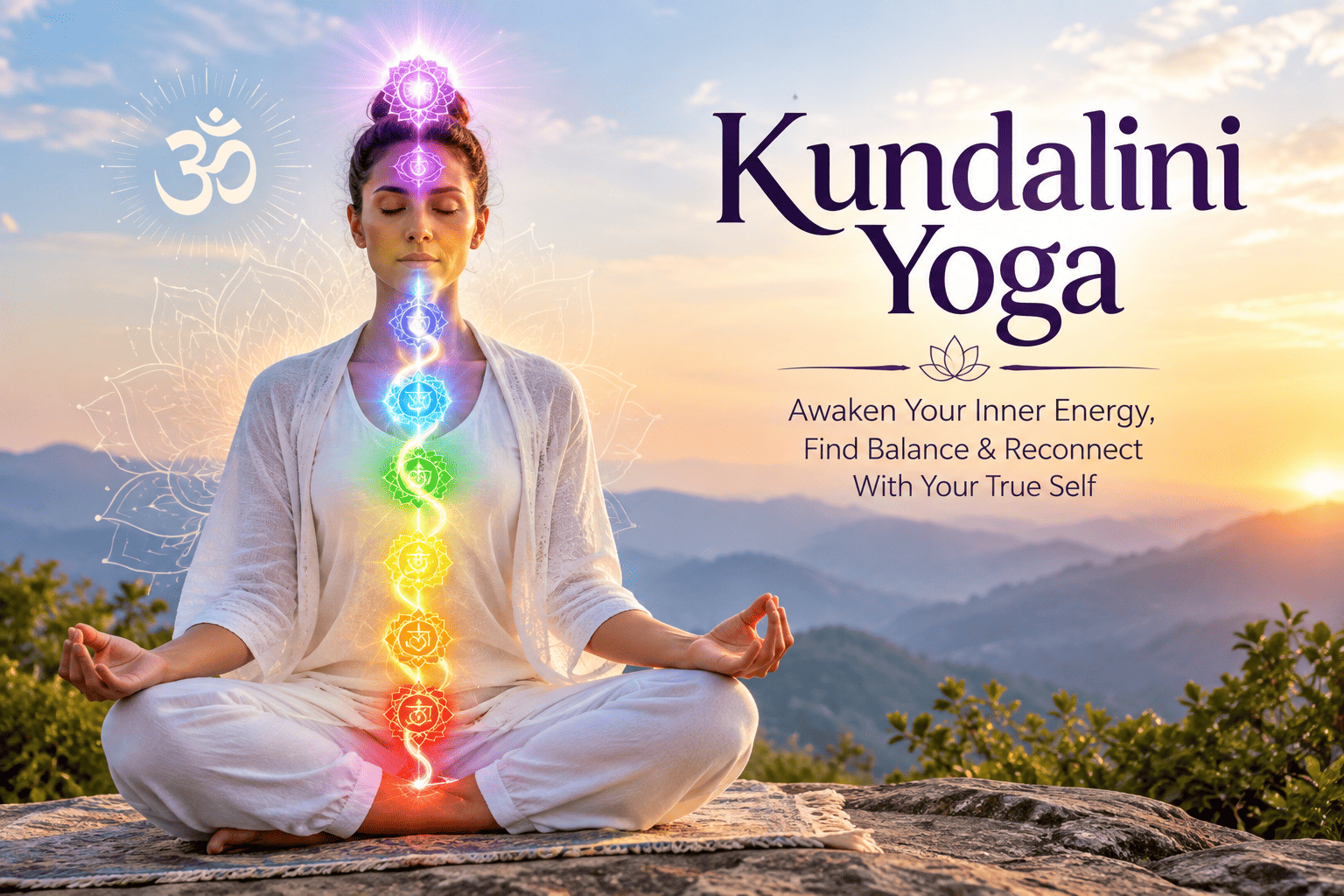
Its name comes from kundalini, traditionally described in yoga and Tantra as a latent energy symbolized as a coiled serpent at the base of the spine. In traditional teachings, awakening this energy is associated with a gradual transformation of consciousness.
But there is an important distinction: Kundalini Yoga can be approached as a spiritual tradition, a structured yoga practice, or a modern mind-body discipline. Its traditional spiritual claims are matters of belief and philosophy rather than scientifically established physiological facts.
So what exactly happens during Kundalini Yoga—and why has this practice attracted so much attention?
Let’s explore.
What Is Kundalini Yoga?
Kundalini Yoga combines several practices rather than relying on physical postures alone.
A typical session may include:
- Asanas — physical yoga postures
- Pranayama — controlled breathing techniques
- Mantra — repeated sounds or phrases
- Mudras — symbolic hand positions
- Meditation — focused mental practice
- Relaxation — periods of rest and awareness
- Kriyas — structured sequences combining several techniques
The word kriya generally means an action or practice designed to produce a particular effect. In Kundalini Yoga, kriyas can combine posture, breathing, movement, concentration, and sound.
This combination gives Kundalini Yoga a different character from practices that primarily emphasize physical flexibility.
The Mystery of Kundalini Energy
The concept of kundalini is central to the tradition.
Traditional yogic philosophy describes kundalini as a dormant spiritual energy located near the base of the spine. The imagery of a coiled serpent represents potential energy waiting to become active.
According to traditional teachings, spiritual practices may help guide this energy upward through a series of subtle energy centers known as chakras.
It is important to understand that chakras and kundalini are concepts from spiritual and philosophical traditions. Modern science has not established them as anatomical structures or measurable forms of energy in the same sense as electricity or heat.
Nevertheless, the practices associated with Kundalini Yoga—such as breathing, meditation, movement, and relaxation—can be studied independently as mind-body techniques.
Understanding the Seven Chakras
Kundalini traditions commonly discuss seven major chakras.
1. Root Chakra
Known as Muladhara, this chakra is traditionally associated with stability, security, grounding, and basic survival.
It is symbolically located near the base of the spine.
2. Sacral Chakra
Svadhisthana is associated traditionally with creativity, emotions, pleasure, and relationships.
It is symbolically connected with the lower abdomen.
3. Solar Plexus Chakra
Known as Manipura, this chakra is traditionally connected with personal power, confidence, motivation, and transformation.
4. Heart Chakra
Anahata represents love, compassion, emotional balance, and connection in traditional chakra systems.
5. Throat Chakra
Vishuddha is associated with communication, expression, and truth.
6. Third-Eye Chakra
Known as Ajna, this chakra is traditionally connected with intuition, concentration, insight, and perception.
7. Crown Chakra
Sahasrara is associated with spiritual awareness, consciousness, and connection to the transcendent.
These descriptions belong to traditional spiritual frameworks rather than modern anatomy.
What Happens During a Kundalini Yoga Session?
A beginner might expect a typical yoga class to involve stretching and balancing.
Kundalini Yoga can look quite different.
A session may begin with breathing or chanting before moving into a particular kriya. Participants may hold a posture while maintaining a specific breathing pattern or repeating a mantra.
The practice may then transition into meditation and relaxation.
For example, a simplified session might include:
- Sitting quietly
- Establishing controlled breathing
- Gentle physical movements
- A structured kriya
- Mantra repetition
- Meditation
- Deep relaxation
The exact sequence varies depending on the teacher, tradition, and class.
Kundalini Yoga and Breathing
Breathwork is one of the most recognizable components of Kundalini Yoga.
Some practices involve slow and controlled breathing, while others use more vigorous breathing patterns.
Breathing techniques can influence how a person feels during practice. Slow breathing may encourage relaxation, while faster breathing can produce noticeable physical sensations such as lightheadedness or tingling.
This is one reason beginners should learn breathing exercises carefully rather than forcing the breath or trying to recreate advanced techniques without instruction.
If a breathing exercise causes dizziness, chest discomfort, or significant distress, stop and return to normal breathing.
Can Kundalini Yoga Reduce Stress?
One reason people become interested in Kundalini Yoga is its potential connection with relaxation and stress management.
Yoga generally combines physical movement with attention to breathing and mental focus. These elements may encourage people to slow down and become more aware of their physical and mental state.
Meditation and controlled breathing have also been studied as approaches for managing stress and supporting psychological well-being.
However, it is important not to treat Kundalini Yoga as a guaranteed treatment for anxiety, depression, or other medical conditions.
Instead, it can be viewed as one possible complementary wellness practice.
Kundalini Yoga and Mental Focus
Modern life constantly demands attention.
Notifications, social media, work, school, and everyday responsibilities can make sustained concentration difficult.
Kundalini Yoga incorporates practices that deliberately direct attention toward breathing, movement, sound, or a chosen object of meditation.
This can create a structured period during which the practitioner isn’t constantly switching between tasks.
Over time, regular meditation practice may help people become more aware of wandering thoughts and emotional reactions.
The goal isn’t necessarily to eliminate thoughts.
Instead, practitioners can learn to notice thoughts without immediately following every one of them.
The Role of Mantra
Sound plays an important role in many Kundalini Yoga traditions.
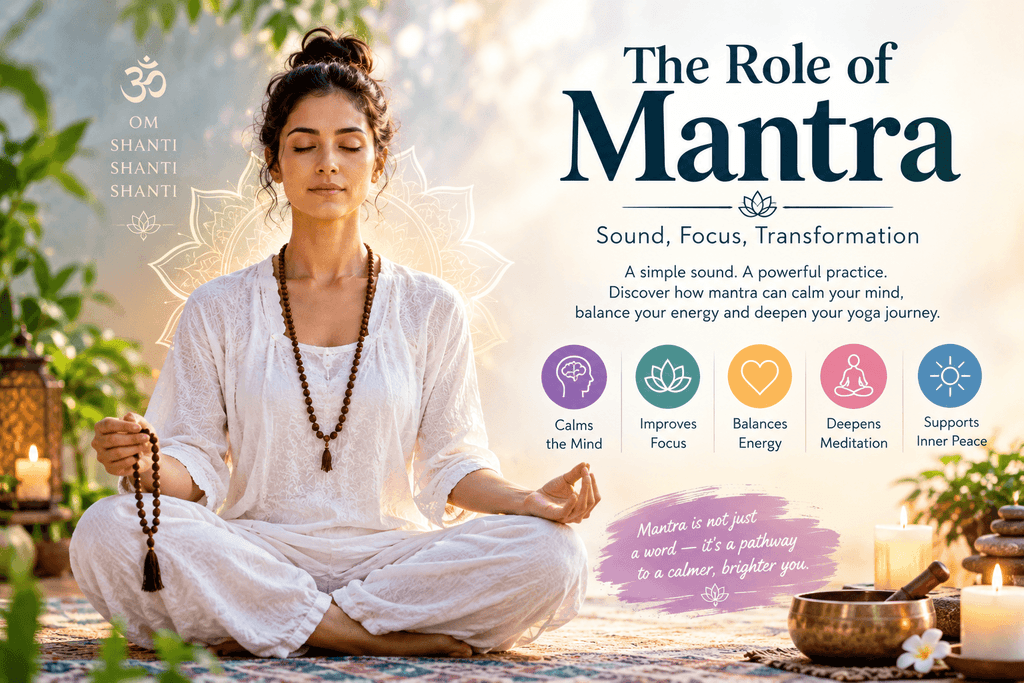
A mantra is a sound, word, or phrase repeated during meditation or practice.
Repetition can provide the mind with a specific focus.
Instead of allowing attention to jump from one thought to another, the practitioner repeatedly returns to the sound or phrase.
Some practitioners approach mantras primarily as spiritual tools, while others appreciate them as concentration techniques.
The experience can therefore vary considerably from person to person.
Is Kundalini Yoga Suitable for Beginners?
Despite its spiritual reputation, beginners can explore Kundalini Yoga.
However, beginners should start with basic practices rather than immediately attempting intense breathing exercises or advanced meditation techniques.
A good starting point might include:
- Gentle yoga movements
- Comfortable seated meditation
- Natural breathing
- Simple mindfulness
- Short practice sessions
- Adequate relaxation
Learning from a qualified and experienced instructor can also help beginners understand technique and avoid unnecessary strain.
You don’t need to force yourself into extreme experiences for a yoga practice to be meaningful.
Potential Physical Benefits
Kundalini Yoga contains physical movement, so some of its potential benefits overlap with other forms of yoga.
Depending on the practice, regular yoga may support:
- Flexibility
- Mobility
- Body awareness
- Balance
- Physical relaxation
- Gentle muscular activity
- Mind-body coordination
The amount of physical activity varies considerably between different Kundalini sessions.
Some classes are physically demanding, while others emphasize meditation, chanting, or breathwork.
Potential Emotional Benefits
The emotional experience of yoga can also be significant.
A regular practice may provide a dedicated period for slowing down, reflecting, and reconnecting with the body.
Some people report feeling calmer or more centered after meditation and yoga.
However, individual experiences differ. Yoga should not be presented as a guaranteed solution for emotional or psychological problems.
People experiencing persistent or severe symptoms should seek appropriate professional support.
Is Kundalini Awakening Dangerous?
This question often appears whenever Kundalini Yoga is discussed.
Traditional literature describes kundalini awakening using powerful spiritual imagery and sometimes intense experiences.
Modern discussions sometimes portray awakening as something mysterious or dangerous.
There is no established scientific evidence demonstrating that a literal serpent-like energy travels through the body.
However, intense meditation, prolonged breathwork, sleep deprivation, extreme fasting, or physically demanding practices can produce strong physical and psychological experiences.
That is why moderation matters.
Beginners should avoid trying to force dramatic experiences. A balanced yoga practice should prioritize comfort, gradual progression, proper breathing, and appropriate instruction.
Kundalini Yoga vs. Traditional Hatha Yoga
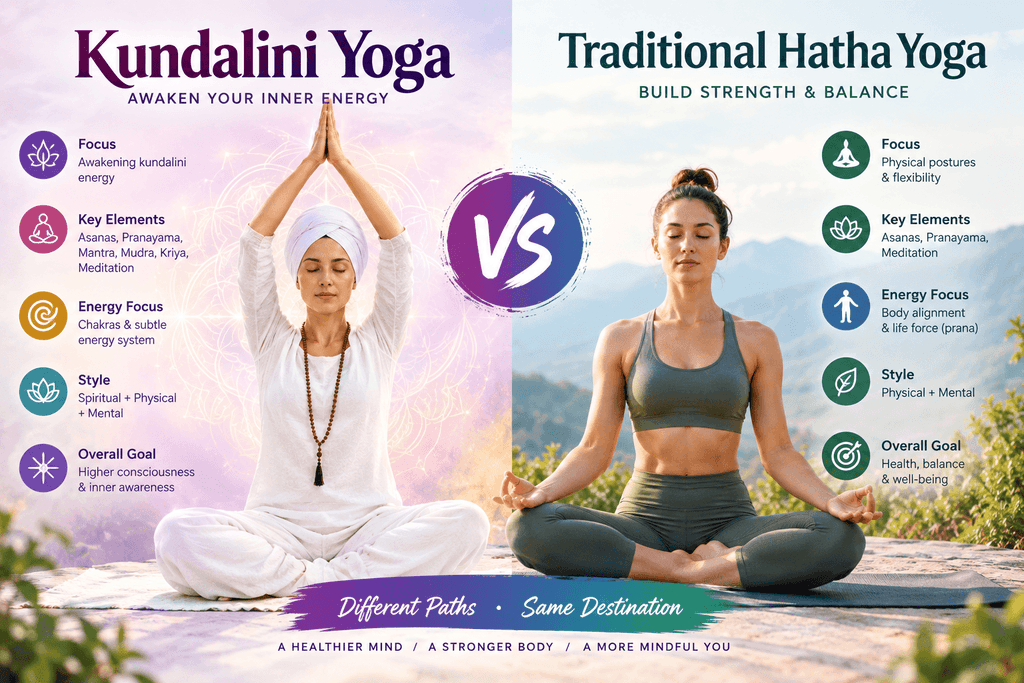
Kundalini Yoga and Hatha Yoga share several elements, but their emphasis can differ.
Hatha Yoga is often associated with physical postures, breathing practices, and meditation.
Kundalini Yoga places particularly strong emphasis on combining these elements with kriyas, mantra, meditation, and the traditional concept of awakening inner energy.
Neither approach has to be treated as a competition.
The better choice depends on what a person wants from their practice—physical movement, meditation, spiritual exploration, relaxation, or some combination.
How to Start Kundalini Yoga Safely
If you’re curious about Kundalini Yoga, begin slowly.
Start with a short session rather than immediately attempting an advanced routine.
Choose comfortable clothing and practice somewhere quiet.
Pay attention to your breathing rather than forcing it.
If you’re new to breathwork, learn techniques from a knowledgeable instructor.
People with medical conditions, those who are pregnant, or anyone who experiences unusual symptoms during practice should consider speaking with an appropriate healthcare professional before beginning intensive yoga or breathwork.
The objective isn’t to chase extraordinary sensations.
The objective is to develop a consistent, mindful practice.
The Deeper Meaning of Kundalini Yoga
Perhaps the most fascinating part of Kundalini Yoga isn’t the idea of mystical energy itself.
It is the invitation to explore awareness.
You sit.
You breathe.
You move.
You repeat a sound.
You observe your thoughts.
And gradually, you may begin noticing things about your habits, attention, emotions, and reactions that normally remain hidden beneath the noise of everyday life.
Traditional Kundalini philosophy interprets this process through the language of energy, chakras, and spiritual awakening.
A modern practitioner may interpret the same experience through mindfulness, concentration, relaxation, and self-awareness.
Both perspectives can coexist as long as traditional spiritual beliefs aren’t presented as established scientific facts.
Final Thoughts
Kundalini Yoga is much more than a collection of yoga poses.
It combines movement, breathing, meditation, mantra, and traditional spiritual concepts into a distinctive mind-body practice.
Its most mysterious idea—the awakening of kundalini energy—comes from ancient yogic traditions and remains a spiritual concept rather than a scientifically verified biological process.
For modern practitioners, however, the practical elements of Kundalini Yoga can provide opportunities for movement, focused breathing, meditation, relaxation, and self-reflection.
Perhaps the real question isn’t whether Kundalini Yoga will unlock a mysterious hidden power.
Maybe the more interesting question is what happens when you finally become quiet enough to pay attention to yourself.
1. What is Kundalini Yoga?
Kundalini Yoga is a practice combining yoga postures, breathing exercises, meditation, mantras, and movement. It is traditionally associated with developing awareness and awakening kundalini energy.
2. What are the benefits of Kundalini Yoga?
Kundalini Yoga may support relaxation, mindfulness, body awareness, concentration, flexibility, and stress management. Individual experiences can vary.
3. Is Kundalini Yoga good for beginners?
Yes, beginners can practice Kundalini Yoga by starting with gentle movements, simple breathing exercises, and short meditation sessions. Learning from an experienced instructor can be helpful.
4. What are the seven chakras in Kundalini Yoga?
The seven commonly discussed chakras are Root, Sacral, Solar Plexus, Heart, Throat, Third Eye, and Crown. They come from traditional yogic spiritual systems rather than modern anatomy.
5. What is Kundalini awakening?
Kundalini awakening is a traditional spiritual concept describing the activation or rising of kundalini energy through the body’s subtle energy system. It is a spiritual belief, not a scientifically established biological process.
6. Can Kundalini Yoga help reduce stress?
Kundalini Yoga includes meditation, controlled breathing, movement, and relaxation, which may help promote calmness and mindfulness. It should be considered a complementary wellness practice rather than a medical treatment.