
The Dangerous Secret Behind Weight Loss Supplements (What They Never Tell You)
The Shocking Truth About Weight Loss Supplements: Illusion, Risks, and Reality
Every year, millions of people embark on a journey to transform their bodies, shed excess body fat, and achieve a healthier lifestyle. It is a multi-billion-dollar industry fueled by ambitious goals, desperate hopes, and aggressive marketing strategies. Walk into any health food store or open any social media platform, and you are immediately bombarded with flashy advertisements promising rapid transformation: “Lose 10 Pounds in 7 Days!”, “Melt Belly Fat Without Exercise!”, or “The Secret Miracle Pill the Fitness Industry Doesn’t Want You to Know About!”
These products, collectively known as weight loss supplements, range from herbal teas and fat-burning pills to metabolism boosters and prescription-grade appetite suppressants. They promise a fast track to your dream physique—a shortcut that bypasses the long, demanding hours of physical exercise and strict dietary discipline.
But what actually lies inside these colorful bottles? Are weight loss supplements a science-backed miracle, a total waste of money, or a hidden danger to your long-term health?
To navigate the massive world of dietary aids, we must dissect the science, unpack the ingredients, expose regulatory loopholes, and uncover what truly drives permanent fat loss.
1. The Multi-Billion Dollar Illusion: How the Market Works
The global dietary supplement market is worth well over $150 billion, with weight loss products forming one of its most profitable sectors. The secret behind the industry’s wild financial success does not lie in miraculous scientific breakthroughs; it lies in consumer psychology.
Weight loss is hard. It requires consistent behavioral changes, caloric restriction, patience, and emotional resistance against cravings. Human nature instinctively seeks the path of least resistance. Supplement companies understand this psychological vulnerability better than anyone. They market their products not as support tools, but as primary solutions.
By utilizing high-profile celebrity endorsements, dramatic “before and after” photos (which are frequently photoshopped, taken under different lighting, or achieved through extreme, short-term dehydrating tactics), and complex pseudo-scientific jargon, companies create an irresistible narrative: You don’t need to work hard; you just need this pill.
2. Categories of Weight Loss Supplements: How Do They Claim to Work?
Weight loss supplements generally claim to operate through four primary biological mechanisms. Understanding these categories is essential to recognizing what is happening inside your body when you take them.
A. Thermogenics (Fat Burners)
Thermogenics are designed to increase your basal metabolic rate (BMR)—the number of calories your body burns at rest—by generating heat inside the body.
- Primary Ingredients: High doses of synthetic Caffeine, Green Tea Extract (EGCG), Synephrine (Bitter Orange), and Capsaicin (derived from chili peppers).
- The Mechanism: These stimulants trigger the release of adrenaline and noradrenaline, accelerating your heart rate and raising core body temperature.
- The Reality: While thermogenic ingredients do slightly elevate calorie burn, the effect is modest—often burning an extra 50 to 100 calories per day at best. That is equivalent to half a small banana.
B. Appetite Suppressants

These products aim to trick your central nervous system or stomach into feeling full, thereby reducing calorie intake.
- Primary Ingredients: Glucomannan (a dietary fiber), Garcinia Cambogia, Caralluma Fimbriata, and chromium picolinate.
- The Mechanism: Soluble fibers expand in the stomach upon absorbing water, physically creating a sensation of fullness. Other chemical compounds claim to modulate neurotransmitters like serotonin to curb emotional eating and sugar cravings.
C. Fat and Carbohydrate Blockers
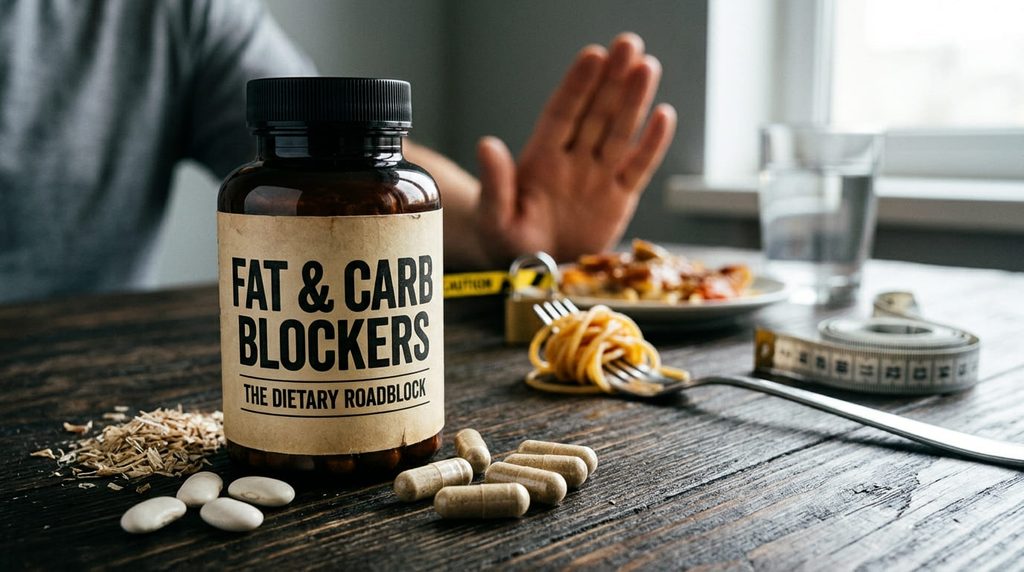
Blockers claim to prevent your digestive tract from absorbing macronutrients from the food you consume.
- Primary Ingredients: Chitosan (derived from the shells of crustaceans) for fat blocking; White Kidney Bean Extract (Phaseolus vulgaris) for carbohydrate blocking.
- The Mechanism: White kidney bean extract inhibits alpha-amylase, the enzyme responsible for breaking down complex carbohydrates into absorbable simple sugars. Chitosan binds to dietary fats in the digestive system so they pass through unabsorbed.
- The Reality: The actual percentage of blocked calories is minimal, and unabsorbed nutrients passing through the digestive tract often lead to uncomfortable gastrointestinal distress.
D. Water Weight Diuretics
Many fast-acting “detox teas” or “flush pills” cause rapid drop on the bathroom scale within 48 to 72 hours.
- Primary Ingredients: Dandelion root, juniper berry, and senna leaf (a natural laxative).
- The Mechanism: These ingredients force your kidneys to excrete water and trigger bowel evacuation.
- The Reality: You are losing fluid and waste, not body fat. As soon as you drink a glass of water or eat a meal, the lost weight returns immediately.
3. The Unseen Danger: Ingredients and Safety Concerns
The most alarming aspect of the weight loss supplement industry is the standard of regulation. Unlike pharmaceutical medications, which must undergo years of rigorous clinical trials before hitting pharmacy shelves, dietary supplements in many countries (including under the FDA in the United States) are regulated far more loosely.
Supplements are generally considered safe until proven dangerous. This regulatory structure creates an environment where manufacturers can sell products with limited prior testing for efficacy or long-term safety.
Common Unregulated or High-Risk Ingredients:
- Ephedra (Ma Huang): Once a dominant ingredient in fat burners, Ephedra was banned by the FDA in 2004 after being directly linked to severe cardiovascular events, including high blood pressure, heart attacks, strokes, and sudden deaths.
- DMAA (Dimethylamylamine): A powerful amphetamine derivative hidden in pre-workouts and fat burners. It has been banned in many jurisdictions due to its potential to narrow blood vessels and elevate blood pressure to lethal levels.
- Contamination and Adulteration: Independent lab testing frequently reveals that imported or obscure weight loss pills contain hidden prescription medications, such as banned weight loss drugs (like Sibutramine), laxatives, or unlisted synthetic stimulants.
- Liver and Kidney Toxicity: Concentrated doses of natural extracts can heavily strain internal organs. High doses of Green Tea Extract (EGCG) in concentrated pill form have been linked in clinical studies to acute liver failure in susceptible individuals.
4. The Biological Reality: Why Supplements Alone Fail
To understand why a pill cannot replace lifestyle changes, you must understand the basic physiology of fat loss.
Body fat (adipose tissue) is essentially stored potential energy. Your body stores excess calories as fat to draw upon when energy from food is scarce. To lose body fat, you must force your body to tap into these energy reserves. This state is known as a Caloric Deficit.
Caloric Deficit=Calories Burned−Calories Consumed>0
If your body requires 2,200 calories per day to maintain its current weight, and you consume 1,700 calories per day, your body mobilizes ~500 calories worth of stored fat to cover the deficit.
No supplement can bypass this fundamental law of thermodynamics. A thermogenic pill might help you burn an extra 50 calories, but if you eat a 300-calorie pastry after taking it, you remain in a caloric surplus and will gain weight.
Furthermore, when weight loss supplements do cause rapid initial weight loss through extreme appetite suppression or fluid loss, they frequently induce muscle wasting. When you lose muscle mass, your baseline metabolic rate drops. Consequently, when you stop taking the pill, you burn fewer calories than you did before starting, leading to rapid regain—a phenomenon known as yo-yo dieting.
5. Do Any Supplements Actually Work?
While no pill replaces a healthy diet, scientific literature acknowledges that a few specific, research-backed compounds can offer marginal, supportive benefits when paired with proper nutrition and exercise:
- Caffeine: One of the most thoroughly researched natural stimulants. It increases alertness, elevates metabolic rate slightly, and improves exercise intensity and fat oxidation during workouts.
- Creatine Monohydrate: Though primarily used for strength and muscle retention, keeping muscle tissue active during a calorie-restricted diet keeps your baseline metabolism firing efficiently.
- Protein Powders (Whey, Casein, Plant): While technically a food supplement rather than a diet pill, consuming adequate protein increases satiety, curbs hunger signals, and preserves lean muscle mass during weight loss.
- Soluble Fiber (e.g., Psyllium Husk): Promotes digestive health, slows glucose absorption, and physically expands in the stomach to assist with appetite control naturally and safely.
6. The Proven Formula for Sustainable Fat Loss
If the secret to lasting fat loss isn’t in a bottle, where is it? Sustainable physical transformation relies on mastering foundational health habits.
       /\
      /  \       [ Level 4: Supplements (0-5% impact) ]
     /----\
    /      \     [ Level 3: Exercise & Resistance Training ]
   /--------\
  /          \   [ Level 2: Sleep & Stress Management ]
 /------------\
/              \ [ Level 1: Caloric Deficit & Protein Intake ]
### 1. Maintain a Sustainable Caloric Deficit
Calculate your total daily energy expenditure (TDEE) and target a modest deficit of 300 to 500 calories per day. This promotes steady, safe fat loss of about 0.5 to 1.5 pounds per week without triggering severe biological hunger responses.

### 2. Prioritize Protein and Whole Foods
Structure meals around whole, nutrient-dense foods: lean proteins, complex carbohydrates, healthy fats, and fiber-rich vegetables. High protein intake (1.6 to 2.2 grams per kilogram of body weight) protects your lean muscle tissue and keeps you full longer.

### 3. Progressive Resistance Training
Cardio burns calories during the activity, but lifting weights builds muscle. Lean muscle tissue increases your long-term metabolic flexibility, making weight maintenance substantially easier.

### 4. Optimize Sleep and Manage Stress
Chronic stress releases high levels of cortisol, a hormone associated with increased appetite, cravings for hyper-palatable foods, and stubborn abdominal fat storage. Prioritizing 7 to 9 hours of quality sleep nightly regulates appetite-controlling hormones like *leptin* and *ghrelin*.
Final Verdict: Are Weight Loss Supplements Worth It?
The weight loss supplement industry thrives by selling quick fixes to complex problems. While the idea of melting fat away with a daily pill is alluring, the reality is stark: Most weight loss supplements are inefficient, overpriced, and occasionally dangerous.
The human body is an adaptable, intelligent system. It cannot be tricked into long-term transformation through cheap stimulants or synthetic blockers. Real, permanent weight loss is not a secret hidden inside a bottle—it is the natural outcome of consistent daily habits, proper nutrition, regular movement, and patience.
Before reaching for a magic diet pill, invest your energy and resources into building a sustainable lifestyle. Your body, your health, and your wallet will thank you.
Here are 6 SEO-optimized, high-intent FAQs designed to capture long-tail search traffic and target common user queries around weight loss supplements.
Frequently Asked Questions (FAQs)
1. Do weight loss supplements actually work for long-term fat loss?
No, supplements do not cause long-term fat loss on their own. While certain ingredients like caffeine or soluble fiber can slightly boost metabolism or curb appetite temporarily, they only account for a tiny fraction of weight loss. Sustainable fat loss requires a consistent caloric deficit created through proper nutrition and regular physical activity.
2. What are the most common side effects of fat burners?
Because many fat burners rely heavily on high doses of central nervous system stimulants, common side effects include:
- Elevated heart rate and high blood pressure
- Anxiety, jitters, and restlessness
- Insomnia and disrupted sleep quality
- Digestive issues, nausea, and stomach cramps
- Dehydration and headaches
3. Are weight loss pills approved by the FDA?
Dietary weight loss supplements are not approved by the FDA for safety and effectiveness before they hit the market. Under current regulations, dietary supplements are treated like food products rather than pharmaceuticals. The FDA only steps in to issue warnings or recalls after a product has been proven dangerous or contaminated in the marketplace.
4. How much weight can you lose in a week using weight loss teas or detoxes?
While detox teas and diuretics may cause a rapid scale loss of 3 to 5 pounds in a single week, this is almost entirely water weight and bowel contents, not actual body fat. Once you rehydrate and return to normal eating patterns, the lost weight will return immediately.
5. What natural ingredients in diet pills are scientifically proven to help?
Only a few ingredients have strong clinical evidence supporting modest benefits:
- Caffeine: Boosts metabolic rate slightly and improves workout performance.
- Protein Powder: Increases satiety (fullness) and preserves lean muscle mass.
- Glucomannan / Psyllium Husk: Soluble fibers that physically expand in the stomach to curb hunger naturally.
- Green Tea Extract (EGCG): Provides a mild thermogenic effect when combined with caffeine.
6. How do I safely lose fat without taking diet pills?
The safest and most effective strategy for permanent weight loss includes:
- Eating in a modest caloric deficit (300–500 calories below your daily maintenance level).
- Consuming high protein and high fiber to stay full and protect lean muscle.
- Engaging in regular strength training to maintain metabolism.
- Getting 7–9 hours of sleep to regulate hunger hormones like ghrelin and cortisol.