
The Secret Code to Unlocking Radiance: Is Your Skin Hiding Its True Potential?
The Secret Behind the Glow
The coveted “dewy complexion”—that luminous, lit-from-within glow that seems reserved for glass-skin models and high-end beauty ads—is actually not a secret skin type at all. Rather, it is the delicate state of perfectly balanced hydration, healthy lipid barriers, and optimal cell turnover. A true dewy complexion looks naturally radiant, plump, and subtly reflective without appearing greasy or oily. But achieving this elusive finish feels almost impossible if you are treating your face with the wrong routine. Every skin type—whether slick with excess sebum, tight and flaking from lack of moisture, or endlessly confused by zone-by-zone differences—possesses the hidden capability to achieve that effortless, light-reflecting dewiness. The real question isn’t whether your skin can glow, but rather: do you actually know what your skin is trying to tell you?
Decoding Your Canvas: Understanding Skin Types
To unlock your skin’s maximum potential, you must first understand the foundation of dermatological mechanics. Skin types are primarily determined by genetics, though they are heavily influenced by climate, diet, hormonal fluctuations, and age. At the center of it all is the sebaceous gland, which produces sebum—our skin’s natural oil. How much or how little sebum your skin produces, combined with your natural moisture-retention abilities, dictates your primary skin profile.
+-------------------+------------------------------------+-------------------------------------+
| Skin Type         | Primary Cause                      | Core Characteristics                |
+-------------------+------------------------------------+-------------------------------------+
| Oily Skin         | Hyperactive sebaceous glands       | Shine, enlarged pores, acne-prone   |
| Dry Skin          | Underactive glands / compromised   | Tightness, flaking, fine lines,     |
|                   | moisture barrier                   | dullness                            |
| Combination Skin  | Mixed gland activity (genetics/    | Oily T-zone, normal or dry cheeks   |
|                   | environment)                       |                                     |
+-------------------+------------------------------------+-------------------------------------+
Oily Skin: The Misunderstood Overproducer
The Science Behind the Shine
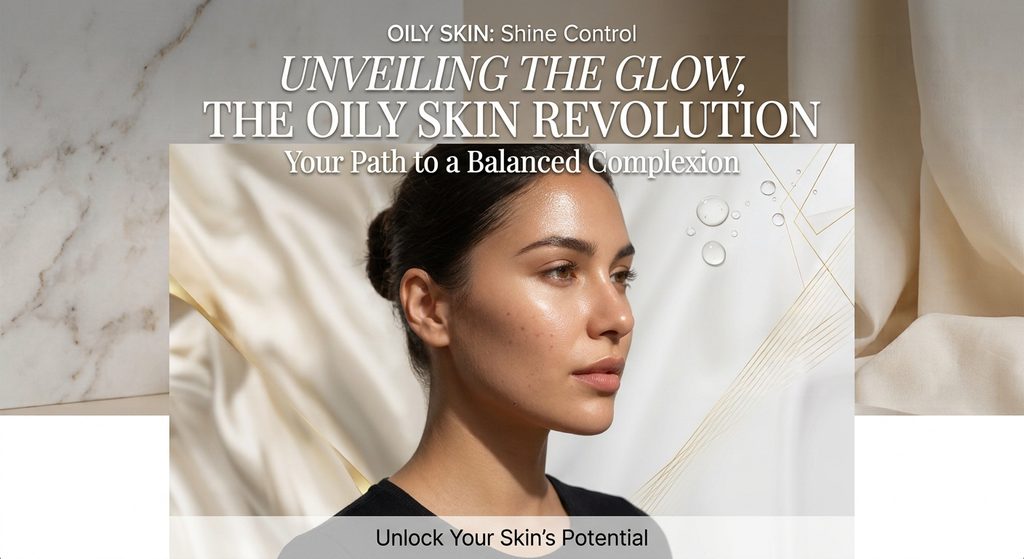
Oily skin is characterized by hyperactive sebaceous glands that produce an excess of sebum. While sebum is essential for lubricating the skin and protecting the skin barrier, overproduction leads to a shiny appearance, particularly by midday.
Key Characteristics
- Persistent shine across the entire face within hours of washing
- Visibly enlarged pores, particularly on the cheeks, nose, and forehead
- High prone-rate to blackheads, whiteheads, and inflammatory acne
- Makeup tends to “slide off” or break down quickly
The Common Pitfall
The biggest mistake people with oily skin make is attempting to strip away every trace of oil using harsh sulfates, astringents, and alcohol-based toners. When you strip the skin of its natural lipids, the brain receives a signal that the barrier is compromised. The result? The sebaceous glands go into overdrive, producing even more oil to compensate.
The Path to Balance
- Cleansing: Use gentle, foaming, or gel cleansers containing salicylic acid (BHA) to penetrate deep into pores and dissolve oil without stripping the moisture barrier.
- Hydration: Never skip moisturizer! Opt for oil-free, gel-based formulas containing hyaluronic acid or niacinamide to regulate oil production while maintaining water levels.
- Treatment: Incorporate retinoids to speed up cellular turnover and prevent dead skin cells from clogging oil channels.
Dry Skin: The Moisture-Deprived Barrier
The Science Behind the Scarcity
Unlike dehydrated skin (which is a temporary lack of water and can affect any skin type), dry skin is a genetic skin type characterized by an underproduction of natural oils. Without sufficient lipids, the skin barrier becomes fragile, leading to rapid Trans-Epidermal Water Loss (TEWL).
Key Characteristics
- Persistent feelings of tightness, especially immediately after cleansing
- Flaking, rough texture, or visible scaling
- Small, almost invisible pores
- Premature fine lines and an overall matte or dull complexion
- Prone to redness, irritation, and sensitivity
The Common Pitfall
Confusing dry skin with mere dehydration often leads to over-exfoliation in an attempt to scrub away dead flakes. Scrubbing compromised, dry skin damages the lipid barrier further, exacerbating inflammation, raw patches, and moisture loss.
The Path to Balance
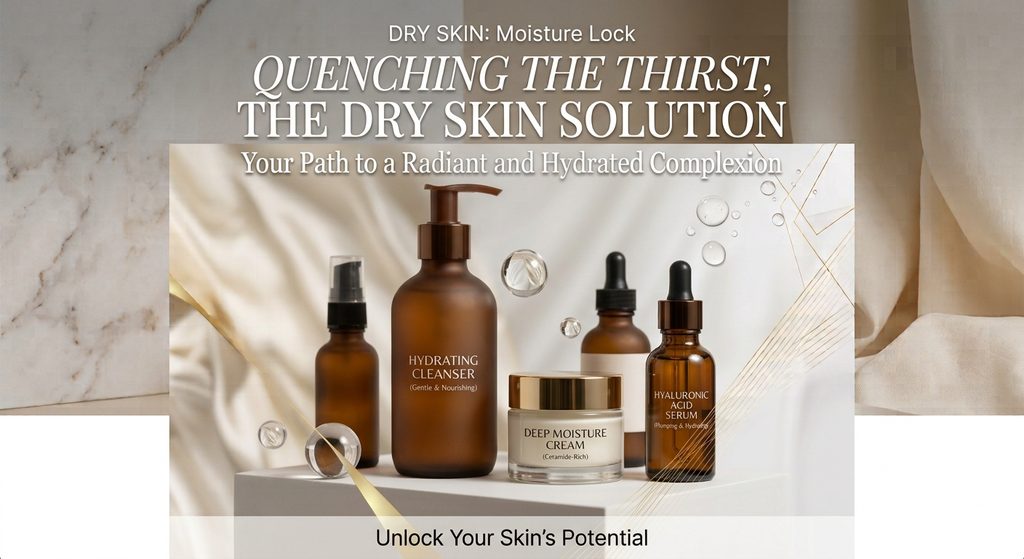
- Cleansing: Choose non-foaming, creamy, or oil-based cleansers that cleanse gently without disrupting the delicate lipid layer.
- Hydration: Layer hydration strategically. Apply humectants (glycerin, hyaluronic acid) to damp skin, followed by rich emollients and occlusives (ceramides, squalane, plant oils) to lock in moisture.
- Protection: Avoid harsh physical scrubs and opt instead for mild lactic acid (AHA), which exfoliates surface cells while providing hydrating benefits.
Combination Skin: The Divided Territory

The Science Behind the Dual Nature
Combination skin is arguably the most common and perplexing skin type. It features hyperactive sebaceous glands in certain areas (typically the T-zone: forehead, nose, and chin) alongside normal or underactive glands on the U-zone (chews and jawline).
Key Characteristics
- An oily T-zone paired with dry or normal cheeks
- Enlarged pores concentrated around the nose and center of the forehead
- Occasional breakouts in the T-zone alongside dry, flaky patches on the cheeks
- Seasonal shifting: oilier during summer months, noticeably dryer during winter
The Common Pitfall
Using a single, all-over skincare product is the primary trap for combination skin. Applying heavy, lipid-rich creams all over the face will clog the T-zone, while applying harsh oil-control products will leave the cheeks irritated, dry, and tight.
The Path to Balance
- Targeted Care: Treat different zones of your face according to their specific needs. Use lightweight, balancing gel-creams on the T-zone and richer, lipid-dense creams on the cheeks.
- Multi-Masking: Apply clay-based masks to the T-zone to absorb excess oil, and soothing, hydrating masks to the cheeks.
- Gentle Exfoliation: Use gentle BHAs specifically on areas prone to congestion, keeping sensitive cheek areas focused on hydration.
Comparative Matrix: Oily vs. Dry vs. Combination
| Feature / Need | Oily Skin | Dry Skin | Combination Skin |
| Sebum Production | Excess throughout | Deficient throughout | Excess in T-Zone, deficient/normal elsewhere |
| Pore Appearance | Enlarged, open | Minimal, tight | Enlarged in T-zone, small on cheeks |
| Primary Goal | Oil regulation & pore clarity | Lipid replenishment & barrier repair | Zone-specific balance & harmony |
| Texture Preference | Lightweight gels, water-creams | Rich emulsions, ointments, oils | Layered: Gels (T-zone) + Creams (Cheeks) |
| Hero Ingredients | Salicylic Acid, Niacinamide | Ceramides, Hyaluronic Acid, Squalane | Niacinamide, Polyhydroxy Acids (PHAs) |
Transforming Any SkinType Into a Dewy Canvas
Achieving a healthy, dewy glow isn’t about altering your underlying genetics—it’s about maximizing water retention and smoothing surface texture regardless of your skin’s baseline oil production.
Step-by-Step Dewy Routine Framework
- Hydrate on Damp Skin: Regardless of your skin type, always apply your humectant serums (like hyaluronic acid or glycerin) to damp skin. Humectants act like water magnets; applying them to dry skin in low-humidity environments can draw moisture out from the deeper layers of your dermis.
- Seal with the Right Lipid Layer:
- For Oily Skin: Seal hydration with a squalane-based light lotion. Squalane mimics natural skin oils without clogging pores.
- For Dry Skin: Seal with ceramide-dense creams and consider a lightweight facial oil on top to catch the light naturally.
- For Combination Skin: Layer a light hydration serum overall, then spot-apply rich cream only where needed.
- Daily Sun Protection: A broad-spectrum SPF is non-negotiable. Modern chemical or hybrid sunscreens often double as fantastic primer bases, leaving behind a subtle, luminous sheen without feeling greasy.
- Internal Hydration and Barrier Support: Skincare works from the outside in, but cellular hydration happens from the inside out. Essential fatty acids (Omega-3s) and consistent water intake support the structural integrity of your cell membranes, ensuring your skin holds onto moisture longer.
By understanding whether your skin craves oil control, lipid replenishment, or zone-by-zone customization, you eliminate the guesswork. When you stop fighting your natural skin type and start treating its specific needs, that elusive, dewy glow transitions from a distant goal into your everyday reality.