The Ultimate Guide to Organic Oils: Benefits, Types, and How to Use Them
For centuries, ancient civilizations—from the Egyptians to Ayurvedic practitioners in India—relied on pure plant extracts to nourish their skin, heal ailments, and protect their hair. Today, as conscious consumers turn away from synthetic ingredients, harsh chemical fragrances, and petroleum-based fillers, organic oils have taken center stage in modern beauty and wellness.
Often referred to as “liquid gold,” high-quality organic oils offer a dense concentration of vitamins, antioxidants, essential fatty acids, and essential nutrients. But with so many products flooding the shelves, what does “organic” really mean when applied to oils? How do cold-pressed carrier oils differ from essential oils, and how can you integrate them effectively into your daily ritual?
Here is everything you need to know about organic oils, their scientifically backed benefits, and how to select the best options for your unique skin and hair care needs.
1. What Makes an Oil Truly “Organic”?
Not all oils are created equal. The term “organic” refers to how the source plants are cultivated, harvested, and processed.
Free From Synthetic Chemicals
For an oil to be certified organic (such as USDA Organic or COSMOS Organic), the source crops (seeds, nuts, fruits, or leaves) must be grown without:
- Synthetic pesticides and herbicides
- Chemical fertilizers
- Genetically modified organisms (GMOs)
- Sewage sludge irradiation
When you apply non-organic oil to your skin, you risk absorbing tiny traces of lingering pesticides. Organic certification guarantees a clean product from soil to bottle.
Cold-Pressed vs. Solvent-Extracted Oils
The extraction method plays a massive role in oil quality.
- Cold-Pressed Extraction: Seeds or nuts are mechanically crushed at low temperatures (typically under 122°F or 50°C). This gentle process preserves heat-sensitive antioxidants, essential fatty acids, and natural aroma.
- Refined/Solvent Extraction: Conventional oils are often extracted using chemical solvents like hexane, then bleached and deodorized at high heat. While this yields more oil cheaply, it strips away beneficial nutrients and leaves behind chemical residues.
To reap the full therapeutic benefits, always look for 100% Certified Organic, Cold-Pressed, and Unrefined oils.
2. The Science: How Organic Oils Benefit the Skin barrier
One common myth about face and body oils is that they clog pores or make skin excessively greasy. In reality, high-quality botanical oils mimic the natural sebum produced by human skin.
Supporting the Lipid Barrier
The outermost layer of your skin, known as the stratum corneum, consists of skin cells bound together by lipids (fats). Factors like pollution, aging, and harsh cleansers damage this barrier, leading to dryness, irritation, and premature aging. Organic oils reinforce this barrier, locking in moisture and sealing out external irritants.
Regulating Natural Sebum
When you strip oily or acne-prone skin with harsh, drying cleansers, your sebaceous glands overcompensate by producing more oil. Applying lightweight organic oils rich in linoleic acid (such as rosehip or jojoba) communicates to your skin that it is sufficiently hydrated, balancing oil production naturally over time.
3. Top Organic Carrier Oils and Their Unique Benefits
Carrier oils are plant-derived oils used to hydrate skin, treat hair, or dilute concentrated essential oils. Here are some of the most powerful organic carrier oils available:
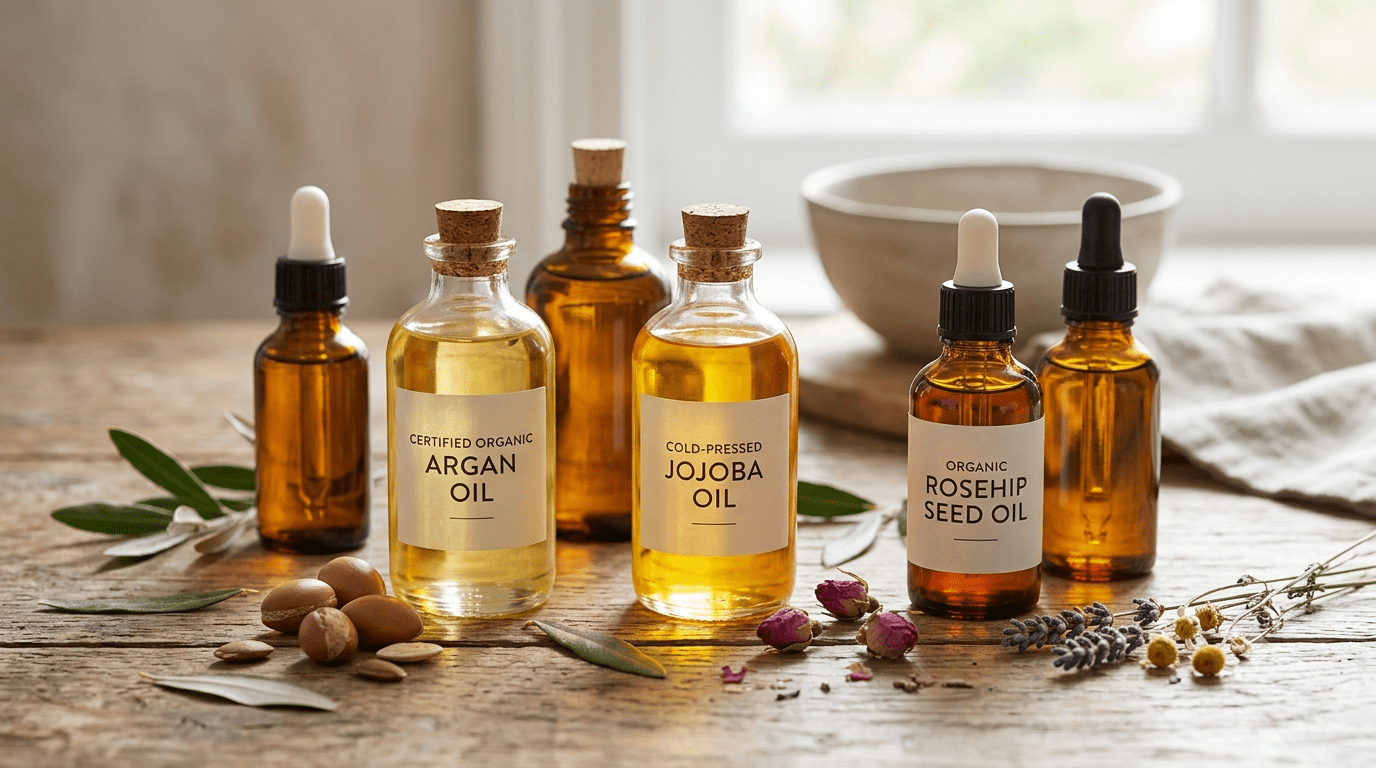
A. Jojoba Oil (Simmondsia chinensis)
- Best For: All skin types, especially oily and acne-prone skin.
- Key Nutrients: Vitamin E, B-complex vitamins, zinc, copper.
- Why It Works: Technically a liquid wax ester, jojoba oil is molecularly almost identical to human sebum. It absorbs almost instantly without clogging pores (it/https://glowingcave.com/2026/07/20/the-ultimate-guide-to-healthy-hair-15-science-backed-haircare-tips/ production.
B. Rosehip Seed Oil (Rosa rubiginosa)
- Best For: Mature skin, hyperpigmentation, scars, and dullness.
- Key Nutrients: Vitamin A (natural retinoic acid), Vitamin C, Omega-3 and Omega-6 fatty acids.
- Why It Works: Renowned as a natural anti-aging power house, rosehip seed oil encourages cell turnover, fades dark spots, and reduces fine lines while leaving a weightless, satin finish.
C. Argan Oil (Argania spinosa)
- Best For: Dry skin, damaged hair, and anti-aging.
- Key Nutrients: Vitamin E (tocopherols), squalene, oleic and linoleic acids.
- Why It Works: Native to Morocco, organic argan oil provides deep hydration and environmental defense. It adds vibrant shine to dry hair strands, tames frizz, and deeply moisturizes rough, flaky skin.
D. Sweet Almond Oil (Prunus dulcis)
- Best For: Sensitive skin, eczema, body massage, and under-eye dark circles.
- Key Nutrients: Vitamin E, Vitamin A, essential fatty acids, potassium.
- Why It Works: Mild and hypoallergenic, sweet almond oil glides smoothly over the skin, making it an excellent base for body massage and targeted soothing of inflamed skin patches.
E. Black Seed Oil (Nigella sativa)
- Best For: Inflammatory skin conditions like psoriasis, eczema, and active breakouts.
- Key Nutrients: Thymoquinone, nigellone, antioxidants, essential omega fatty acids.
- Why It Works: Used for millennia in ancient medicine, black seed oil boasts potent antimicrobial and anti-inflammatory compounds that calm active breakouts and soothe irritated scalp tissuehttps://www.amazon.com/s?k=vo+organic+castor+oil&adgrpid=153507940743&hvadid=678135470573&hvdev=c&hvlocphy=9223217&hvnetw=g&hvqmt=b&hvrand=8755990092326448986&hvtargid=kwd-2280380008740&hydadcr=11892_13482969&mcid=4a712d3fb058314ea8ac08d15caea002&tag=hydglogoo-20&ref=pd_sl_yztsanes8_b.
4. Transformative Uses for Hair & Scalp Health
Organic oils aren’t just for your face and body—they are foundational to holistic hair care routines across the globe.
Key Takeaway: Hair strands are porous, dead protein structures. While water hydrates the hair, organic oils act as sealants, trapping that moisture inside the hair shaft to prevent breakage and split ends.
Scalp Oiling & Growth Stimulation
A healthy scalp is the foundation for strong hair growth. Massaging organic oils—such as castor oil diluted with jojoba or coconut oil—into the scalp stimulates blood flow to hair follicles, delivering vital nutrients directly where growth begins.
- Rosemary Essential Oil + Carrier Oil: Studies have shown that organic rosemary essential oil (diluted in a carrier oil like jojoba) performs comparably to commercial hair growth treatments in supporting hair density over time, without harsh chemical side effects.
Pre-Shampoo Treatments (Pre-Poo)
Applying warm organic coconut or argan oil to your lengths 30 to 60 minutes before washing shields strands from hygral fatigue—the swelling and weakening of hair cuticles caused by constant wetting and drying.
5. How to Seamlessly Integrate Organic Oils into Your Daily Routine
To maximize the benefits of organic oils without feeling overly greasy, application method matters.
       Step 1                 Step 2                 Step 3
+-------------------+  +-------------------+  +-------------------+
|  Hydrate / Dampen |  |  Warm Oil in Palm |  | Press Into Skin   |
|  (Water/Hydrosol) | ---> |  (2-4 Drops)    | ---> |  (Lock in Moisture)|
+-------------------+  +-------------------+  +-------------------+
For the Face
- Start Clean & Damp: Always apply oil to damp skin. Spray your face with a floral hydrosol (like rosewater) or apply a hydrating hyaluronic acid serum first.
- Use 2–4 Drops: Less is more. Warm 2 to 4 drops between clean palms.
- Press, Don’t Rub: Gently press the oil into your face, neck, and chest. Oils are occlusives—they lock in moisture, acting as a shield for the hydration underneath.
For the Body
Apply body oils directly after a bath or shower while your skin is still slightly wet. The oil emulsifies with remaining water droplets, absorbing deeper into the skin and leaving a silky, radiant finish.
6. How to Choose and Store High-Quality Organic Oils
Because organic oils are natural and unrefined, they require proper selection and care to remain fresh and potent.
| Criteria | What to Look For | Why It Matters |
| Packaging | Dark glass bottles (amber, cobalt, or violet) | UV light degrades natural oils quickly, causing oxidation and rancidity. Clear plastic bottles should be avoided. |
| Labels | “100% Organic,” “Cold-Pressed,” “Unrefined” | Guarantees no chemical additives, heat treatment, or synthetic solvents were used. |
| Ingredients List | Single botanical name (e.g., Simmondsia Chinensis) | Avoid products with fillers, mineral oils, added fragrances, or synthetic preservatives. |
| Shelf Life | Store in a cool, dark place (6–24 months lifespan) | Heat and light cause oils to spoil. Oils high in polyunsaturated fats (like rosehip) spoil fastest and benefit from refrigeration. |
The Natural Path to Radiance
Embracing organic oils is more than just a beauty trend—it’s a return to intentional, biological skin and hair care. By feeding your body pure, cold-pressed nutrients directly from nature, you support your skin barrier, protect your scalp, and avoid the toxic burden of synthetic cosmetics.
Whether you are looking to calm active breakouts with jojoba, fade scarring with rosehip, or restore dry hair with argan oil, there is an organic oil tailored precisely for you. Start simple, choose certified organic ingredients, and let the natural power of plant lipids transform your daily wellness routine.