
The Ultimate Guide to a Holistic Beauty Routine: Clean Skincare & Wellness
The definition of beauty in the United States has undergone a massive paradigm shift. The era of heavy, pore-clogging makeup and harsh chemical peels is being rapidly replaced by a philosophy that values health, transparency, and longevity. Today, beauty is no longer just about what you put on your face; it is a holistic ecosystem encompassing what you put into your body, how you manage your mind, and the environmental impact of your choices.
This comprehensive guide breaks down the pillars of a modern, holistic beauty routine, offering actionable, science-backed strategies to achieve radiant health from the inside out.
1. The Clean Beauty Revolution: Why Ingredients Matter
The “clean beauty” movement has evolved from a niche wellness trend into the standard for modern American consumers. Because the US Food and Drug Administration (FDA) bans significantly fewer cosmetic ingredients than its European counterparts, the burden of safety often falls on the consumer.
True clean beauty focuses on non-toxic, biocompatible ingredients that nourish the skin’s natural barrier without disrupting the endocrine system or causing long-term cellular damage.
Ingredients to Avoid and Embrace
Navigating ingredient labels can be daunting. Here is a streamlined guide to the most common harmful chemicals and their safe, effective alternatives:
| Avoid This | Found In | Swap For |
|---|---|---|
| Parabens | Preservatives in lotions and foundations | Phenoxyethanol or plant-derived preservatives |
| Phthalates | Synthetic fragrances and hair sprays | Natural essential oils or “fragrance-free” products |
| Sulfates (SLS/SLES) | Foaming cleansers and shampoos | Coco-glucoside or decyl glucoside |
| Chemical SPF (Oxybenzone) | Traditional sunscreens | Mineral SPF (Zinc Oxide or Titanium Dioxide) |
By eliminating these systemic disruptors, you allow your skin to function as it was designed to—regulating its own oil production, shedding dead cells efficiently, and maintaining a robust moisture barrier.
2. Building an Effective, Order-Dependent Skincare Regimen
A successful skincare routine relies just as much on the order of application as it does on the products themselves. Applying products out of order can prevent active ingredients from penetrating the skin, rendering expensive serums useless or even causing irritation.
This core daily regimen ensures optimal absorption and protection.
1
Cleanse
Morning and Night
1.Cleanse:Morning and Night.
Start with a gentle, sulfate-free cleanser to remove dirt, excess sebum, and environmental pollutants. In the evening, employ a “double cleanse” method: begin with an oil-based cleanser or balm to break down makeup and water-resistant SPF, followed by a water-based cleanser to deeply clean the pores.
2
Tone and Prep
Apply while skin is damp
2.Tone and Prep:Apply while skin is damp.
Modern toners have moved past the stinging astringents of the past. Use a hydrating essence or a balancing toner packed with hyaluronic acid or glycerin. Applying this to damp skin acts as a delivery system, pulling moisture deeper into the epidermis and prepping the skin for active ingredients.
3
Treat with Actives
Targeted serums
3.Treat with Actives:Targeted serums.
This is where you address specific skin concerns.
- Morning: Apply a Vitamin C serum. This powerful antioxidant neutralizes free radicals caused by pollution and brightens the complexion.
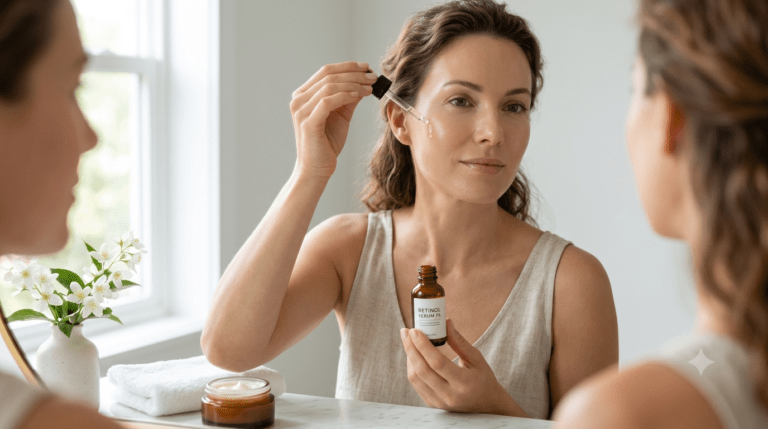
- Evening: Apply a retinoid (Vitamin A derivative) or exfoliating acids (AHA/BHA) to accelerate cell turnover and boost collagen production. Never mix strong acids and retinoids in the same application.
4
Moisturize
Lock in the barrier
4.Moisturize:Lock in the barrier.
Seal in the serums and provide essential lipids to the skin barrier. Look for moisturizers containing ceramides, squalane, or peptides. Even oily skin requires hydration; depriving oily skin of moisture often causes it to overproduce sebum to compensate.
5
Protect
Morning only: Non-negotiable
5.Protect:Morning only: Non-negotiable.
Apply a broad-spectrum sunscreen with an SPF of 30 or higher. UV radiation is responsible for up to 80% of visible skin aging, including hyperpigmentation, loss of elasticity, and fine lines. Apply SPF as the absolute final step in your morning routine, allowing it to form a protective film over the skin.
3. The Skin-Gut Axis: Nutrition for Outer Radiance
Topical treatments can only achieve so much if the body’s internal environment is highly inflamed or nutrient-deficient. The medical community increasingly recognizes the “skin-gut axis”—the direct correlation between the microbiome in your digestive tract and the health of your skin.
Conditions like acne, rosacea, and eczema are frequently exacerbated by internal inflammation. To optimize your beauty routine, your diet must support cellular repair and collagen synthesis.
Essential Nutrients for Glowing Skin
- Omega-3 Fatty Acids: Found in wild-caught salmon, walnuts, chia seeds, and flaxseed. Omega-3s strengthen the skin’s cellular membranes, allowing them to hold onto water and nutrients while flushing out toxins. They are potent anti-inflammatories that can drastically reduce redness and acne.
- Vitamin C: Beyond topical application, internal Vitamin C is a mandatory cofactor for collagen production. Citrus fruits, bell peppers, strawberries, and broccoli provide the building blocks your body needs to maintain skin elasticity.
- Antioxidants (Polyphenols): Dark berries, green tea, and dark chocolate protect the skin from oxidative stress. They neutralize free radicals that degrade collagen and elastin.
- Probiotics and Prebiotics: Cultivating a healthy gut microbiome directly impacts skin clarity. Incorporate fermented foods like kimchi, kefir, kombucha, and sauerkraut, alongside prebiotic fibers (garlic, onions, asparagus) that feed the good bacteria.
The Role of Hydration
Chronic dehydration manifests instantly on the skin, causing a dull, gray appearance and exacerbating the look of fine lines. Aim for at least half your body weight in ounces of water daily. Enhance your hydration by consuming water-rich foods like cucumbers, watermelon, and celery, which provide structured water that cells can easily absorb.
4. The Mind-Body Connection: How Stress Sabotages Skin
The most expensive serums in the world cannot outwork chronic stress. When the brain perceives stress—whether from a demanding job, financial worries, or lack of sleep—the adrenal glands release cortisol.
The Cortisol Effect
Elevated cortisol levels wreak havoc on the skin in several distinct ways:
- Increased Sebum Production: Cortisol binds to receptors in the sebaceous glands, triggering an overproduction of oil that leads to clogged pores and cystic acne.
- Collagen Degradation: High stress hormones actively break down collagen and elastin, accelerating the aging process and leading to skin sagging.
- Impaired Barrier Function: Stress slows down the skin’s natural healing processes and compromises the lipid barrier, leading to transepidermal water loss (TEWL) and severe dryness.
Sleep Hygiene as a Beauty Essential
“Beauty sleep” is a literal biological necessity. During deep, slow-wave sleep, the body’s production of human growth hormone (HGH) peaks, driving cellular repair and regeneration. Simultaneously, cortisol levels drop to their lowest point.
To optimize nighttime repair:
- Maintain a strict sleep schedule, going to bed and waking up at the same time daily.
- Keep the bedroom temperature cool (between 60–67°F) to facilitate the natural drop in core body temperature required for deep sleep.
- Eliminate blue light exposure from screens at least an hour before bed, as it suppresses melatonin production, disrupting both the onset and quality of sleep.
5. Sustainable Beauty: Elevating Your Impact
A truly holistic beauty routine extends its care beyond the individual to the environment. The beauty industry historically generates massive amounts of plastic waste and relies on resource-heavy supply chains. Conscious American consumers are now demanding “blue beauty” (ocean-safe) and “green beauty” (earth-safe) practices.
Skinimalism
The trend of “skinimalism” pushes back against the excessive 12-step routines of the past. By paring down to highly effective, multi-tasking products, you reduce your carbon footprint, minimize packaging waste, and decrease the likelihood of sensitizing your skin through product overload.
Eco-Conscious Choices
When auditing your beauty cabinet, look for brands that prioritize:
- Reef-Safe Formulations: Avoiding oxybenzone and octinoxate in sunscreens, which cause coral bleaching.
- Refillable and Glass Packaging: Moving away from single-use virgin plastics.
- Cruelty-Free and Vegan Certifications: Ensuring no animal testing was conducted at any stage of product development.
- Ethical Sourcing: Ensuring ingredients like mica (used for shimmer in makeup) and shea butter are sourced through fair-trade practices that protect local workers.
Redefining Your Routine
The pursuit of beauty is no longer about masking flaws or chasing an impossible standard of perfection. It is a daily practice of self-care and respect for your body’s natural systems. By choosing clean ingredients, respecting the precise sequence of topical care, fueling your body with anti-inflammatory nutrition, prioritizing mental wellbeing, and demanding sustainability, you create a beauty routine that yields compounding returns.
True radiance is the byproduct of profound, holistic health. When you align your lifestyle with your biology, your skin doesn’t just look better—it functions beautifully.The definition of beauty in the United States has undergone a massive paradigm shift. The era of heavy, pore-clogging makeup and harsh chemical peels is being rapidly replaced by a philosophy that values health, transparency, and longevity. Today, beauty is no longer just about what you put on your face; it is a holistic ecosystem encompassing what you put into your body, how you manage your mind, and the environmental impact of your choices.
This comprehensive guide breaks down the pillars of a modern, holistic beauty routine, offering actionable, science-backed strategies to achieve radiant health from the inside out.
1. The Clean Beauty Revolution: Why Ingredients Matter
The “clean beauty” movement has evolved from a niche wellness trend into the standard for modern American consumers. Because the US Food and Drug Administration (FDA) bans significantly fewer cosmetic ingredients than its European counterparts, the burden of safety often falls on the consumer.
True clean beauty focuses on non-toxic, biocompatible ingredients that nourish the skin’s natural barrier without disrupting the endocrine system or causing long-term cellular damage.
Ingredients to Avoid and Embrace
Navigating ingredient labels can be daunting. Here is a streamlined guide to the most common harmful chemicals and their safe, effective alternatives:
| Avoid This | Found In | Swap For |
|---|---|---|
| Parabens | Preservatives in lotions and foundations | Phenoxyethanol or plant-derived preservatives |
| Phthalates | Synthetic fragrances and hair sprays | Natural essential oils or “fragrance-free” products |
| Sulfates (SLS/SLES) | Foaming cleansers and shampoos | Coco-glucoside or decyl glucoside |
| Chemical SPF (Oxybenzone) | Traditional sunscreens | Mineral SPF (Zinc Oxide or Titanium Dioxide) |
By eliminating these systemic disruptors, you allow your skin to function as it was designed to—regulating its own oil production, shedding dead cells efficiently, and maintaining a robust moisture barrier.
2. Building an Effective, Order-Dependent Skincare Regimen
A successful skincare routine relies just as much on the order of application as it does on the products themselves. Applying products out of order can prevent active ingredients from penetrating the skin, rendering expensive serums useless or even causing irritation.
This core daily regimen ensures optimal absorption and protection.
1
Cleanse
Morning and Night
1.Cleanse:Morning and Night.
Start with a gentle, sulfate-free cleanser to remove dirt, excess sebum, and environmental pollutants. In the evening, employ a “double cleanse” method: begin with an oil-based cleanser or balm to break down makeup and water-resistant SPF, followed by a water-based cleanser to deeply clean the pores.
2
Tone and Prep
Apply while skin is damp
2.Tone and Prep:Apply while skin is damp.
Modern toners have moved past the stinging astringents of the past. Use a hydrating essence or a balancing toner packed with hyaluronic acid or glycerin. Applying this to damp skin acts as a delivery system, pulling moisture deeper into the epidermis and prepping the skin for active ingredients.
3
Treat with Actives
Targeted serums
3.Treat with Actives:Targeted serums.
This is where you address specific skin concerns.
- Morning: Apply a Vitamin C serum. This powerful antioxidant neutralizes free radicals caused by pollution and brightens the complexion.
- Evening: Apply a retinoid (Vitamin A derivative) or exfoliating acids (AHA/BHA) to accelerate cell turnover and boost collagen production. Never mix strong acids and retinoids in the same application.
4
Moisturize
Lock in the barrier
4.Moisturize:Lock in the barrier.
Seal in the serums and provide essential lipids to the skin barrier. Look for moisturizers containing ceramides, squalane, or peptides. Even oily skin requires hydration; depriving oily skin of moisture often causes it to overproduce sebum to compensate.
5
Protect
Morning only: Non-negotiable
5.Protect:Morning only: Non-negotiable.
Apply a broad-spectrum sunscreen with an SPF of 30 or higher. UV radiation is responsible for up to 80% of visible skin aging, including hyperpigmentation, loss of elasticity, and fine lines. Apply SPF as the absolute final step in your morning routine, allowing it to form a protective film over the skin.
3. The Skin-Gut Axis: Nutrition for Outer Radiance
Topical treatments can only achieve so much if the body’s internal environment is highly inflamed or nutrient-deficient. The medical community increasingly recognizes the “skin-gut axis”—the direct correlation between the microbiome in your digestive tract and the health of your skin.
Conditions like acne, rosacea, and eczema are frequently exacerbated by internal inflammation. To optimize your beauty routine, your diet must support cellular repair and collagen synthesis.
Essential Nutrients for Glowing Skin
- Omega-3 Fatty Acids: Found in wild-caught salmon, walnuts, chia seeds, and flaxseed. Omega-3s strengthen the skin’s cellular membranes, allowing them to hold onto water and nutrients while flushing out toxins. They are potent anti-inflammatories that can drastically reduce redness and acne.
- Vitamin C: Beyond topical application, internal Vitamin C is a mandatory cofactor for collagen production. Citrus fruits, bell peppers, strawberries, and broccoli provide the building blocks your body needs to maintain skin elasticity.
- Antioxidants (Polyphenols): Dark berries, green tea, and dark chocolate protect the skin from oxidative stress. They neutralize free radicals that degrade collagen and elastin.
- Probiotics and Prebiotics: Cultivating a healthy gut microbiome directly impacts skin clarity. Incorporate fermented foods like kimchi, kefir, kombucha, and sauerkraut, alongside prebiotic fibers (garlic, onions, asparagus) that feed the good bacteria.
The Role of Hydration
Chronic dehydration manifests instantly on the skin, causing a dull, gray appearance and exacerbating the look of fine lines. Aim for at least half your body weight in ounces of water daily. Enhance your hydration by consuming water-rich foods like cucumbers, watermelon, and celery, which provide structured water that cells can easily absorb.
4. The Mind-Body Connection: How Stress Sabotages Skin
The most expensive serums in the world cannot outwork chronic stress. When the brain perceives stress—whether from a demanding job, financial worries, or lack of sleep—the adrenal glands release cortisol.
The Cortisol Effect
Elevated cortisol levels wreak havoc on the skin in several distinct ways:
- Increased Sebum Production: Cortisol binds to receptors in the sebaceous glands, triggering an overproduction of oil that leads to clogged pores and cystic acne.
- Collagen Degradation: High stress hormones actively break down collagen and elastin, accelerating the aging process and leading to skin sagging.
- Impaired Barrier Function: Stress slows down the skin’s natural healing processes and compromises the lipid barrier, leading to transepidermal water loss (TEWL) and severe dryness.
Sleep Hygiene as a Beauty Essential
“Beauty sleep” is a literal biological necessity. During deep, slow-wave sleep, the body’s production of human growth hormone (HGH) peaks, driving cellular repair and regeneration. Simultaneously, cortisol levels drop to their lowest point.
To optimize nighttime repair:
- Maintain a strict sleep schedule, going to bed and waking up at the same time daily.
- Keep the bedroom temperature cool (between 60–67°F) to facilitate the natural drop in core body temperature required for deep sleep.
- Eliminate blue light exposure from screens at least an hour before bed, as it suppresses melatonin production, disrupting both the onset and quality of sleep.
5. Sustainable Beauty: Elevating Your Impact
A truly holistic beauty routine extends its care beyond the individual to the environment. The beauty industry historically generates massive amounts of plastic waste and relies on resource-heavy supply chains. Conscious American consumers are now demanding “blue beauty” (ocean-safe) and “green beauty” (earth-safe) practices.
Skinimalism
The trend of “skinimalism” pushes back against the excessive 12-step routines of the past. By paring down to highly effective, multi-tasking products, you reduce your carbon footprint, minimize packaging waste, and decrease the likelihood of sensitizing your skin through product overload.
Eco-Conscious Choices
When auditing your beauty cabinet, look for brands that prioritize:
- Reef-Safe Formulations: Avoiding oxybenzone and octinoxate in sunscreens, which cause coral bleaching.
- Refillable and Glass Packaging: Moving away from single-use virgin plastics.
- Cruelty-Free and Vegan Certifications: Ensuring no animal testing was conducted at any stage of product development.
- Ethical Sourcing: Ensuring ingredients like mica (used for shimmer in makeup) and shea butter are sourced through fair-trade practices that protect local workers.
Redefining Your Routine
The pursuit of beauty is no longer about masking flaws or chasing an impossible standard of perfection. It is a daily practice of self-care and respect for your body’s natural systems. By choosing clean ingredients, respecting the precise sequence of topical care, fueling your body with anti-inflammatory nutrition, prioritizing mental wellbeing, and demanding sustainability, you create a beauty routine that yields compounding returns.
True radiance is the byproduct of profound, holistic health. When you align your lifestyle with your biology, your skin doesn’t just look better—it functions beautifully.