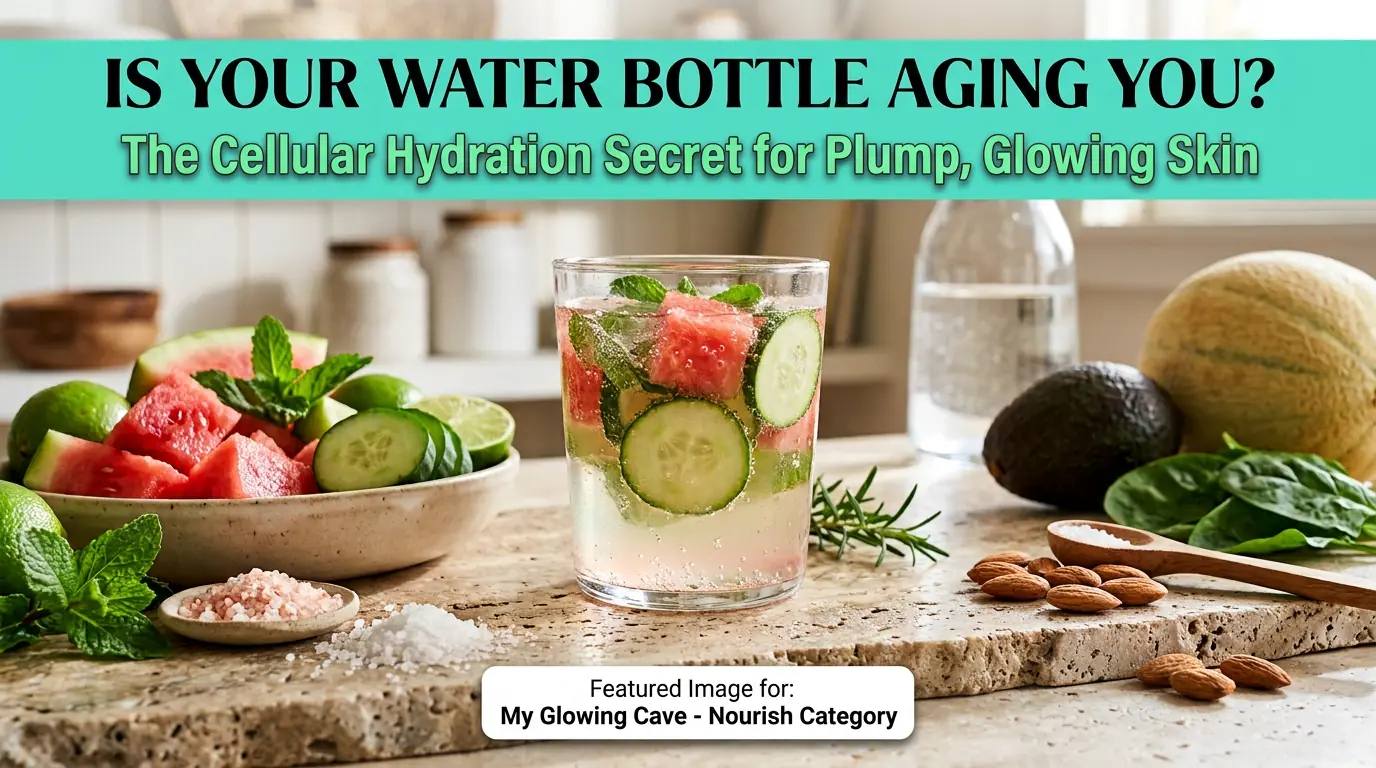
Is Your Water Bottle Aging You? The Cellular Hydration Secret for Plump, Glowing Skin
Is Your Water Bottle Aging You? The Cellular Hydration Secret for Plump, Glowing Skin
You carry a half-gallon water bottle everywhere. You sip continuously from morning until night, diligently checking off your eight-glasses-a-day goal. Yet, when you look in the mirror, your skin still shows fine lines, persistent dullness, and a tight, uncomfortable sensation.
How can your skin be chronically dehydrated when you drink more water than ever?
The uncomfortable truth is that plain tap or filtered water might actually be flushing essential minerals out of your system, leaving your cells starved for true moisture. Achieving plump, radiant skin requires cellular hydration—a process that depends heavily on key electrolytes, gel-water matrix foods, and a healthy lipid barrier.
Cellular hydration relies on balance. Source: Facebook
The Big Myth: Why Plain Water Isn’t Enough for Plump Skin
Drinking plain water is vital, but water molecules cannot enter your skin cells on their own. They rely on specialized transport channels called aquaporins, which are gated by essential minerals known as electrolytes.
When you consume excessive amounts of mineral-depleted or reverse-osmosis water without replacing key minerals, your body excretes the excess through urination. In doing so, it pulls vital sodium, potassium, and magnesium along with it.
[ Plain Water Intake ] ➔ [ Dilutes Extracellular Minerals ] ➔ [ Triggers Kidney Flushing ] ➔ [ Dehydrated Skin Cells ]
To achieve that sought-after “bouncy” skin texture, water must be held inside the extracellular matrix—the gel-like layer composed of hyaluronic acid and collagen that sits directly beneath your epidermis. Without adequate electrolyte mineral binding, plain fluid simply passes right through you.
Dehydrated Skin vs. Dry Skin: Knowing the Difference
Before fixing your hydration routine, you must determine whether your skin lacks oil or water. Treating dehydrated skin with heavy surface oils won’t solve the underlying water deficiency.
| Feature | Dry Skin (Skin Type) | Dehydrated Skin (Skin Condition) |
|---|---|---|
| Root Cause | Lack of natural sebum (oil) production | Lack of water content inside skin cells |
| Pore Size | Small or invisible pores | Can occur with small, large, or acne-prone pores |
| Visual Texture | Flaky, rough, or scaly surface | Crepey, dull, with exaggerated fine lines |
| Feel | Tight all over, rarely gets oily | Oily on the surface yet tight underneath |
| Primary Fix | Topical ceramide creams & plant oils | Cellular minerals, electrolyte foods & humectants |
The Essential Electrolytes for Glowing Skin
Electrolytes are minerals that carry an electric charge. They regulate fluid balance, maintain osmotic pressure across cell membranes, and directly influence collagen production.
1. Potassium: The Cellular Water Sponge
Potassium works inside the cell to draw moisture across the cellular wall. Low potassium levels cause fluid to leak out of cells, leading to a sunken, tired complexion.
- Top Food Sources: Avocado, coconut water, sweet potatoes, bananas, spinach.
2. Sodium: The Osmotic Regulator
While excessive sodium causes puffiness, optimal amounts are required to keep water inside your vascular system and transport nutrients directly to the dermis.
- Top Food Sources: Unrefined pink Himalayan salt, Celtic sea salt, fermented kimchi.
3. Magnesium: The Barrier Repair Catalyst
Magnesium supports repair processes and reduces cortisol-induced inflammation. It aids in synthesizing fatty acids that prevent transepidermal water loss (TEWL).
- Top Food Sources: Pumpkin seeds, dark chocolate (70%+), Swiss chard, almonds.
4. Calcium: The Epidermal Cell Turner
Calcium regulates cell turnover in the stratum corneum and plays a critical role in generating protective skin lipid barriers.
- Top Food Sources: Chia seeds, wild-caught canned salmon, leafy greens, Greek yogurt.
Structured Water: Hydrating Through Foods
Water found naturally within raw fruits and vegetables exists in a structured state—often called EZ water (Exclusion Zone water) or gel water. This form contains natural cellular minerals and fiber, allowing your digestive system to absorb and release moisture gradually over several hours.
+-----------------------------------------------------------------------+
|                       THE GEL-WATER MATRIX                            |
|                                                                       |
|   [ Water Molecules ] + [ Natural Electrolytes ] + [ Soluble Fiber ]  |
|                                  │                                    |
|                                  ▼                                    |
|             Slower Digestion & Sustained Water Release                |
|                                  │                                    |
|                                  ▼                                    |
|               Plump, Hydrated Extracellular Matrix                    |
+-----------------------------------------------------------------------+
Top Water-Dense Foods for Your Shopping List
- Cucumbers (96% Water): High in silica, an essential trace element that strengthens connective tissue and boosts collagen synthesis.
- Watermelon (92% Water): Packed with lycopene, an antioxidant that shields skin cells from UV-induced free radical damage.
- Celery (95% Water): Delivers a natural blend of sodium, potassium, and phthalides that promote vascular health.
- Radishes (95% Water): Rich in sulfur and vitamin C, which encourage gentle detox pathways and collagen formation.
- Strawberries (91% Water): Contain ellagic acid to protect elastic fibers from degradation.
Daily Hydration & Electrolyte Action Plan
Use this practical daily routine to transition from surface-level drinking to deep, cellular hydration.
Morning: The Mineral Start
Instead of chugging a large glass of plain tap water first thing in the morning, create a simple mineral tonic to kickstart absorption.
- 16 oz room-temperature filtered water
- 1 pinch of unrefined sea salt or Celtic salt
- Squeeze of fresh lemon juice (for potassium and vitamin C)
- Optional: 1 tsp raw unpasteurized honey
Mid-Day: Eat Your Water
Incorporate at least two water-dense, electrolyte-rich options into your lunch or snack window.
- Example: A cucumber-celery smoothie blended with coconut water, or a bowl of fresh watermelon topped with a pinch of sea salt and mint.
Evening: Seal the Water In
At night, focus on magnesium to lower stress hormones and help your skin repair while you sleep.
- 1 cup of warm chamomile tea with a magnesium glycinate supplement, or pumpkin seed mix before bed.
Linking Nutrition Back to Your Daily Routine
Internal hydration works hand in hand with external care and recovery:
- Fitness Integration: When executing intensive movement sessions—like high-intensity interval training or heavy leg days—you lose significant amounts of sodium and potassium through sweat. Rehydrate with natural electrolyte sources rather than sugary sports drinks to maintain skin elasticity.
- Rest & Recovery: Cellular repair peaks during deep sleep. Ensuring proper mineral balance before bed keeps skin cells plump overnight and minimizes morning puffiness.
- Topical Support: Pair your internal electrolyte intake with humectants (like hyaluronic acid and glycerin) applied to damp skin, followed by a ceramide barrier cream to seal the moisture inside.
Final Thoughts: Changing How You Hydrate
If your skin feels dry, dull, or perpetually tight despite a high water intake, stop over-consuming plain fluids. Focus instead on nutrient-dense foods, unrefined trace minerals, and balanced electrolytes to transform how your body absorbs moisture. By shifting your approach to cellular hydration, you feed your skin from the inside out—unlocking a smooth, firm, and radiant glow.
Frequently Asked Questions (FAQs) About Cellular Hydration & Skin Health
Q1: How long does it take to see results in my skin after switching to cellular hydration?
A: Most people notice an improvement in skin plumpness, elasticity, and reduced morning tightness within 7 to 14 days of adding electrolytes and water-dense foods to their daily routine. Complete epidermal turnover takes about 28 days, so long-term radiance will show fully after a month of consistent mineral-rich hydration.
Q2: Can drinking too much plain water actually dehydrate my skin?
A: Yes. Over-consuming plain, low-mineral water can flush out key electrolytes like sodium, potassium, and magnesium through excessive urination. This process—known as hyponatremia in extreme cases or mineral dilution—leaves your cells without the necessary minerals needed to hold onto water, resulting in chronically dehydrated skin.
Q3: What is the difference between dry skin and dehydrated skin?
A: Dry skin is a skin type caused by a lack of natural oil (sebum) production. Dehydrated skin is a temporary skin condition caused by a lack of water content inside skin cells. Even people with very oily or acne-prone skin can suffer from dehydrated skin.
Q4: Do I need expensive electrolyte powders for glowing skin, or can I get them from food?
A: You do not need expensive commercial powders, which often contain artificial sweeteners and synthetic fillers. You can easily get all your essential electrolytes from whole foods like avocados, cucumbers, coconut water, dark leafy greens, seeds, and a pinch of unrefined sea salt in your morning water.
Q5: Will adding salt to my water cause facial bloat or puffiness?
A: Excessive table salt (processed sodium chloride) found in fast food can cause water retention and puffiness. However, a small pinch of unrefined sea salt or Celtic salt contains over 80 trace minerals. When balanced with potassium-rich foods, it promotes proper cellular fluid balance without causing facial swel