
The Untold Secret of Skipping: Transform Your Body in 10 Minutes a Day
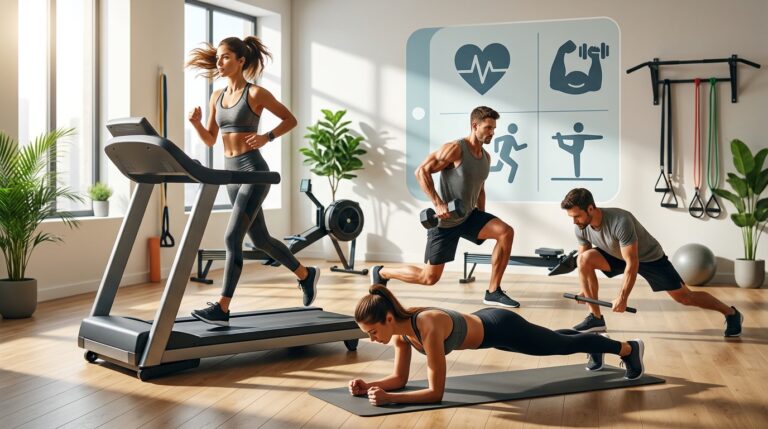
Physical exercise generally falls into four core operational categories, each serving a unique physiological purpose: cardiovascular (aerobic) exercise designed to strengthen the heart and lungs, strength (anaerobic) training meant to build muscular force, flexibility training aimed at maintaining joint range of motion, and balance or stability work intended to sharpen neuromuscular control. While most gym routines force you to choose between these distinct worlds—leaving you to alternate between heavy weight sets and monotonous treadmill sessions—a single, forgotten tool silently bridges the gap across all four. It requires no gym membership, takes up less space than a pair of shoes, and burns more energy per minute than almost any mainstream machine. Yet, despite its simplicity, millions of people completely overlook it, unaware that elite combat sports athletes and high-performance conditioners rely on it as their primary weapon for total body conditioning. That simple exercise is skipping.
At a glance, skipping rope looks like child’s play—a casual pastime relegated to schoolyard blacktops and nostalgic fitness montages. However, beneath its deceptive simplicity lies a relentless, highly efficient physical stimulus. When you step over a fast-moving rope, your body undergoes a unique mechanical challenge. Every system is forced to fire at once. Your calves, quads, and hamstrings absorb and propel your body weight with micro-explosions of force, while your shoulders, forearms, and core stabilize the continuous rhythmic cadence. Skipping strips away the padded seats, artificial resistance curves, and guided tracks of modern exercise equipment, returning fitness to its most foundational requirement: pure, unadulterated body control.
GoodRx
The Mechanics of the Movement: Why Skipping Works

To understand the extraordinary impact of skipping, one must examine the biomechanics of impact and rebound. Unlike running, where the body experiences asymmetric foot strikes that can send uneven impact forces through the hips, knees, and lower back, skipping is a symmetrical, double-leg or rhythmically alternating single-leg action.
When your feet strike the ground during a low-amplitude skip, your Achilles tendons act like powerful, elastic springs. They compress upon landing, store kinetic energy, and instantly release it to launch you back into the air. This quick-burst dynamic is known in exercise science as plyometrics—a method of movement designed to train the nervous system to react rapidly and powerfully. By engaging this plyometric stretch-shortening cycle continuously, skipping builds lower-leg reactivity, stiffens the arch of the foot, and fortifies the ankle complex, creating an athletic foundation that translates directly to sprinting, jumping, and overall agility.
GoodRx
+-------------------------------------------------------------------------------+
|                        THE DUAL MECHANICS OF SKIPPING                         |
+--------------------------------------------------+----------------------------+
| LOWER BODY: PLYOMETRICS                          | UPPER BODY: ISOMETRICS     |
| • Elastic tendon recoil                          | • Shoulder stabilization   |
| • Ankle-complex fortification                    | • Continuous forearm tension|
| • Rapid stretch-shortening cycle                 | • Constant core engagement |
+--------------------------------------------------+----------------------------+
Simultaneously, the upper body undergoes a prolonged isometric contraction. Holding the arms near the torso while driving rope rotation exclusively through wrist action forces the deltoids, rotator cuffs, and forearms to maintain continuous tension. Your abdominal wall and deep core stabilizers must brace continuously to maintain upright posture against the rapid rhythm of landing forces. The result is a seamless fusion of plyometric lower-body explosiveness and dynamic upper-body control—all occurring inside a space no larger than a bath mat.
Physiological Breakthroughs: What Happens Inside Your Body
The internal adaptions driven by skipping extend far beyond simple muscular endurance. Because the exercise demands simultaneous movement from every major muscle group, the oxygen demand spikes almost instantaneously. This rapid spike forces the heart to contract with greater force, pumping larger volumes of blood per beat (stroke volume) to feed starving tissues.
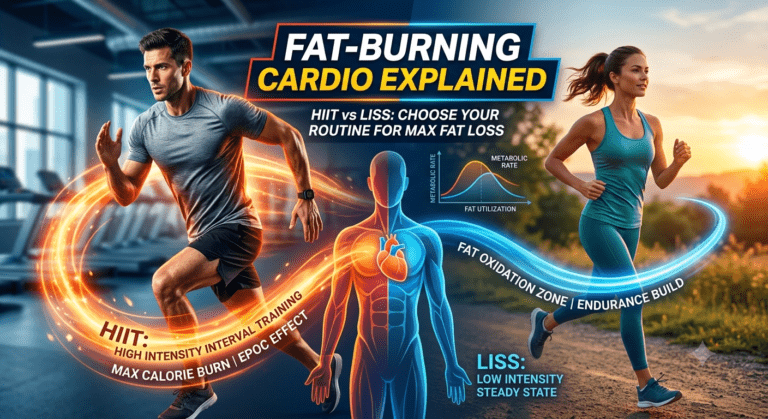
Cardiovascular and Metabolic Efficiency Ten minutes of fast-paced skipping can burn as many calories as running an eight-minute mile, making it one of the most time-efficient cardiovascular workouts available. The sustained high-intensity nature of the exercise forces the body to cross the anaerobic threshold quickly, triggering significant excess post-exercise oxygen consumption (EPOC). This elevated metabolic state ensures that your body continues to burn calories long after the workout has concluded as it works to repair tissue and restore systemic equilibrium.
Crossrope
Skeletal Adaptation and Bone Density While high-impact activities are often feared for potential joint wear, controlled low-amplitude impact loading is actually the primary driver of bone remodeling. Every light landing during a skip places a subtle, uniform micro-stress on the skeletal frame—particularly the tibia, femur, and hip joints. In response, osteoblasts (bone-building cells) deposit new bone mineral content, significantly improving bone density. This structural reinforcement helps protect against age-related bone loss and stress fractures without subjecting the joints to the heavy, uneven heel-strike forces typical of outdoor road running.
+---------------------------------------------------------------------------------+
|                       PHYSIOLOGICAL ADAPTATION PATHWAYS                         |
+------------------------+-------------------------------+------------------------+
| METABOLIC              | SKELETAL                      | NEUROMUSCULAR          |
| • Rapid EPOC trigger   | • Micro-stress signaling      | • Proprioceptive focus |
| • Elevated stroke vol. | • Increased bone mineral mass | • Intra-limb cadence   |
| • High caloric output  | • Joint complex resilience    | • Rapid reflex wiring  |
+------------------------+-------------------------------+------------------------+
Neuromuscular Coordination and Spatial Focus: Skipping demands continuous real-time communication between the brain, eyes, hands, and feet. The motor cortex must time a rope traveling at dozens of miles per hour with a leap occurring milliseconds before contact. This delicate timing sharpens overall balance, motor skill integration, and proprioception—the body’s awareness of its position in space. Furthermore, the intense rhythm forces a deep state of mental focus. It is virtually impossible to jump https://www.muscleandstrength.com/exercises/skipping-jump-roperope effectively while letting your mind wander; the instant focus slips, the rope catches, forcing an immediate reset. This tight feedback loop turns skipping into a active form of moving mindfulness.
Skipping Styles and Equipment: Matching Method to Goal
Not all skipping routines are created equal. Depending on the equipment used and the footwork patterns applied, skipping can be customized to emphasize speed, power, absolute stamina, or technical agility.
+-----------------------------------------------------------------------------------------+
|                              ROPE TYPES AND TRAINING FOCUS                              |
+------------------+------------------------------------+---------------------------------+
| ROPE TYPE        | PRIMARY CHARACTERISTICS            | TARGET FITNESS GOAL             |
+------------------+------------------------------------+---------------------------------+
| Speed Ropes      | Thin vinyl/wire, ultra-lightweight | Hand speed, double-unders, HIIT |
| Weighted Ropes   | 0.5 lbs to 2+ lbs heavy cable      | Upper body strength, power      |
| PVC/Beaded Ropes | Balanced weight, tactile feedback  | Technique, footwork mastery     |
+------------------+------------------------------------+---------------------------------+
Speed Skipping
Speed skipping utilizes light wire or ultra-thin vinyl ropes built for minimal aerodynamic drag. The goal here is high cadence and rapid turnover, often incorporating movements like double-unders (where the rope passes twice under the feet per jump) or high-knee sprints. This style pushes the heart rate to its absolute maximum, making it an exceptional tool for High-Intensity Interval Training (HIIT).
Nike
Heavy Weighted Rope Training
Weighted ropes shift the effort dramatically toward the upper body. Ropes weighing anywhere from half a pound to two pounds increase resistance during rotation, forcing the shoulders, upper back, chest, and grip to work intensely to keep the loop moving. The increased momentum requires deeper core bracing, turning a cardio session into a true strength-endurance challenge.
Freestyle and Agility Footwork
Freestyle skipping incorporates side-straddles, crossovers, boxer skips, and single-leg hops. By constantly altering foot placements, this style conditions stabilizer muscles in multiple planes of movement, reinforcing lateral ankle strength and preventing repetitive stress injuries associated with single-plane movement patterns.
Building the Ultimate 4-Week Progression
To unlock the full potential of skipping without overloading connective tissue, progress must be structured systematically. Beginners often make the mistake of jumping too high or landing too hard, leading to early fatigue or lower-leg soreness. Success lies in staying low to the ground—jumping barely one inch off the floor—and absorbing each landing on the balls of the feet with soft, flexible knees.
+----------------------------------------------------------------------------------------+
|                               4-WEEK SKIPPING PROGRESSION                              |
+-------+-----------------------------+--------------------------------------------------+
| WEEK  | FOCUS                       | STRUCTURE                                        |
+-------+-----------------------------+--------------------------------------------------+
| Wk 1  | Rhythm & Cadence Baseline   | 30s Jump / 30s Rest x 10 Rounds (10 mins total)  |
| Wk 2  | Endurance Building          | 45s Jump / 15s Rest x 12 Rounds (12 mins total)  |
| Wk 3  | Agility & Footwork Intro    | Alternate Basic Jump & Boxer Skip (15 mins)      |
| Wk 4  | High-Intensity Capacity     | 60s Jump / 15s Rest x 15 Rounds (18.75 mins)     |
+-------+-----------------------------+--------------------------------------------------+
Week 1: Establishing Cadence and Foundation
- Goal: Master the basic bounce and build lower-leg tolerance.
- Routine: Complete 10 rounds consisting of 30 seconds of continuous basic bouncing followed by 30 seconds of rest. Focus entirely on spinning the rope with your wrists rather than your elbows or shoulders.
- Frequency: 3 days per week (non-consecutive days).
Week 2: Expanding Interval Work Volume
- Goal: Increase cardiovascular output while refining landing technique.
- Routine: Complete 12 rounds of 45 seconds of active skipping followed by 15 seconds of rest. Introduce the “boxer skip”—alternating weight slightly from one foot to the other on each rebound—to distribute impact and conserve energy.
- Frequency: 3 to 4 days per week.
Week 3: Integrating Footwork Variations
- Goal: Enhance coordination, lateral stability, and active core activation. GoodRx
- Routine: 15 minutes of structured continuous intervals:
- Minute 1–3: Basic Bounce (Warm-up)
- Minute 4–8: Alternate between 30s High-Knees and 30s Boxer Skip
- Minute 9–13: Alternate between 30s Side-to-Side Hops and 30s Basic Bounce
- Minute 14–15: Cool-down basic bounce
- Frequency: 4 days per week.
Week 4: Peak Conditioning and Power Output
- Goal: Maximize metabolic burn and dynamic power output.
- Routine: High-Intensity Interval Protocol:
- Perform 60 seconds of maximal effort skipping (incorporating rapid cadence or double-unders if mastered) followed by 15 seconds of complete rest.
- Repeat for 15 total rounds.
- Frequency: 4 days per week.
Common Pitfalls and How to Overcome Them
Despite its accessibility, jumping rope has a learning curve that causes many beginners to quit prematurely. Overcoming these initial hurdles requires attention to form, setup, and equipment choices.
PMC – NIH
- Incorrect Rope Length: A rope that is too long will drag heavily on the ground, disrupting rhythm; a rope that is too short will trip your feet repeatedly. To check length, stand on the center of the rope with one foot. The bottom of the handles should align with your armpits.
- Jumping Too High: Excessive vertical jump height drains energy rapidly and creates unnecessary joint impact. You only need enough clearance for the thin rope to pass underneath—roughly three-quarters of an inch to an inch off the floor.
- Arm Flare: Reaching outward with your elbows pulls the rope upward, shortening its path and catching your toes. Keep your elbows tucked close to your ribcage and drive the rotation purely through small, quick wrist circles.
- Hard Surface Selection: Jumping on bare concrete or asphalt accelerates lower-leg fatigue and increases joint stress. Always practice on wooden floors, gym mats, rubberized turf, or dedicated jump rope mats to absorb impact forces properly.
The Ultimate Equalizer in Modern Fitness
Skipping rope proves that transformative physical conditioning does not require massive rooms filled with complicated machinery, digital subscription services, or heavy weight stacks. By combining plyometric lower-body power, isometric upper-body tension, high-efficiency metabolic conditioning, and deep mental focus into a single motion, skipping remains one of the most effective conditioning tools ever discovered.
When you strip away the trends and gimmicks of modern workout culture, true fitness boils down to how effectively your body moves through space. A humble length of rope demands that you move with grace, power, speed, and precision every single second. Whether you are an experienced athlete looking to sharpen your reflexes or someone seeking an efficient, low-cost way to burn fat and build cardiovascular endurance, the answer is waiting in a simple loop of cord. Pick up the rope, establish your rhythm, and experience the unrivaled power of skipping.